

Audio By Carbonatix
Sri Lanka's new prime minister says the country is down to its last day of petrol as it faces its worst economic crisis in more than 70 years.
In a televised address, Ranil Wickremesinghe said the nation urgently needs $75m (£60.8m) of foreign currency in the next few days to pay for essential imports.
He said the central bank will have to print money to pay government wages.
Mr Wickremesinghe also said state-owned Sri Lankan Airlines may be privatised.
The island nation's economy has been hit hard by the pandemic, rising energy prices, and populist tax cuts. A chronic shortage of foreign currency and soaring inflation had led to a severe shortage of medicines, fuel and other essentials.
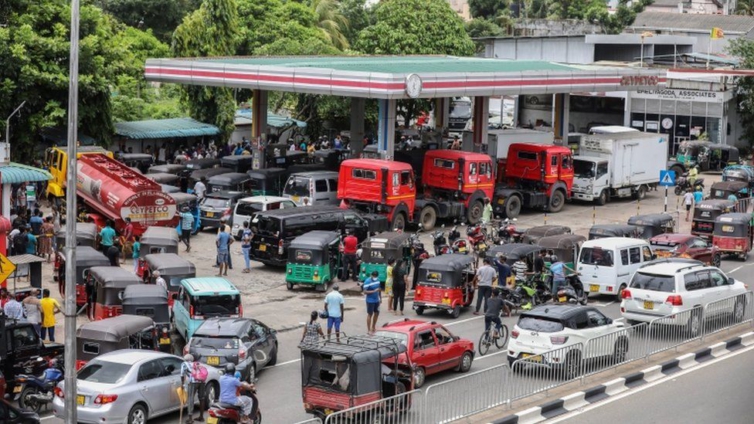
In the capital Colombo, auto rickshaws, the most popular means of transport in the city, and other vehicles have been queuing at petrol stations.
"At the moment, we only have petrol stocks for a single day. The next couple of months will be the most difficult ones of our lives," said Mr Wickremesinghe, who was appointed prime minister on Thursday.
However, shipments of petrol and diesel using a credit line with India could provide fuel supplies in the next few days, he added.
Mr Wickremesinghe said the country's central bank would have to print money to help meet the government's wage bill and other commitments.
"Against my own wishes, I am compelled to permit printing money in order to pay state-sector employees and to pay for essential goods and services. However, we must remember that printing money leads to the depreciation of the rupee," he said.
He also proposed selling off Sri Lankan Airlines as part of efforts to stabilise the nation's finances. The carrier lost 45 billion Sri Lankan rupees ($129.5m; £105m) in the year ending March 2021.
In recent weeks, there have been large, sometimes violent, protests against President Gotabaya Rajapaksa and his family.
Last week, the president's elder brother Mahinda resigned as prime minister after government supporters clashed with protesters. Nine people died and more than 300 were wounded in the violence.
On Friday, Mr Wickremesinghe told the BBC, that the economic crisis is "going to get worse before it gets better".
In his first interview since taking office, he also pledged to ensure families would get three meals a day.
Appealing to the world for more financial help, he said "there won't be a hunger crisis, we will find food".
Latest Stories
-
Abuse case: Nana Akua’s husband Harold unable to appear in court after hospital admission – Police
16 minutes -
Mahmud Kabore picks NDC Ashanti Regional Communication Officer nomination forms
22 minutes -
KNUST Career Services pioneer Selina Doe Angmor named among 2026 40 Under 40 honourees
24 minutes -
Nana Akua domestic abuse case: Police to arraign husband after hospital discharge
27 minutes -
NHIS coverage rises to 70% after government uncaps levy – Health Minister
34 minutes -
World Cup visa scandal: I’ll go after anyone who dents Mahama’s gov’t – Ernest Norgbey
42 minutes -
GCNM calls for a permanent office complex, more funding for specialist nursing training
42 minutes -
Salomey Awiti Baffoe reunites with family after GH¢100k bail
54 minutes -
We’ll modernise Accra without losing its heritage – Roads Minister assures Ga Mantse
1 hour -
Rent Control urges Parliament to expedite amendment of outdated rent laws
1 hour -
The scars on the drum: A Nunyãdume reflection on failure, courage and the audacity to try
1 hour -
Gender Ministry warns perpetrators of violence after Nana Akua Addo videos circulate
2 hours -
Police investigate alleged child-stealing involving two pupils in Ashanti Region
2 hours -
Nhyiaeso NPP Chairman provides GH₵50,000 support to executives, party members, and community
2 hours -
Man nearly drowns while swimming to catch missed pontoon on Volta Lake
2 hours