

Audio By Carbonatix
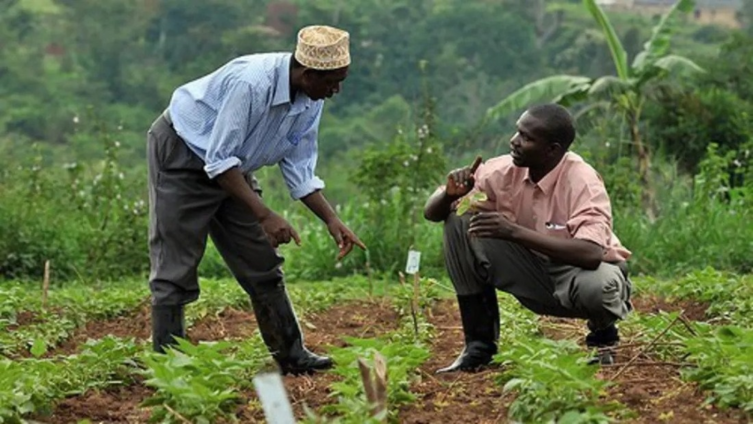
A new study has found that agricultural extension agents (AEAs) in Ghana have limited capacity to effectively deliver services to farmers with disabilities.
Published in the Journal of Agricultural Science, the paper titled “Disability-Inclusive Competency Needs of Agricultural Extension Agents” collected responses from 528 frontline AEAs across all 16 regions.
“The findings showed extension agents’ competency levels were very low in most of the areas examined. Noticeable areas where the extension agents need training include skills pertinent to disability inclusion and expertise in designing and implementing disability-inclusive technologies,” the paper’s abstract noted. They demonstrated a low level of competency in disability inclusion to help address Sustainable Development Goal (SDG) 10 on reducing inequalities.
According to the Ghana Statistical Service, about eight per cent of Ghanaians (approximately 2.1 million people) live with some form of disability. Disability prevalence is higher among residents of rural areas, which are dominated by farmers (9.5%), than among those in urban communities (6.5%). According to the Persons With Disability Act passed by parliament in 2006, “a person who provides service to the public shall put in place the necessary facilities that make the service available and accessible to a person with disability.”
The study identified critical training areas, such as the design of adaptive technologies, understanding the psychology of farmers with disabilities, and navigating legal frameworks for disability inclusion, as key areas where AEAs need capacity building.
“Meeting these needs is crucial for enhancing productivity and alleviating poverty among farmers with disabilities, given that households with such individuals encounter increased poverty risks,” the paper noted.
More on findings
AEAs in Ghana are largely government employees who work with district agricultural directorates and the Ministry of Food and Agriculture (MOFA) to provide technical advice, training, and modern farming techniques to farmers nationwide.
Despite ample evidence showing that farmers with disabilities can achieve self-reliance and generate regular income, there is a limited extension staff with the necessary skills to support them.
Respondent AEAs reported having ‘low competencies’ in solving problems of farmers, monitoring and evaluating farming activities, and low internal interest and motivation to support farmers with disabilities. They also reported having ‘very low’ competencies in designing technologies for effective disability-inclusive extension advisory services.
The researchers assessed disability-inclusive competency based on three key dimensions: knowledge, attitudes, and skills.
The authors say the observed low competency may not be attributable solely to technical capacity gaps but could also reflect underlying biased or deficit-based perceptions toward farmers with disabilities.
Although this study did not directly assess attitudinal bias, prior research indicates that extension personnel may unconsciously view persons with disabilities through a limitation-focused lens, which can reduce professional engagement, problem-solving orientation, and willingness to invest in inclusive service delivery.
Such perceptions align with the social model of disability, which emphasises that exclusion often arises from institutional practices and professional norms rather than from individual impairments alone.
Recommendations
To enhance disability-inclusive competencies, the authors say MOFA and extension organisations should implement targeted training programs for AEAs.
To address both competency deficits and potential bias, extension systems in Ghana should adopt transformative capacity-building approaches that go beyond technical training.
These should include experiential learning, direct engagement with farmers with disabilities as co-educators, reflective modules on inclusive extension ethics, and exposure to successful disability-inclusive agricultural enterprises.
The strategic plan for electronic agricultural extension by MOFA acknowledges the necessity for disability-inclusive services, including subtitled videos and audio materials.
The integration of these tools is limited, thereby restricting access to extension services for farmers with disabilities.
The authors say leveraging IT tools and innovative approaches to deliver extension services can promote inclusivity and encourage sustainable agricultural practices.
Embedding disability inclusion into extension performance metrics, pre-service curricula, and monitoring frameworks, alongside the use of accessible IT tools, can institutionalise inclusive norms, reshape perceptions, and strengthen AEAs’ confidence and commitment to serving farmers with disabilities equitably.
The findings emphasise the essential requirement for focused professional development, inclusive strategies, and financial resources to facilitate necessary accommodations.
Equipping AEAs with these competencies can ensure the equitable participation of all farmers in the agricultural sector, driving socioeconomic development and reducing disparities.
The authors of the study are: Dr Isaac Kwasi Asante of the Department of Agricultural Science Education, University of Education, Winneba; Dr John Kwesi Ocran of the Council for Scientific and Industrial Research; Dr Enoch Teye Kwao Ametepey of the College of Agriculture, Health and Natural Resources, Kentucky State University, USA; and Dr Joseph Opoku Gakpo of the Hub for Food Systems Communication and Engagement, North Carolina State University, USA.
The rest are Dr Adam Awini of the Department of Special Education at the University of Education, Winneba, and Dr Gabriel Owusu of the Directorate of Agricultural Extension Services at MOFA.
Latest Stories
-
Ghana begins review of 1999 National Land Policy, targets new framework by 2027
4 minutes -
Tiptoe Lane’s tech takeover: The story behind Ghana’s booming informal phone market
1 hour -
Abanga vows to use social media to counter NDC messaging ahead of 2028 elections
1 hour -
Okai Mintah seeks Sabah Zita Benson’s support for NDC National Youth Organiser bid
2 hours -
Okai Mintah vows to strengthen NDC campaign machinery ahead of 2028
2 hours -
Mother of four and Jasikan teacher among new Telecel M’ahitti Promo winners
2 hours -
International Youth Shakers Conclave 2026 set to bring global young leaders to London
2 hours -
Gov’t is committed to addressing teachers’ conditions of service, deprived-area allowance – Education Minister
2 hours -
GoldBod’s structure encouraging galamsey – Afenyo-Markin
2 hours -
Tullow starts selling Jubilee, TEN crude to Ghanaian refineries
2 hours -
Local Government Service authorises rationalisation, redistribution of staff
2 hours -
PURC assures consumers of working to ensure quality services in Northern Region
2 hours -
Ghana develops US$4.28bn water financing framework
2 hours -
Christian Council calls for protection of mission schools’ religious identity
2 hours -
Mahama holds discussions with India’s External Affairs Minister
2 hours