

Audio By Carbonatix
The issue of rising inflation will not leave us anytime soon as the Institute of Economic Affairs (IEA) is urging the government to take overall responsibility for the present inflation crisis.
It, therefore, wants a pragmatic approach rather than an ideological approach to resolve what has become a perennial national problem, calling for a collaborative effort between the government and the Bank of Ghana to address the issue.
Proposing a new approach to address the rising inflation which hit 27.6% in May 2022, the economic think tank, said the government should consider eliminating or reducing numerous fuel taxes and levies, among other measures.
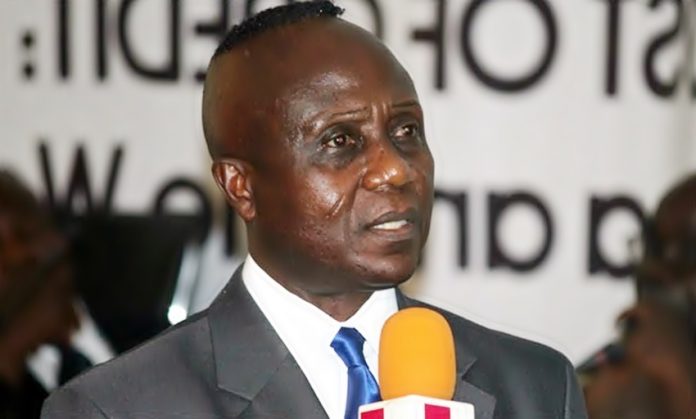
Speaking at a roundtable discussion on “Rethinking Inflation Management in Ghana”, Director of Research, Dr. John Kwakye, said government must act with BoG to mitigate effects of major drivers, which, according to inflation figures, include food, fuel and transport.
“Indeed, GSS has been at pains to point out main sources of Ghana’s inflation, with view to guiding policymakers in taking appropriate remedial measures. For food, this is time to release some of reserves in the Bulk Strategic Stock, if any, to augment supplies Government should also access ECOWAS strategic stock, if available, to supplement domestic supply”, he pointed out.
Further, it said “government should provide temporary subsidy for staples like maize, rice and bread to ease the burden on low-income consumers. Even IMF, which is known not to be a fan of subsidies, has called on Governments to provide food subsidies to cushion effects of high prices on their citizens”.
Again, it noted that “for fuel, Government should use some of its windfall earnings from higher oil prices of about $120 as against the budget estimates of about $60 to cushion domestic pump prices. This is time to activate the Energy Sector Stabilisation Levy Act (ESLA), meant to accumulate tax funds to cushion future shocks. Government should also reduce some of the numerous fuel taxes and levies.”
Inflation trends and causes
Ghana has history of high inflation compared to peers in Africa and elsewhere.
In the 1980s and 1990s, inflation was in high double digits.
Over the last 20 years, however, inflation declined significantly along with improvement in general macroeconomic performance.
Empirical literature identifies fiscal policy, food and exchange rate as key drivers of Ghana’s inflation.
Stabilising cedi
On stabilising the cedi, the IEA said the way to stabilise exchange rate on a durable basis is to close supply and demand gap.
According to Dr. Kwakye, it requires fully leveraging capacities and opportunities for earning foreign exchange, including by increasing and diversifying exports and increasing earnings from natural resources by taking greater control of them.
The IEA also called for by streamlining institutional and legal framework regarding remittances to increase inflows from Ghanaian diaspora.
At same time, it called for aggressive promotion of production of import substitutes domestically through industrialisation so as to curtail demand for imports and foreign exchange.
Latest Stories
-
National Peace Council urges investment in youth to sustain Ghana’s peace
3 minutes -
Afenyo-Markin urges youth to speak up against injustice
14 minutes -
CAF annuls Edo Queens victory, orders WAFU B final to resume from extra time
36 minutes -
Interior Minister urges traditional authorities to enforce anti-bushfire bye-laws
38 minutes -
3rd Republic Bank-JoyNews Habitat Fair Clinic ends on a high note after three days of strong patronage
40 minutes -
Ten climbers missing after avalanche hits Himalayan base camp
1 hour -
NPP had more permanent fuel relief measures than current GH¢2 diesel cut – Amin Adam
2 hours -
Photos from the 3rd Republic Bank-JoyNews Habitat Fair Clinic
2 hours -
Ethiopia’s army promises restraint amid fears of new civil war
2 hours -
Amin Adam calls for review of fuel taxes as diesel prices remain above GH¢18
2 hours -
World Vision Ghana, Ahafo districts sign MoU for universal WASH coverage
3 hours -
When the gold engine stutters: What Ghana’s Cedi and reserves are telling us about the new economic architecture
3 hours -
Two reportedly die after being trapped in mining pit at Juaboso
3 hours -
Petrosol cleans up Wa Municipal Hospital, to donate medical equipment
3 hours -
‘If NPP was ‘insensitive’ over fuel prices, NDC must accept same description now’ — Amin Adam
4 hours