

Audio By Carbonatix
In the tapestry of a nation’s history, there are moments of severe trials that demand more than mere political leadership; they demand the precise intervention of an architect-statesman.
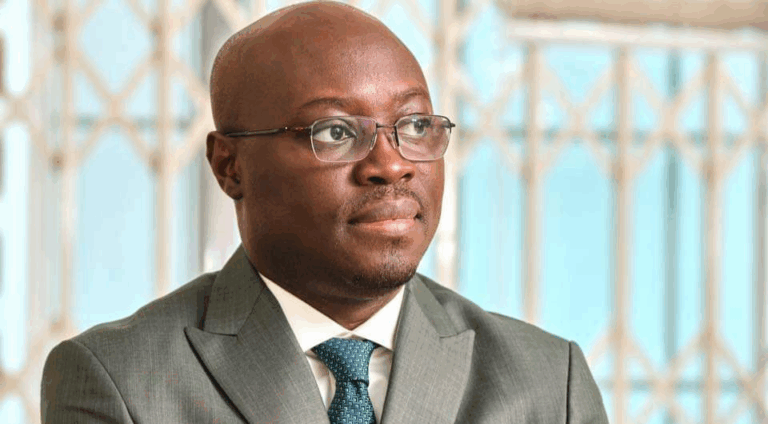
When Dr Cassiel Ato Forson assumed the mantle of Minister for Finance on January 22, 2025, Ghana was at such a crossroads. The economy, shackled by crippling debt and a crisis of confidence, desperately needed not just a manager, but a master technician with the intellectual courage to perform a surgical and lasting "reset". The performance of Dr Forson in the subsequent months is not a story of minor adjustments; it is a profound narrative of intellectual rigour, decisive execution, and the swift restoration of Ghana’s image both at home and across the globe.
What distinguishes Dr. Forson’s leadership is the seamless unity of academic authority and political mastery. While many finance ministers learn on the job, Dr Forson walked in armed with the blueprint for the nation’s recovery, written during his own years of rigorous study. His PhD in Finance from KNUST, earned in 2020, focused precisely on Ghana’s debt sustainability, concluding, even at that early stage, that the nation’s debt was on an unsustainable trajectory.
The policies he is now implementing are not speculative; they are the direct, calculated application of his own evidence-based academic conclusions. This is a rare, powerful fusion: the ultimate scholar leading the ultimate execution. Further reinforcing this foundation is his qualification as an Oxford-trained Tax Professional (MSc in Taxation) and his history as Ghana’s Alternate Governor to the IMF, where he was instrumental in negotiating the 2015 Extended Credit Facility (ECF) Programme. This deep institutional memory and technical fluency meant that upon his return, there was no learning curve, only an immediate, decisive operational readiness crucial for a nation in crisis.
The true measure of a leader is the speed and clarity with which they address the people's pain. Dr Forson’s first actions were not just fiscal but moral, aimed at immediately restoring shattered public trust.
In his inaugural address, he declared a simple yet revolutionary mission: "things must change," and a "war against wasteful expenditure". This was not rhetoric; it became the financial engine of his early success. The most powerful symbolic and substantive move came with the announcement and subsequent unanimous parliamentary endorsement of the scrapping of the Electronic Transfer Levy (E-levy). This tax had become a lightning rod for public dissatisfaction.
The ability of a government facing a massive deficit to abolish a key source of revenue demonstrated exceptional strategic confidence. By coupling the E-levy removal with rigorous and ruthless cost-control measures, literally cutting wasteful government expenditure to create the necessary fiscal space, Dr Forson proved that prudent management could deliver greater public benefit than unpopular taxation, immediately renewing the sacred social contract with Ghanaians.
If the E-levy removal was a tactical victory, Dr Forson’s crowning achievement is the structural, legislative reform he engineered to make Ghana’s fiscal discipline permanent.
He understood that recovery must be secured by law, not by personalities. His championing of the amendments to the Public Financial Management Act, 2016 (Act 921), introduced two foundational pillars of long-term stability: The Debt Rule, a legally binding commitment to reduce the nation's debt-to-GDP ratio to a sustainable 45% by 2035, and The Operational Rule, mandating an annual primary surplus of at least 1.5% of GDP. These measures, backed by the establishment of an Independent Fiscal Council, are the essence of true nation-building. They insulate future financial decisions from short-term political expediency, offering a decades-long framework of assurance to global investors and future generations of Ghanaians.
Furthermore, to eliminate the chronic buildup of unpaid government commitments, new, stringent controls were implemented, requiring prior commitment authorisation from the Ministry of Finance for all government contracts. The consequence of this discipline was immediate and quantifiable: in a crucial high-level meeting with the nation’s bankers, Dr Forson gave his personal assurance that the government had built "sufficient financial buffers" through strategic cuts to meet every single 2025 Domestic Debt Exchange Programme (DDEP) obligation, stating firmly, "We do not intend to default". This decisive action stabilised the domestic financial sector and restored confidence in the sovereign promise.
The ultimate seal of approval for Dr Forson’s competence arrived on the international stage. Following the successful Staff-Level Agreement at the Fifth Review of the IMF Extended Credit Facility (ECF), the world’s financial gatekeepers spoke in unison: Moody’s upgraded Ghana’s sovereign credit outlook, interpreting the move as a "strong endorsement of the government’s fiscal discipline, structural reforms, and macroeconomic stabilisation agenda".
The IMF and World Bank issued separate statements explicitly commending the Ghanaian economic management team, led by Dr Forson, for demonstrating "prudent fiscal stewardship and a coherent policy framework". Most poignantly, IMF Managing Director Kristalina Georgieva personally commended Dr Forson for his "strong commitment to economic reforms".
This collective global commendation confirms that Ghana's "reset story" is being managed by a team that inspires trust at the highest level, a direct reflection of the Finance Minister’s strategic negotiation skills and personal credibility, which allowed Ghana to expedite its return to global financial grace.
Dr Cassiel Ato Forson's early tenure is an extraordinary testament to the power of disciplined, scholarly leadership applied to the realities of political economy. His performance has transcended the immediate crisis, securing Ghana’s financial footing not just for today, but for decades to come.
By linking his PhD thesis on debt unsustainability to the establishment of the PFM Act’s debt rule, and by channelling ALL Annual Budget Funding Amount (ABFA) revenues exclusively into productive infrastructure projects, a measure designed to ensure the economy can "grow itself out of debt", Dr Forson is performing an act of transformative strategic architecture.
He has transitioned Ghana from a state of fiscal anxiety to one of structural assurance, proving himself to be the essential scholar-statesman needed for this era. His legacy is not just the stability he has restored, but the foundation he has laid for "The Ghana We Want" a Ghana built on prudence, discipline, and globally validated confidence. This is the performance of a lifetime, an unforgettable contribution to the nation's destiny.
He is, therefore, a Finance Minister whose judgement the nation can trust regardless of what his opponents and or those who misunderstand him say about him and his decisions.
*****
The writer, Raymond Ablorh, is a Policy, Research, Strategy and Communication Consultant
Latest Stories
-
Asylum votes show people want help, says Kemi Badenoch
47 minutes -
Badenoch welcomes expanded grooming gangs inquiry
48 minutes -
GACL MD sues Samuel Buabeng over alleged Facebook defamation
53 minutes -
Christa Pike in critical condition after surviving two lethal injections, lawyer says
57 minutes -
Kemi Badenoch backs face covering ban at protest
1 hour -
Man City not ‘above the rules’, says No 10 after backlash to Burnham remarks
1 hour -
Real Madrid submit ‘substantial’ dossier in Barca payments case
1 hour -
Messi completes purchase of second Spanish club
2 hours -
Government must engage horticulturists on tomato crisis – GhIH
2 hours -
King Promise’s ‘Can’t Tame Us’ becomes official Chelsea anthem
2 hours -
Afenyo-Markin demands Baffour Awuah’s release from EOCO’s custody, end to alleged political intimidation
2 hours -
Rapper Rick Ross arrested on domestic violence charges
2 hours -
Minority demands security review of Ghana-Colombia visa waiver and port deals
2 hours -
Pursue drug kingpins, not persecute political opponents – Afenyo-Markin tells EOCO
2 hours -
‘I am disappointed’ – Yaw Ampofo Ankrah breaks silence after NSA suspension
2 hours