

Audio By Carbonatix
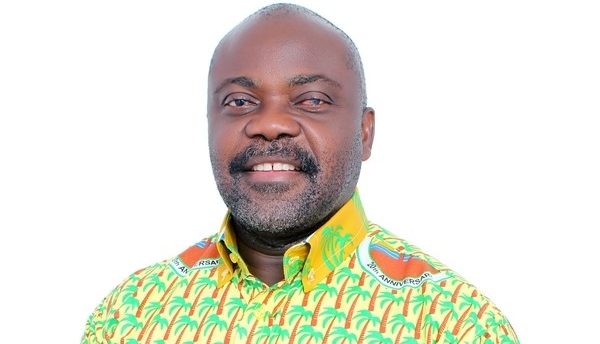
As Ghana prepares to commemorate Republic Day on Tuesday, July 1, the Chief Executive Officer of Coconut Grove Regency Hotel and National Treasurer of the Association of Ghana Industries (AGI), Ralph Ayitey, has made a passionate appeal to Ghanaians to show renewed respect and pride in the Ghanaian Cedi as a national symbol of economic sovereignty and identity.
In a wide-ranging interview with Myjoyonline, the industry leader underscored the importance of viewing the Cedi not just as a currency, but as a unifying symbol of ‘Ghanaianness’, a representation of the country’s independence, resilience, and collective aspiration for growth.
“Even after independence, we were still using the British pound. So, as part of the process of achieving total independence and republican status, the Cedi was introduced. It is what identifies us as a nation. Every facet of life, be it medicals, transport, school fees, is governed by economics and determined by how much Cedi you have or are supposed to have,” he said.
Mr Ayitey stressed that respecting the Cedi is foundational to Ghana’s economic development and called for a cultural shift that starts with education and awareness.
“When we were in primary school, we were taught to take good care of the Cedi. We were made to understand its value, even the coins. That discipline must be reintroduced,” he noted. “Let’s protect this, whether it’s five, ten, twenty or two hundred Cedis. Let’s defend it to the hilt.”
Pride in the Cedi Must Be National Behaviour
According to the National AGI Treasurer, deliberate policies and cultural attitudes must be developed to reinforce respect for the currency. He called on Ghanaians to consistently transact and price in Cedis, particularly in local settings, to reinforce confidence and national pride in the currency.
“The more we transact in Cedis, the more we respect the Cedi, and the more we develop a sense of positive entitlement, dignity and national pride,” he said. “People joke about the 'Ghanaian Cedi', but there’s no other Cedi anywhere else in the world. It’s ours. Let’s own it.”
He cautioned that Ghana’s journey to full economic independence would remain incomplete if citizens continued to devalue their own currency, either culturally or commercially.
“It starts with the citizenry. We must feel comfortable transacting in Cedis. It’s not just about the Bank of Ghana and inflation, it’s about national pride. That sense of ownership must be ingrained in us.”
Civic Education and Deliberate Policy Key to Currency Respect
He further called for enhanced civic education, suggesting that national identity, pride in local institutions, and financial discipline must be instilled early in schools and reinforced through national policy.
“If we’re not teaching our children to value what is Ghanaian, like the Cedi, then it becomes difficult for them to appreciate things like inflation or exchange rates later. Civil education must play a key role in shaping our national consciousness.”
Be Deliberate: A Call to Leaders and Business Stakeholders
The hospitality industry player also challenged both policymakers and private sector players to adopt a deliberate and coordinated approach to strengthening the economy, highlighting the role of business in driving currency stability.
“Let’s be deliberate about the businessman being comfortable holding on to his Cedi. Let’s engage businesses in shaping the exchange rate, inflation, and investment environments. Solutions often lie with the business community, not just government.”
He cited the Coconut Grove in Elmina as a success story of deliberate Ghanaian management in a hospitality industry often dominated by foreign heads.
“Elmina is a three-star hotel, but it's been run by Ghanaians for years. Being deliberate about training and promoting Ghanaians in key sectors is critical for national development,” he said.
Ghana Cannot Operate in Silos
While acknowledging the realities of global trade, he warned that Ghana must build internal systems and policies that work in the national interest, even within a global context.
“We cannot encapsulate ourselves from global trade, but we can consolidate ourselves to determine what we use, at what cost, and with what benefit. Let’s stop operating in silos and work together, government, private sector, and civil society, to shape a Ghana we can all be proud of.”
He ended with a strong patriotic call: “Every Republic Day, we must ask ourselves what symbols of our nationhood we are defending. The Cedi is one of them. Let’s protect it like we protect our flag or rally behind our football team. Let’s be deliberate, be communal, and be proud.”
As Ghana marks another Republic Day, his message is clear: national development begins with respecting what is ours, and the Ghana Cedi must be at the centre of that conversation.
Latest Stories
-
I have supported highway authority financially to fix roads in my constituency – A Plus
15 minutes -
US, Iran fail to reach peace agreement after marathon talks in Pakistan
38 minutes -
ECG kicks off Phase Two of transformer upgrades at Lashibi; brief outages expected
1 hour -
Port crises loom as 11,000 drivers threaten four-day strike
2 hours -
A source of excellence across generations – Vice President Opoku-Agyemang lauds Mfantsipim
3 hours -
(Photos) Mfantsipim School launches historic 150th anniversary
3 hours -
Knights and Ladies of Marshall group backs Catholic Bishops’ stance on anti-LGBTQ+
4 hours -
Bright Simons writes: All the Filla in the Ibrahim Mahama/E&P – Gold Fields Saga
5 hours -
Monetise Idiocy In Ghana
5 hours -
The Ghanaian prophet and the mysterious death of his scottish wife Charmain Speirs
6 hours -
Nearly 400 sentenced in Nigeria for links to militant Islamists
6 hours -
Ghana’s recovery supported by gold strength despite global oil price pressures – Standard Bank Research
6 hours -
Methodist Church hails Mfantsipim@150; calls for “fresh consecration” to excellence
6 hours -
‘Excellence is our inheritance’ – Nana Sam Brew-Butler hails Mfantsipim’s 150-year reign in leadership
6 hours -
Kwaku Azar writes: A-G vs OSP
7 hours