

Audio By Carbonatix
For over six decades, the skyline of Accra has evolved, reaching toward a modern horizon, yet the ground beneath us remains trapped in a cycle of familiar tragedy.
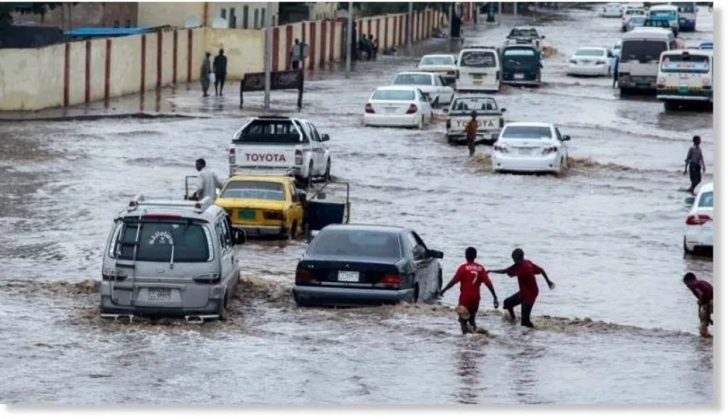
When the skies darken and the rains begin to fall, the city holds its breath, waiting to see which neighbourhoods will be reclaimed by the water. It is a recurring nightmare that defies the promise of progress, leaving us to confront a haunting reality: we have failed to learn from the lessons of our own history.
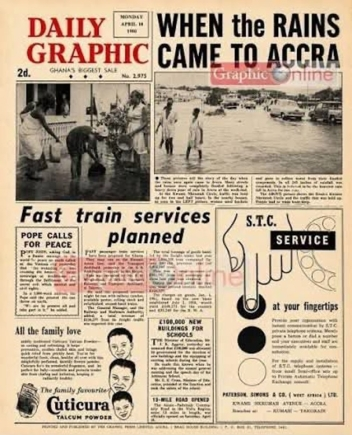
The evidence of this stagnation is stark. One need only look to the Daily Graphic of April 14, 1960, which carried the haunting headline, "WHEN THE RAINS CAME TO ACCRA." The images from that day depicting citizens wading through knee-deep water near Kwame Nkrumah Circle could easily be mistaken for a report from this morning.
The persistence of this flooding is a damning indictment of a collective inability to treat urban planning as a matter of survival rather than a negotiable suggestion. While the city has grown in density and ambition, our approach to the drainage of our environment remains as obsolete as the technology of the era that first documented this crisis.
The persistence of this flooding is a damning indictment of a collective inability to treat urban planning as a matter of survival rather than a negotiable suggestion. While the city has grown in density and ambition, our approach to the drainage of our environment remains as obsolete as the technology of the era that first documented this crisis.
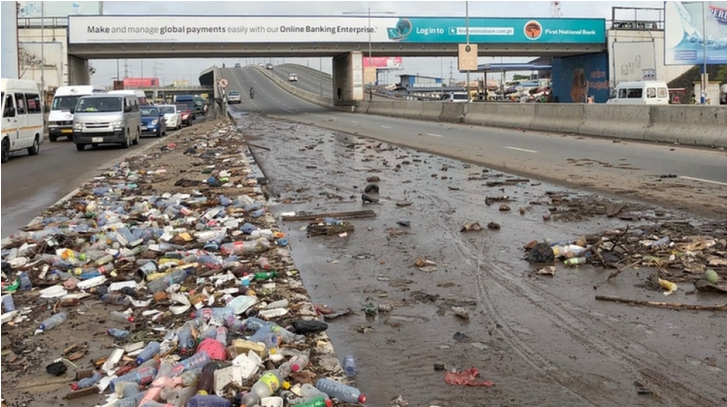
The most corrosive aspect of this cycle occurs when authorities finally attempt to address the root causes of the flooding, particularly the encroachment of structures upon vital, natural waterways. When the wrecking ball arrives, the narrative rarely focuses on the structural necessity of the action or the lives that will be saved by clear drainage. Instead, the discourse is hijacked by a theatre of emotional blackmail.
As demolition notices are served, the immediate reaction is not a recognition of the danger posed by illegal structures but a desperate, public plea for mercy. In this volatile moment, the burden of blame is conveniently shifted away from the initial act of building in a waterway and placed squarely upon the shoulders of the authorities tasked with enforcement.
The individuals and agencies attempting to clear the path for flood mitigation are frequently cast as villains, while the underlying issue, the flagrant disregard for environmental and zoning regulations, is obscured by the intensity of the public outcry.
By prioritising these emotional pleas over the cold, hard requirements of urban safety, we are effectively choosing to repeat the disasters of the past. Each time a structure is permitted to remain in a floodway because of a heart-wrenching story, a new contract is signed for future loss of life and property.
The authorities, meanwhile, are often left to wilt under this pressure, wavering between the necessity of their mandate and the fear of public backlash.
We are living in a city where the archives of 1960 and the floods of 2026 tell the same story. Until we are willing to accept the hard truth that the water will always reclaim its path regardless of our sentimentality, we will continue to look back at our history with regret.
It is time for the authorities to stop playing to the theatre of emotion and recognise that their true obligation is to the structural integrity of the city. We must break the cycle, or we will remain a people destined to build, to weep, and to watch the water wash our mistakes away time and time again.
About the Author

Rev’d Fr. Desmond Uriel Nii Okine Quaye is a multifaceted individual with a diverse background in Theology, Journalism, Marketing, and Public Relations. His professional journey reflects a commitment to both spiritual and secular pursuits, marked by a blend of academic achievements and practical experiences.
Latest Stories
-
Schizophrenia-related disorders lead mental health cases recorded in Ghana
14 minutes -
Dutch authorities enlist Ghana in hunt for fugitive drug lord Bolle Jos
38 minutes -
Ghana housing finance conference adopts communiqué to improve affordable housing access
5 hours -
Special Initiatives Minister urges Wa Technical Institute to enrol more girls as EU-backed solar training lab opens
5 hours -
In the matter of my first year at the Bar
6 hours -
ActionAid Ghana calls for an end to child marriage, greater investment in girls’ rights
6 hours -
Newsfile to tackle World Cup visa scandal, beach demolitions, education strikes, BRICS bid
6 hours -
UK-Ghana Trade & Investment Summit: Trade Resource Centre to help businesses maximise UK-Ghana trade opportunities
6 hours -
Embassy of Denmark celebrates World Maritime Day
7 hours -
Linking LEAP to productive inclusion could cut extreme poverty by 2030 – UNICEF
8 hours -
Trade Ministry backs use of creative arts to rehabilitate prison inmates
8 hours -
Negotiations with government to continue despite strike suspension – GNAT
8 hours -
‘Ghana cannot afford to waste public resources; every cedi has a job’ – Ato Forson
8 hours -
Ghana expects economic boost as World Assemblies of God Congress brings 10,000 delegates to Accra
8 hours -
Joy in Nayilifong as Farouk Aliu Mahama donates 100kVA transformer to improve power supply
8 hours