

Audio By Carbonatix
The world is now halfway toward reaching the 2027 goal of providing Early Warning For All (EW4All), with 108 countries (55%) reporting some level of capacity for multi-hazard early warning systems—more than double the 52 countries in 2015.
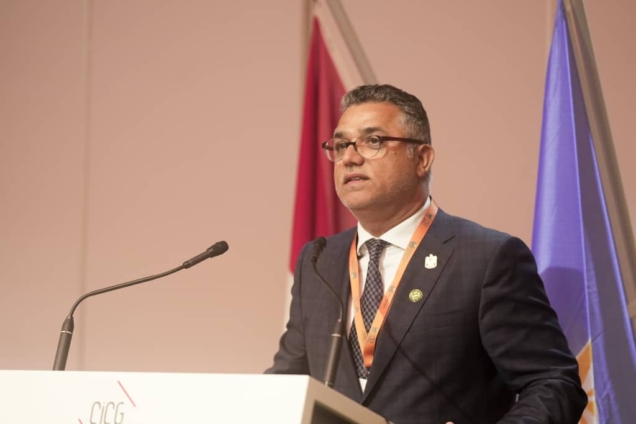
However, there is still much work to be done, as emphasised by the President of the World Meteorological Organization (WMO), Dr. Abdulla Al Mandous, on World Meteorological Day (WMD).
“Early Warnings for All make economic sense. On a global scale, every US$ 1 invested in early warnings is estimated to result in US$ 9 in net economic benefits. In some regions, it’s even higher.”
President Al Mandous pointed out three key gaps that must be addressed through enhanced collective efforts, one of which is bridging the capacity gap among WMO members.
He stated that significant capacity gaps still exist among WMO members. “On behalf of the World Meteorological Organization, I call upon global stakeholders—including the UN, international and regional development agencies, and national governments—to work together by providing the necessary resources and support to help these vulnerable nations establish effective early warning systems as soon as possible.”
He also emphasised the need to close the technical and collaboration gap within the WMO, noting that the rapid advancement of technologies like artificial intelligence is revolutionizing meteorological forecasting and disaster monitoring. While leading global centers, such as ECMWF, and several NMHSs have already integrated AI into their operations, disparities still exist in the technical capacity of WMO members to fully leverage these exciting advancements.
“By embracing emerging technologies like AI, we can develop new standards, guidelines, and best practices that will empower all Members, especially those most vulnerable, to enhance disaster monitoring, early warning, and forecasting, particularly for extreme weather events.”
He also called for enhanced strategic guidance, progress monitoring, and high-level coordination from Congress and the Executive Council to ensure the WMO's most significant contribution to the UN's Early Warnings for All initiative.
Another concern raised by the WMO President was the need to strengthen collaboration across the four pillars of Early Warning Systems. He highlighted that the Early Warnings for All initiative is built on four key pillars: Disaster Risk Knowledge and Management, jointly led by the United Nations Office for Disaster Risk Reduction (UNDRR) and WMO; Detection, Observation, Monitoring, Analysis, and Forecasting, led by WMO; Warning Dissemination and Communication, led by the International Telecommunication Union (ITU); and Preparedness and Response Capabilities, led by the International Federation of Red Cross and Red Crescent Societies (IFRC).
“True disaster risk reduction and prevention can only be achieved through well-coordinated, multi-sectoral early warning systems. I urge WMO and its Members to proactively engage with relevant UN organizations, international partners, and national agencies to develop comprehensive and effective early warning systems.
Furthermore, NMHSs should actively promote the significant economic and social benefits of early warning systems to their governments and the public.”
Latest Stories
-
Port crises loom as 11,000 drivers threaten four-day strike
1 hour -
A source of excellence across generations – Vice President Opoku-Agyemang lauds Mfantsipim
2 hours -
(Photos) Mfantsipim School launches historic 150th anniversary
2 hours -
Knights and Ladies of Marshall group backs Catholic Bishops’ stance on anti-LGBTQ+
3 hours -
Bright Simons writes: All the Filla in the Ibrahim Mahama/E&P – Gold Fields Saga
4 hours -
Monetise Idiocy In Ghana
4 hours -
ECG kicks off Phase Two of transformer upgrades at Lashibi; brief outages expected
5 hours -
The Ghanaian prophet and the mysterious death of his scottish wife Charmain Speirs
5 hours -
Nearly 400 sentenced in Nigeria for links to militant Islamists
5 hours -
Ghana’s recovery supported by gold strength despite global oil price pressures – Standard Bank Research
5 hours -
Methodist Church hails Mfantsipim@150; calls for “fresh consecration” to excellence
5 hours -
‘Excellence is our inheritance’ – Nana Sam Brew-Butler hails Mfantsipim’s 150-year reign in leadership
6 hours -
Kwaku Azar writes: A-G vs OSP
6 hours -
Mfantsipim–Adisadel rivalry built excellence, not division – Sam Jonah
6 hours -
Vice President launches Mfantsipim’s 150 years of shaping Ghana’s greatest mind
6 hours