

Audio By Carbonatix
Thaddeus Sory, a renowned lawyer and one of the petitioners for the removal of the former Chief Justice, has rejected claims that the investigative committee that heard the case operated without clear rules or transparency.
Speaking on JoyNews’ PM Express on October 20, he said Gertrude Araba Sackey Torkornoo suggestions that the committee applied rules that did not exist and acted opaquely were “plainly false.”
“What she is saying is completely untrue. Saying they were applying rules that didn’t exist and that they were opaque, and all of that was plainly false,” he said.
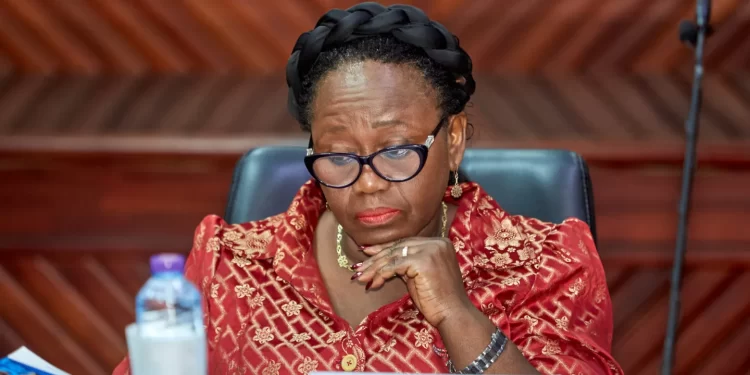
The legal challenge by former Chief Justice Gertrude Araba Sackey Torkornoo forms the backdrop to the ongoing debate.
She has filed a suit at the High Court seeking to halt the vetting and appointment of Justice Baffoe-Bonnie as Ghana’s next Chief Justice.
In her application, Justice Torkornoo is asking the court to nullify all actions taken by the Justice Gabriel Scott Pwamang Committee, which was set up to investigate petitions that led to her removal.
She is also seeking a declaration that the committee’s proceedings were invalid, and that the Presidential Warrant that formalised her removal was illegal and of no effect.
The legal move comes just as Parliament’s Appointments Committee prepares to vet Justice Baffoe-Bonnie for the top judicial position.
But Thaddaues Sory disagrees.
According to him, from the very start of the proceedings, the committee clearly outlined its procedure.
He explained that there was even a June 2020 case involving a previous justice of the Superior Court — believed to be Justice Essel — in which Justice Dotse called on the Rules of Court Committee to enact rules for Article 146 proceedings.
Mr. Sory said the removed Chief Justice, Gertrude Araba Sackey Torkornoo, who assumed office during the ongoing process, rather spent her time making rules that were plainly unconstitutional while ignoring the already established Article 146 provisions.
“She became Chief Justice during the process. During that period, she spent her time making rules that were plainly unconstitutional and forgot Article 146. In any event, there is nothing wrong with Article 146,” he stressed.
Reflecting on his earlier experience with the constitutional procedure, the lawyer said he was first involved in Article 146 proceedings during the Oppong and Attorney General case, which was among the first cases brought under that article.
“This was the first time I’ve been involved in Article 146 proceedings in the Oppong and Attorney General matter, which was about the first case brought under Article 146.
"I was a junior lawyer involved in it, together with Ambrose Dery and Samuel Cudjoe and co, and it was followed, and nobody raised issues about due process and all of that,” he recalled.
Mr. Sory maintained that Article 146 has always been properly applied, adding that concerns about due process are misplaced.
Latest Stories
-
Star Oil paid GH¢2.7bn in taxes, levies in nine months of 2026
11 minutes -
Samson’s Take: The rule of law is cheaper before the bulldozer
12 minutes -
GRA blames system failure for delay in issuing receipt over passenger’s customs duty
33 minutes -
Livestream: Newsfile discusses World Cup visa scandal, beach demolitions, education strikes, BRICS bid
36 minutes -
NC-PTAs welcomes end of teachers’ strike, urges parents to prepare children for Monday
46 minutes -
Government procures over 2,000 transformers as Ghana’s electricity access hits 89.13% – Energy Minister
1 hour -
UTAG-UG threatens strike on October 19 over unpaid allowance
1 hour -
Let The Constitution direct Chieftaincy to deliver “All Development Is Local”
3 hours -
John Jinapor outlines renewable energy, nuclear power priorities for 2027
3 hours -
Ghana explores centre of excellence for hearing, communication and cochlear implant care
4 hours -
Schizophrenia-related disorders lead mental health cases recorded in Ghana
4 hours -
Dutch authorities enlist Ghana in hunt for fugitive drug lord Bolle Jos
5 hours -
Ghana housing finance conference adopts communiqué to improve affordable housing access
9 hours -
Special Initiatives Minister urges Wa Technical Institute to enrol more girls as EU-backed solar training lab opens
10 hours -
In the matter of my first year at the Bar
10 hours