

Audio By Carbonatix
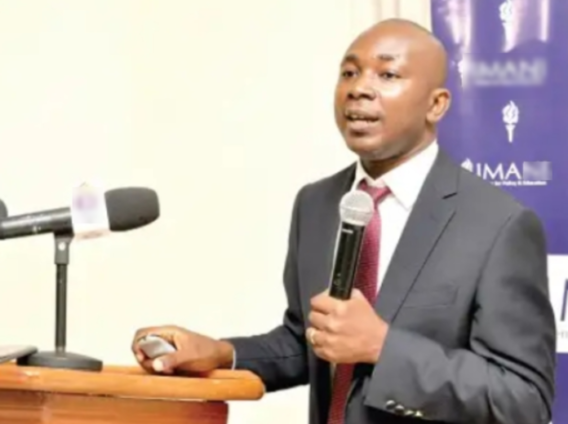
Economist Prof Godfred Bokpin is concerned that the recent strengthening of the cedi, if not managed with a clear strategy and communication, risks damaging the country’s already fragile local production capacity.
Speaking on Newsfile on Saturday, May 17, he cautioned that the government’s approach to driving down the exchange rate could backfire.
“If the consideration is that we can drive down inflation to the end-of-year target, and we can’t get that done from the supply end because the economy’s supply capacity is severely constrained, then I will not go with the strengthening of the currency in the manner they are doing it.”
According to him, the appreciation of the cedi appears to be policy-induced rather than accidental.
“It’s not a blip. And again, there are concerns about sustainability. There is a reason for what is happening,” he said.
He explained that fiscal consolidation and monetary tightening were central to the current trend.
“From the fiscal side, you can see discipline. Government is not spending. Import is very low. That means the economy’s cash absorption capacity is restricted, and demand is subdued.”
Prof. Bokpin also credited improved coordination between the Ministry of Finance and the Bank of Ghana.
“I want to commend the Minister of Finance and the Governor of Bank of Ghana. There’s coordination going on towards a common goal.”
But he was clear about the downside of the policy.
“When you drag down the exchange rate, it only makes imports cheaper. To the extent that we are promoting an import-oriented economy, I would say go for that. But that strategy does not create jobs.”
He pointed to data trends that show how local producers are already suffering. “
From November 2023, inflation on locally produced items is higher than imported inflation. That means you are better off importing, paying all the duties at the port, rather than producing here.”
Prof. Bokpin believes the central bank is using the cedi as a tool to fight inflation, but warned that such demand-side solutions are insufficient without boosting production.
“Inflation is basically aggregate demand exceeding aggregate supply. If supply is constrained and you only focus on exchange rate-driven disinflation, it’s not sustainable.”
He criticised the lack of clarity around the Bank of Ghana’s strategy.
“I believe the central bank has at the back of their mind a certain exchange rate level that they want to hit and stabilise at, but that hasn’t been communicated. It leaves the market guessing. And that causes uncertainty.”
He warned that past cycles show the danger of short-term gains.
“Anytime the cedi strengthens, the issue is always about sustainability. The ups and downs are not good for the market. It’s not good for planning.”
Instead, he urged a long-term view. “We should rather build our reserves. That allows predictability and stability. That will be more helpful.”
He acknowledged that the Bank of Ghana is staying within acceptable margins under the IMF-supported program.
“We had gone beyond the floor level set under the program even before the election. So there’s some kind of margin to still intervene in the market.”
But he insisted, “What the market is looking for is stability. Stability that allows businesses to plan, investors to make decisions, and producers to expand.”
Prof. Bokpin argued that the way forward is not just controlling inflation through exchange rate manipulation but investing in productive capacity.
“What you need is supply-oriented policies. Supply-oriented policies will not coexist with what we are doing right now.”
He concluded with a warning. “If we continue this way, we’ll strengthen the cedi, make imports cheaper, and kill our local industry. We’ll lose jobs and undermine long-term economic resilience.”
Latest Stories
-
Ghana, Germany deepen cooperation on railways, labour mobility
27 seconds -
Huge crowds greet Pope in Paris for open-air Mass
11 minutes -
‘I never said I’ll declare a state of emergency’ – President Mahama on galamsey
52 minutes -
Bobby Banson condemns EOCO’s attempted arrest of Nana Agyei Baffour Awuah
1 hour -
When Kumasi begins to look like somebody is in charge
1 hour -
Parliamentary probe into cocaine seizure would be a waste of time – Inusah Fuseini
1 hour -
Cocaine seizure: Focus on Ghana’s reputation, not partisan blame – Osae-Kwapong
1 hour -
Two Invitations, Three Interrogations: Did Baffour Awuah tell the whole story?
2 hours -
Drug cartels may be seeing Ghana as easy route – Lenin Anane Agyei
3 hours -
Ghana risks gaining notoriety as drug-trafficking hub – Bobby Banson
3 hours -
Government dismissed my drug trafficking warning, then tried to arrest me – Ntim Fordjour
3 hours -
Day Two: 3rd Republic Bank-JoyNews Habitat Fair Clinic underway at Junction Mall
3 hours -
NACOC addressing inherited gaps in fight against drug trafficking – Deputy Director-General
3 hours -
Taekwondo goes to school as GTF launches five-region youth campaign
3 hours -
The issues Mourinho is struggling to fix at Real Madrid
3 hours