

Audio By Carbonatix
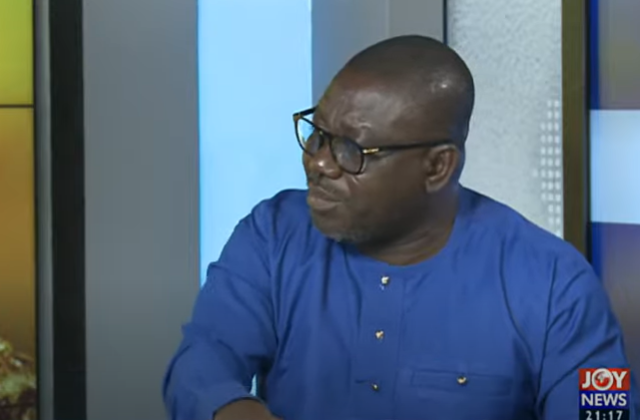
The Ranking Member of Parliament’s Finance Committee, Isaac Adongo has called for a legal framework to regulate Ghana’s domestic and external borrowing, as well as how governments invest and deploy such funds.
While noting that contracting of loans by the government was not an unacceptable thing, given the country’s financing gaps, Mr Adongo raised concerns about Ghana’s recurring unsustainable indebtedness.
“We must have a regime that allows us to be very prudent in our borrowing; there must be a clear signal, policy intervention and a legal regulation that compels countries, such as Ghana, when they borrow, to put it into areas that we can generate the forex sustainably,” he said.
The call follows Ghana’s debt restructuring as part of a US$3 billion loan-support programme with the International Monetary Fund (IMF) for debt sustainability, economic recovery, and stability.
He said the country must learn from the impact of the Domestic Debt Exchange Programme (DDEP) on individuals, financial institutions, and bondholders, as well as the issues associated with external debt restructuring.
Mr Adongo, Member of Parliament for Bolgatanga Central in the Upper East Region, indicated that a legal framework would ensure that governments spent loans on productive sectors of the economy.
This would allow the country to receive positive yields on loan investments, repay them, and keep Ghana from falling into an unsustainable debt situation that would force it to resort to loan-support programmes and austerity measures.
Mr Adongo said this in an interview with the media on the sidelines of a three-day conference on Africa’s debt crisis and international financial architecture reform in Accra on Thursday.
The conference is an initiative of the International Development Economics Associates (IDEAs) to provide a platform for discussions on how best to restructure Africa’s debt to prevent insolvency.
The government of Ghana and the African Network on Debt and Development (AFRODAD) are supporters of the three-day conference.
Mr Adongo suggested that the country institutes a legally binding mechanism to ensure that debt levels were regulated, and governments were required to follow such debt limits.
“Beyond that, [we must] look at where to invest the money in order to improve the debt carrying capacity of our country and be able to service our debts.
“You can’t go on the international capital market to borrow, knowing that your biggest problem is how to generate the forex, and you borrow for five years, and all that you do is to put it in the payment of salaries and goods and services,” he noted.
Mr Adongo also called for effective management of Ghana’s vast mineral wealth, with a focus on adding value to key exports such as gold, bauxite, and cocoa.
“We must be prudent in the way we manage our resources, it’s doable. It’s about having the political will to do it. We must build growth poles and generate the kind of resources that will allow us to pay for it,” he stated.
Latest Stories
-
NDC threatens sanctions over oversized campaign posters, gives aspirants 5 days to comply
51 minutes -
Star Oil paid GH¢2.7bn in taxes, levies in nine months of 2026
1 hour -
Samson’s Take: The rule of law is cheaper before the bulldozer
1 hour -
GRA blames system failure for delay in issuing receipt over passenger’s customs duty
1 hour -
Livestream: Newsfile discusses World Cup visa scandal, beach demolitions, education strikes, BRICS bid
2 hours -
NC-PTAs welcomes end of teachers’ strike, urges parents to prepare children for Monday
2 hours -
Government procures over 2,000 transformers as Ghana’s electricity access hits 89.13% – Energy Minister
2 hours -
UTAG-UG threatens strike on October 19 over unpaid allowance
2 hours -
Let The Constitution direct Chieftaincy to deliver “All Development Is Local”
3 hours -
John Jinapor outlines renewable energy, nuclear power priorities for 2027
4 hours -
Ghana explores centre of excellence for hearing, communication and cochlear implant care
5 hours -
Schizophrenia-related disorders lead mental health cases recorded in Ghana
5 hours -
Dutch authorities enlist Ghana in hunt for fugitive drug lord Bolle Jos
6 hours -
Ghana housing finance conference adopts communiqué to improve affordable housing access
10 hours -
Special Initiatives Minister urges Wa Technical Institute to enrol more girls as EU-backed solar training lab opens
10 hours