

Audio By Carbonatix
Donald Trump pledged the US would “take other countries’ jobs” if he returned to the White House, as he laid out his plans to slash taxes and lower energy costs and regulations for manufacturers that made goods on US soil.
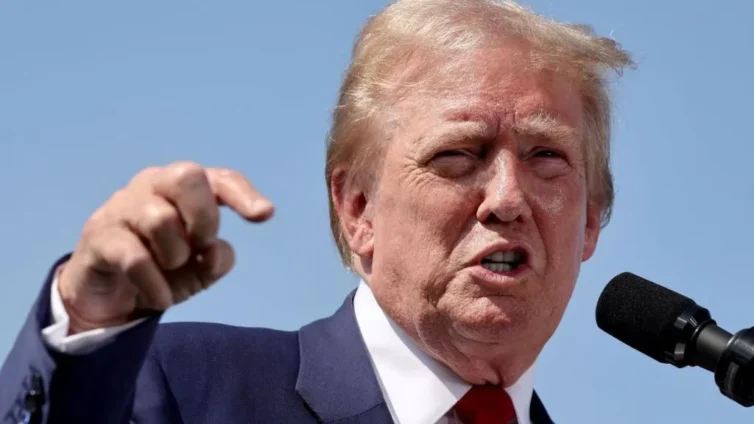
At a campaign rally in Savannah, Georgia, Trump promised a "manufacturing renaissance", reiterating his pledge to punish American companies that manufactured outside the US, and slap large tariffs on foreign-made goods to protect US industries.
Trump and Vice-President Kamala Harris have stepped up efforts to outline their competing visions for the economy in the final stretch of the campaign, highlighting what voters say is a top concern in the 2024 election.
Harris is expected to unveil a new set of economic proposals in a major speech in Pittsburgh, Pennsylvania, on Wednesday.
Speaking to a crowd in Savannah, Trump moved beyond his usual protectionist policies to raise the prospect of more trade battles.
Trump said he would offer special federal zones with "ultra low taxes and regulations" to companies that relocate to the US, cut through regulation and appoint a "manufacturing ambassador" to convince international companies to move the United States.
“Under my plan, American workers will no longer be worried about losing your jobs to foreign nations. Instead, foreign nations will be worried about losing their jobs to America,” he said.
Trump has also previously proposed a 60% tariff or higher on Chinese goods and a blanket 20% tariff on imports from other countries, an aggressive policy that could increase prices for Americans, according to some economists.
During his presidency, Trump imposed tariffs on some goods imported from China. The Biden administration has left some of these policies in place and announced new restrictions in some areas such as electric vehicles.
The former president has sought to blame Democrats for the surge in inflation following the Covid pandemic, which has since cooled, as well as the high cost of groceries that remain top concerns for voters.
The food Consumer Price Index rose by 25% from 2019 to 2023, according to the US Department of Agriculture.
Polls have indicated that American voters are most concerned about the economy, and more voters see Trump as equipped to handle it. Harris, however has made some gains.
Voters for whom the economy was a major factor preferred Trump over Harris by 53-47%, according to CBS News/YouGov poll of likely voters published this week. But Harris has improved her standing since August, when only 43% of voters who prioritised the economy favoured her.
Trump’s visit to Georgia came on the heels of a New York Times/Siena College poll that found him slightly ahead in the state, as well as the battlegrounds Arizona, and North Carolina.
Both candidates have devoted significant time and resources to campaigning in Georgia, as it may prove critical to their paths to the White House.
Though the Georgia speech was billed as an economic event, Trump dedicated a significant portion of his speech to other subjects. He recounted the failed assassination attempt on his life at a Pennsylvania rally in July and the second suspected attempt in Florida this month. He praised the US Secret Service, which has faced scrutiny over their ability to protect Trump.
He also attacked Harris, calling her "grossly incompetent" and said she would "deindustrialise the United States and destroy our country".
An hour before Trump spoke in Georgia, the Harris campaign held a press call with American investor Mark Cuban, who has long supported Democratic candidates.
Mr Cuban assailed Mr Trump’s proposals to place tariffs on American companies which manufactured in countries like Mexico, saying it would harm American businesses.
“It just goes to show that he doesn't think these things through,” Mr Cuban said.
Harris will return to the another critical swing state - Pennsylvania - on Wednesday to lay out her own economic agenda.
The vice-president has already released a set of economic proposals aimed at first-time home buyers, tax breaks for families and a ban on grocery "price-gouging". She has called for a "first-ever" tax credit for builders of homes sold to first-time buyers, as well as up to $25,000 in down-payment assistance for "eligible" first-time buyers.
She told reporters on Sunday the plan would focus on investing "in the aspirations and ambitions of the American people while addressing the challenges that they face".
Latest Stories
-
Today’s front pages: Tuesday, October 13, 2026
44 minutes -
Wealth Over Water: How Galamsey Is Threatening Ghana’s Water Security
1 hour -
LA 2028: Black Queens pumped up for second leg of Mauritius tie
1 hour -
LA 2028: Black Queens hold final training session ahead of second leg against Mauritius
2 hours -
Standards are not Seasonal: What the EC appointments teach both sides
2 hours -
King Mohammed VI urges private sector to create youth jobs and spread benefits of growth
2 hours -
KGL U17 Colts 2026: Greater Accra win title after penalties win over Western Region
2 hours -
UK Investment Roadshow opens in London to advance UK-Ghana growth partnership
2 hours -
Assemblies of God requires pastors to resign before entering partisan politics – Rev. Wengam
3 hours -
Ghana targets 20% annual reduction in maternal deaths – Health Minister
3 hours -
Cyber attacks in Africa grow faster than global rate, report finds
3 hours -
Ghana signs UAE deal to create 5,000 overseas jobs
3 hours -
One Million Coders Programme targets 100,000 digital jobs in two years – Sam George
3 hours -
John Jinapor, Italian Ambassador explore opportunities for energy sector investment
3 hours -
NHIA seeks legal reforms to support Free Primary Healthcare
3 hours