

Audio By Carbonatix
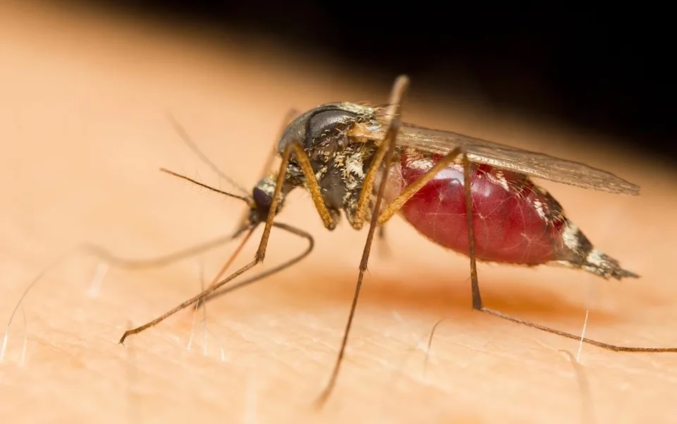
There has been a significant increase in the number of UK cases of a mosquito-borne virus that can cause sudden fever and joint pain, and is normally only found in Africa and southern Asia.
The UK Health Security Agency (UKHSA) says more than 70 cases of the chikungunya virus were reported in the first six months of this year, more than double than in the same period last year – all of them linked to travel.
Chikungunya, while rarely fatal, can leave people experiencing joint pain for years.
The UKHSA is warning travellers to take precautions against mosquito bites.
In most cases, people recover fully within a couple of weeks, but for some, pain can persist for months or even years.
In very rare cases it can be fatal.
While the 73 infections seen in the UK in the first six months of this year is not a huge number, it is more than double the 27 cases over the same period last year.
An outbreak of the virus is under way in the Indian Ocean region, and almost all of the infections were linked to travel in India, Sri Lanka and Mauritius.
Chikungunya is spread by two types of mosquito, neither of which are present in the UK, so there is no risk on onward infection.
But Dr Philip Veal, Consultant in Public Health at UKHSA, says it is a warning to travellers to make sure they take precautions against mosquito bites.
"Chikungunya can be a nasty disease and we're seeing a worrying increase in cases among travellers returning to the UK.
"It is essential to take precautions against mosquito bites when travelling.
"Simple steps, such as using insect repellent, covering up your skin and sleeping under insecticide-treated bed nets can greatly reduce the risk.
"Before you travel, check the Travel Health Pro Website for the latest advice on your destination.
"A chikungunya vaccine may also be considered for those travelling to higher-risk regions."
The same report also says the first-ever UK cases of Oropouche virus, normally only found in Central and South America and the Caribbean, have also been detected in travellers returning from Brazil.
This virus is predominantly spread by midge bites rather than mosquitoes, with the main type of midge involved in transmission not found in Europe or the UK.
Symptoms include high fever, chills, headache, joint pain and muscle aches.
The UKHSA warns of a rise in Oropouche virus infections globally since 2024, and says pregnant travellers should take particular care following some concerns about the impact the virus can cause during pregnancy.
Latest Stories
-
Ghana’s ocean is not land under water: Why the Fisheries Commission is right to demand a proper assessment of offshore gold exploration
2 minutes -
Teacher unions maintain strike as FWSC, GES negotiations yield no deal
4 minutes -
Photos: Mahama Ayariga engages World Bank on sustainable cities development
9 minutes -
Foreign Affairs Minister warns embassies over long queues, ‘inhumane’ conditions for visa applicants
11 minutes -
Photos: AMA steps up enforcement to clear traders from BRT shelters
12 minutes -
Shortage of health information officers threatens quality of healthcare data – GHIMA
13 minutes -
Ghana’s National Chess Team, The Golden Knights return from Samarkand with gold and seven new international titles
14 minutes -
Northern Births and Deaths Director to face PAC over GH¢71k withdrawals
23 minutes -
Djokovic claims 102nd title of career with China Open win
27 minutes -
Desire FC teams up with Hellas Verona to develop emerging talent in Ghana
31 minutes -
Labone robbery case adjourned to October 22 as prosecution prepares supplementary statements
32 minutes -
BoG must come again on Cedi bouquets; people can use their money as gifts once they don’t deface it – Ayariga
33 minutes -
Mahama Cares administrator calls for stronger financial support for chronic illness patients
36 minutes -
Wontumi not yet confirmed among Mahama’s pardoned convicts – Palgrave
39 minutes -
6 Ghanaian victims of human trafficking arrested in Zambia cybercrime raid – Foreign Affairs Ministry
41 minutes