

Audio By Carbonatix
David Lammy’s whirlwind first trip as foreign secretary, organised at very short notice, is not about instant results or even brave new horizons.
It is all about perception - the appearance of a new, vigorous administration, determined to hit the ground running, brimming with goodwill towards some of the UK’s most important partners.
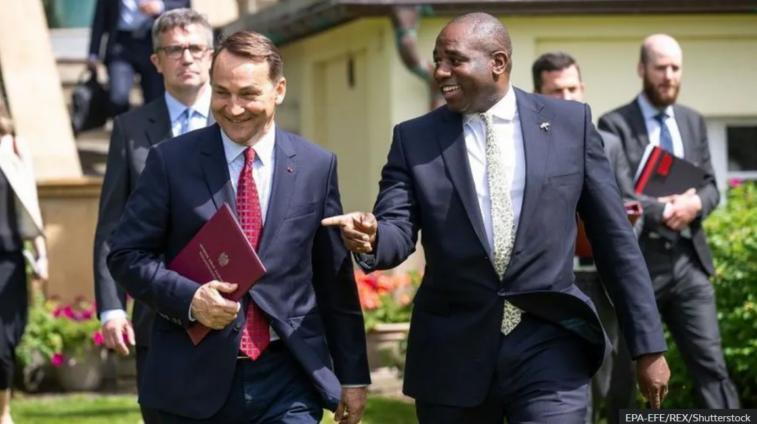
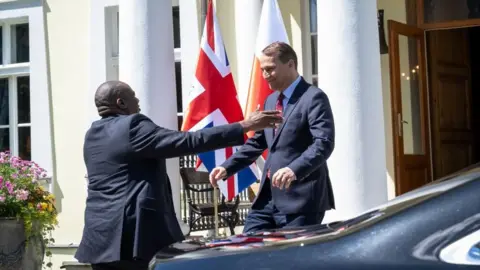
After an evening spent with his German counterpart, Annalena Baerbock - the two found time to watch a few minutes of England’s European Championship quarter-final - Mr Lammy’s tour moved to the bucolic surroundings of the country estate of Poland’s Foreign Minister Radoslaw Sikorsky.
After a couple of hours of talks, it was back on the plane for a short flight north to one of Nato’s newest members, Sweden.
Why Germany, Poland and Sweden?
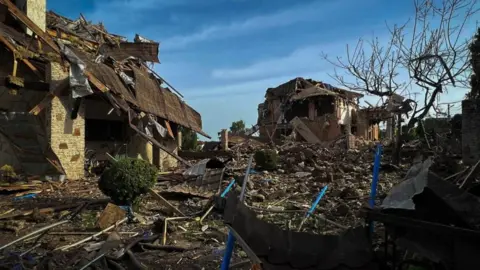
Partly because of Ukraine. Along with Britain, all three countries play important roles in sustaining Kyiv’s war effort. With the new Defence Secretary John Healey on the ground in Odesa, Prime Minister Sir Keir Starmer’s government is keen to stress that the UK’s commitment to Ukraine will remain rock solid.
Following a meeting with President Zelensky and his counterpart Defence Minister Rustem Umerov, Mr Healey said the UK would provide more artillery guns, a quarter-of-a-million ammunition rounds and nearly 100 precision Brimstone missiles.
"There may have been a change in government, but the UK is united for Ukraine," he said, promising to "reinvigorate" support via increased military aid.
He also pledged to fast-track the reinforcements to ensure they arrive with the next 100 days.
“We want to double down on our commitment to Ukraine,” Mr Lammy said, as dragonflies swooped over a tranquil lake and a pair of majestic eagles circled overhead.
France, in the midst of its own election - one which seems destined to have far-reaching consequences - was not on the itinerary. Not this weekend.
No stop in Brussels, either. Sir Keir has said the UK will not return to the EU “in my lifetime”.
But Poland and Sweden are both key European partners and fellow Nato members - good places for the foreign secretary to start exploring the outlines of closer future relations.
“I want to reset both our bilateral relationship and our relationship with the European Union,” Mr Lammy said, adding a reference to Labour’s still rather nebulous pledge to strike a new EU-UK security pact.
Meanwhile, on a visit to Edinburgh on Sunday, the prime minister said work was already under way to improve the UK's relationship with the EU.
He said his government "can get a much better deal than the botched deal that Boris Johnson saddled the UK with".
Mr Lammy said that when European leaders gather at Blenheim Palace on 18 July for the next meeting of the European Political Community (established by Emmanuel Macron in the wake of Russia’s invasion of Ukraine), “the new spirit of co-operation will be on show”.
Lammy's concerns: Russia, China, Gaza
The trip comes just days before Sir Keir takes his own first steps on the international stage as prime minister, at the Nato summit in Washington DC.
These are tricky times to be shoring up relationships, with France taking a lurch to the right and the US possibly on the verge of returning the unpredictable Donald Trump to office.
Mr Lammy agreed this was a “tough geopolitical moment”, but said it was important not to confuse disagreements between mature democracies with the threats posed by authoritarian regimes.
“I am concerned when I see Iranian drones turning up in Ukraine,” he said.
“I am concerned when I see shells from North Korea being used here on European soil.
"And of course I'm concerned with the partnership that I see Russia brokering across those authoritarian states.”
Other issues hang heavy over the new foreign secretary’s first trip, in particular the war in Gaza.
In Germany on Saturday, Mr Lammy spoke to the need to strike a “more balanced approach to Israel-Gaza”.
It is not clear exactly what he meant, but with ceasefire talks apparently poised to resume, finding a way to end the Gaza war and revive the Arab-Israeli peace process seems destined to consume a large amount of diplomatic time in the coming months.
For his part, Mr Lammy’s famously anglophone host said the relatively new Polish government shared something in common with the incoming Starmer administration.
Both, Mr Sikorski said, were “the product of the public being tired with enthusiasts on the nationalist side of politics” - a remark which perhaps only partially reflected the true nature of last week’s general election.
Mr Sikorski said he looked forward to “a more pragmatic approach” from Britain to its relationship with Europe and said the two ministers had discussed “some creative ideas of how to further that”.
Latest Stories
-
Affi Agbenyo’s EC appointment is constitutionally appropriate, but politically, people have the right to remind us – Haruna Iddrisu
3 minutes -
Education is critical to Ghana’s future and development – Haruna Iddrisu
21 minutes -
Who’s Emelia Affi Agbenyo, the 43-year-old newly sworn-in Deputy EC Chair?
55 minutes -
Haruna Iddrisu calls for limits on annual university accommodation fee increases
2 hours -
Today’s front pages: Tuesday, October 13, 2026
2 hours -
Wealth Over Water: How Galamsey Is Threatening Ghana’s Water Security
3 hours -
LA 2028: Black Queens pumped up for second leg of Mauritius tie
3 hours -
LA 2028: Black Queens hold final training session ahead of second leg against Mauritius
4 hours -
Standards are not Seasonal: What the EC appointments teach both sides
4 hours -
King Mohammed VI urges private sector to create youth jobs and spread benefits of growth
4 hours -
KGL U17 Colts 2026: Greater Accra win title after penalties win over Western Region
4 hours -
UK Investment Roadshow opens in London to advance UK-Ghana growth partnership
4 hours -
Assemblies of God requires pastors to resign before entering partisan politics – Rev. Wengam
4 hours -
Ghana targets 20% annual reduction in maternal deaths – Health Minister
4 hours -
Cyber attacks in Africa grow faster than global rate, report finds
4 hours