

Audio By Carbonatix
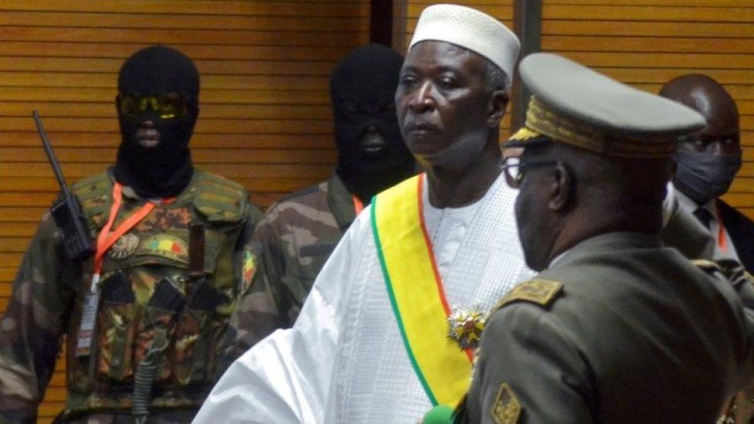
UN chief António Guterres has demanded the immediate release of Mali's President Bah Ndaw and PM Moctar Ouane, who have been detained by soldiers.
They were driven by soldiers to a military camp near the capital, Bamako.
The two men have been leading an interim government which took power after a military coup last August.
They were detained just hours after a government reshuffle in which two army officers who took part in the coup were replaced.
Late on Monday, Mr Ouane told AFP in a phone call that soldiers "came to get him". The news agency said the line was then cut.
Defence Minister Souleymane Doucouré has also reportedly been detained.
The African Union, the Economic Community of West African States (Ecowas), the EU and the US have also condemned the arrests, saying Mali's top politicians must be released without any preconditions.
What has triggered the latest crisis?
Ibrahim Boubaca Keïta was ousted as president last year following weeks of anti-government protests over rising insecurity, alleged corruption and a failing economy.
His removal was generally celebrated - but the slow pace of change over the last nine months has been causing tensions.
An ongoing strike by the main union is in its second week and threatens to cripple the economy.
The interim government - overseeing the 18-month transition - agreed to appoint a new broader-based cabinet in the face of these problems and the threat of renewed protests.
Col Sadio Camara and Col Modibo Kone, who served as ministers of defence and security respectively, were dropped.
The opposition group behind the protests last year, M5 RFP, is also infuriated that it did not get rewarded with any ministerial positions.
Plus public confidence is waning over the army leaders' ability to tackle the Islamist insurgency that has spilled into neighbouring Burkina Faso and Niger.
A previous coup in 2012 led to militant Islamists exploiting the chaos and seizing the north of the country.
French troops helped regain territory, but attacks continue as the insurgents capitalise on the persistent political instability in the region.
What happens next?
Discussions are ongoing at the Kati military camp, where the president and prime minister are being held.
The talks have also involved members of the M5 RFP. The group has been critical of the prime minister, so may be angling to replace him, reports BBC World Service Africa editor Will Ross.
A delegation from Ecowas, which played a key role in setting up the transitional government, is also due to visit Bamako.
Latest Stories
-
GAEC must retain nuclear scientists for Ghana’s nuclear ambitions – Minister
22 minutes -
Man reportedly mistaken for game and shot by hunter dead in forest
25 minutes -
19-year-old mason jailed 15 years for defiling seven-year-old pupil
29 minutes -
Ghana’s banking sector assets rise 20.47% to GH¢500.2bn – BoG Governor
33 minutes -
22 injured as Sprinter bus overturns at Sege after tyre burst
35 minutes -
UN housing expert urges Ghana to strengthen Rent Control Department amid housing affordability concerns
43 minutes -
Delta-BCI partnership reaches 166,000 people with breast cancer education
52 minutes -
Power restoration fault suspected in Kumasi Central Market fire
6 hours -
The 7-foot giant of Ngleshie Amanfro: Seven-foot Ghanaian Ephraim Saawa dreams of joining the national basketball team
7 hours -
Government promises support for Kumasi Central Market fire victims
7 hours -
Vibes The Movie: Big Ghun’s Ghanaian film earns five nominations at 2026 REFFA
7 hours -
‘I’m a fulfilled man’—Justice Korbieh on missing out on Supreme Court despite two nominations
7 hours -
MamaCare CEO warns unresolved conflicts among health workers could undermine maternal and neonatal care
8 hours -
Health professionals urged to translate medical knowledge into practice to save mothers
8 hours -
Retired judge Justice Francis Korbieh charges 1,568 new lawyers to uphold integrity
9 hours