

Audio By Carbonatix
For years, residents of Woe, Kporkporgbor, Fuveme, Anloga, and Dzita-Agbledomi have watched the sea inch closer to their homes.
Each tide brings with it more than waves; it carries the fears of families who have lost land to erosion, the anxiety of fishermen whose livelihoods depend on a coastline under siege, and the uncertainty of a future shaped by climate change.
Now, hope is arriving in the form of a global partnership. The United Nations Human Settlements Programme (UN-Habitat), working with the Anloga District Assembly, is rolling out a climate change and urban resilience project aimed at transforming the way these coastal communities live, work, and protect themselves against the environment’s growing threats.
The initiative was formally introduced on Thursday when the District Chief Executive for Anloga, Sandra Seyram Kpedor, welcomed the Program Specialist for Climate Change and Urban Resilience, Daniel Kofi Abu, UN-Habitat, and his team to her office.
“This program is more than a development project—it’s a lifeline,” Ms. Kpedor said. “It will help us address sea-level rise, coastal erosion, and flooding, while also creating green jobs, building eco-friendly infrastructure, and strengthening our people’s ability to adapt.”
For fishermen in Woe and Tegbi, the project’s promise of sustainable urban planning could mean better protection for landing beaches, and eco-friendly infrastructure could safeguard livelihoods from tidal destruction.
In Dzita-Agbledomi and Anloga, green job opportunities could help keep young people employed within their communities instead of seeking work elsewhere.
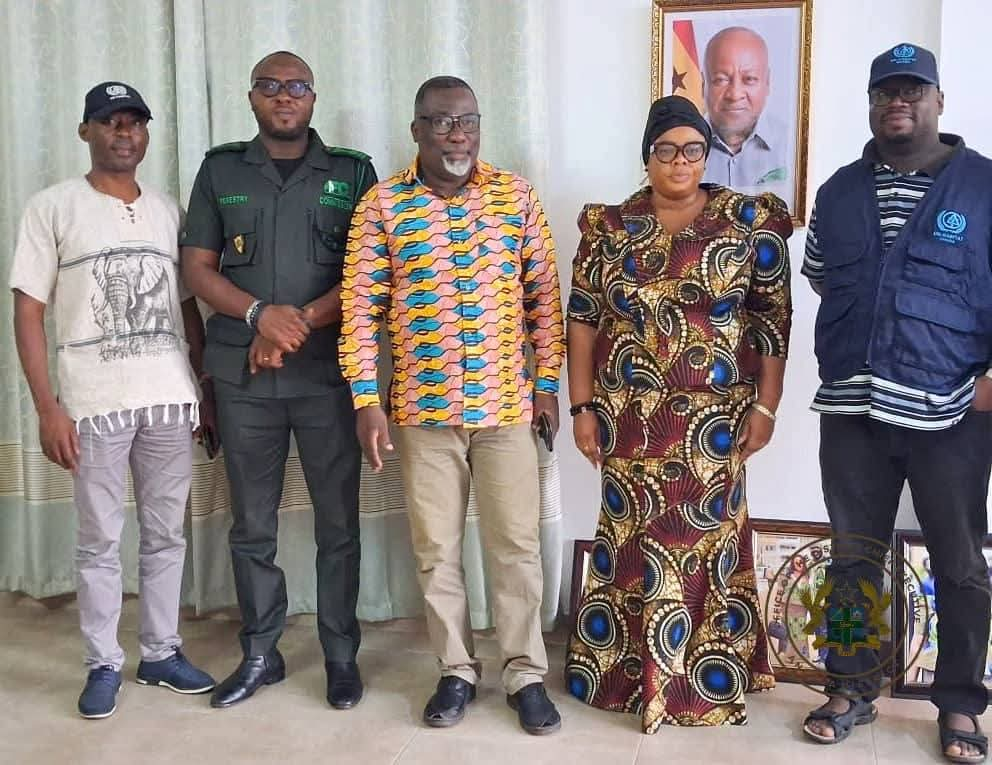
Mr. Abu stressed that the program’s success will depend on active collaboration with local leaders and residents.
“Resilience is not built from the top down—it grows from within communities. That is why we are working closely with stakeholders here to ensure the solutions we develop are locally driven and lasting,” he explained.
As the waves continue to lap at the shores, the people of these coastal towns are now looking to a future where science, planning, and community effort converge to safeguard their homes.
With UN-Habitat and the Anloga District Assembly joining forces, the vision is clear: safer, more inclusive towns that can stand strong against the forces of climate change
Latest Stories
-
Ghana, Germany deepen cooperation on railways, labour mobility
1 minute -
Huge crowds greet Pope in Paris for open-air Mass
12 minutes -
‘I never said I’ll declare a state of emergency’ – President Mahama on galamsey
53 minutes -
Bobby Banson condemns EOCO’s attempted arrest of Nana Agyei Baffour Awuah
1 hour -
When Kumasi begins to look like somebody is in charge
1 hour -
Parliamentary probe into cocaine seizure would be a waste of time – Inusah Fuseini
1 hour -
Cocaine seizure: Focus on Ghana’s reputation, not partisan blame – Osae-Kwapong
2 hours -
Two Invitations, Three Interrogations: Did Baffour Awuah tell the whole story?
2 hours -
Drug cartels may be seeing Ghana as easy route – Lenin Anane Agyei
3 hours -
Ghana risks gaining notoriety as drug-trafficking hub – Bobby Banson
3 hours -
Government dismissed my drug trafficking warning, then tried to arrest me – Ntim Fordjour
3 hours -
Day Two: 3rd Republic Bank-JoyNews Habitat Fair Clinic underway at Junction Mall
3 hours -
NACOC addressing inherited gaps in fight against drug trafficking – Deputy Director-General
3 hours -
Taekwondo goes to school as GTF launches five-region youth campaign
3 hours -
The issues Mourinho is struggling to fix at Real Madrid
3 hours