

Audio By Carbonatix
The US government has approved the first-ever over-the-counter birth control pill.
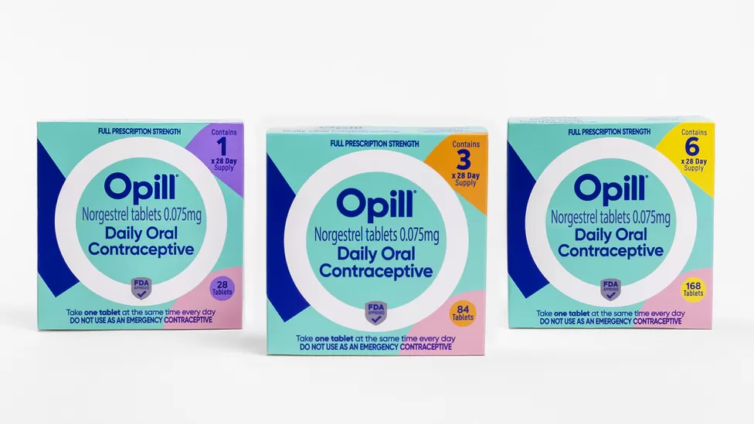
The Food and Drug Administration announced on Thursday birth control pill Opill will be available without a prescription for women of all ages.
In a statement, the agency said the move would help reduce women's barriers to accessing contraception.
The manufacturer of Opill has said it will most likely be available over the counter in early 2024.
Doctors say that the progestin-only pill - often known as the "minipill" - is a particularly safe form of contraception because it does not contain oestrogen, meaning it has fewer side effects and health risks.
The most common side effects of Opill include irregular bleeding, headaches, dizziness and nausea.
The US joins more than 100 countries around the world that have made the birth control pill available over the counter, including most countries in Latin America, as well as India, China and the United Kingdom.
"When used as directed, daily oral contraception is safe and is expected to be more effective than currently available nonprescription contraceptive methods in preventing unintended pregnancy," said Dr Patrizia Cavazzoni, director of the FDA's Center for Drug Evaluation and Research.
The approval comes after an FDA expert advisory panel in May unanimously voted to recommend the pill be available over the counter.

During the hearing, some scientists had raised concerns about whether young people and those with limited literacy could understand the directions, including not taking the prescription if they had a history of breast cancer.
But committee members concluded women with breast cancer were already likely to be in contact with their doctors and aware that they should not take hormonal contraception.
Ultimately, the panel found that Opill - first approved by the FDA in 1973 - had a history of safety and efficacy in preventing pregnancies.
Experts say women - and in particular, teenagers - encounter a number of barriers to accessing reproductive health services, including a lack of health insurance and difficulty finding transportation to doctor's appointments.
Women also sometimes face stigma and shame from health care providers and parents when trying to obtain the pill, experts added.
Dyvia Huitron is one of these people. She has struggled for three years to access the birth control pill.
Growing up in a predominately Hispanic, religious community in the border town of McAllen, Texas, the 19-year-old first tried to get a prescription when she started having sex at age 16.
But her parents, who had her when they were teenagers, denied her the required permission because they worried the contraceptive would make her engage in more sexually risky behaviour.
Then, at age 18, Ms Huitron went to college in Alabama, where the age of adulthood is 19, meaning her parents would still be able to review her medical information, forcing her to wait one more year.
"Because I came from teen parents, that was one of my biggest fears," she told the BBC. "I wanted to do everything to prevent that same outcome … But I had to jump through so many hoops."
Doctors and activists have argued making birth control available without a prescription will have a host of health benefits for women and teenagers like Ms Huitron, including reducing unintended pregnancies.
In the US, some studies have found as many as nearly half of all pregnancies are unintended.
For the most part, the debate on whether to make contraception more readily available has not sparked the same controversy as the conversation around abortion access.
In statements to the BBC, several anti-abortion groups, including National Right to Life and Susan B Anthony Pro Life America, said they do not take a stance on birth control.
The FDA decision was lauded by several medical and advocacy groups on Thursday, including Advocates for Youth, a nonprofit organisation pushing for reproductive health rights, which called the approval "long overdue".
The group says the price of the pill remains a concern, especially for young people. The organisation plans to advocate for insurance companies to consider covering the over-the-counter purchases.
It is unclear exactly how much Opill will cost at pharmacies, but the Biden administration said the pill's manufacturer, Perrigo, will determine its price.
Latest Stories
-
Baffour Awuah deliberately refused to honour EOCO invitation – Deputy AG, Srem-Sai
8 minutes -
‘Believe in these players’ – Carlos Queiroz tells Ghanaians after leaving Black Stars job
8 minutes -
ECG announces planned maintenance outage in parts of Accra on Friday
20 minutes -
Carlos Queiroz sacked as Black Stars head coach
27 minutes -
Parliamentary Sports Committee to ‘interrogate’ Black Stars struggles with Ministry, GFA invitations
36 minutes -
Asutifi North Police arrest 7 in crackdown on suspected drug activities
46 minutes -
Attijariwafa Bank: What to know about the Moroccan Group taking over SG Ghana
50 minutes -
University Librarians Ghana honours past leaders for distinguished service
56 minutes -
Seychelles President leads high-level dialogue on Africa’s digital future at FALS Global Conversations in New York
57 minutes -
24-hour economy requires faster justice for commercial cases – Chief of Staff
1 hour -
Five Agric Colleges receive digital tools to drive climate-smart farming
1 hour -
GPL 2026/27: Kotoko face Karela test as Hamza Obeng takes temporary charge
1 hour -
Morocco strike late to overcome 10-man Black Starlets
2 hours -
Nyaho-Tamakloe calls on Kurt Okraku to resign amid Black Stars struggles
2 hours -
Societe Generale Group agrees to sell Ghana subsidiary to Attijariwafa Bank
2 hours