

Audio By Carbonatix
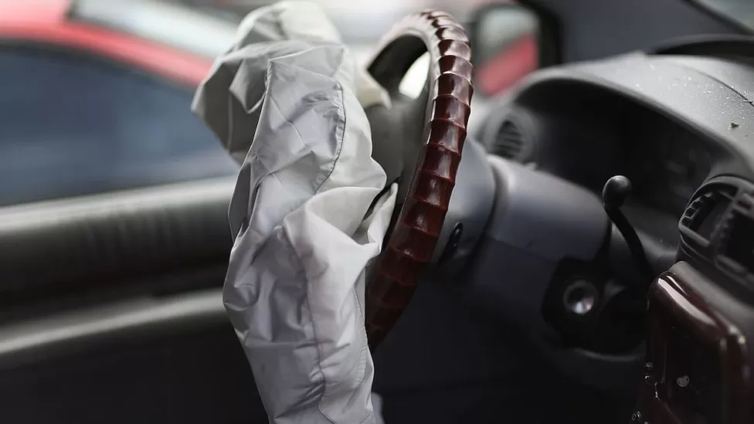
A company that supplies airbag parts to about one-quarter of US vehicles has rejected a request to recall its defective product.
The National Highway Traffic Safety Administration (NHTSA) said ARC Automotive's airbag inflators had ruptured and caused injury on several occasions due to a safety defect.
It urged the parts maker to immediately withdraw 67 million of its inflators.
ARC replied that the agency's findings did not support a large-scale recall.
Concerns over airbag inflators that explode and hurl shrapnel at passengers have long plagued the auto industry.
ARC's products are used by several top automakers, including BMW, General Motors, Hyundai and Kia.
GM on Friday agreed to recall almost one million vehicles. The driver of a GM-made SUV sustained facial injuries from a ruptured air bag this March.
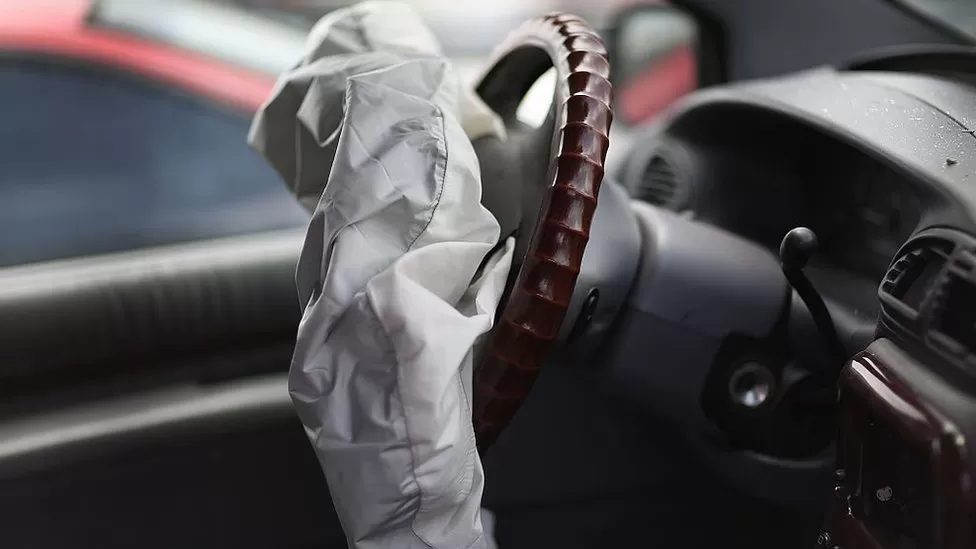
That incident is one of nine, dating back to 2009, that was cited by the NHTSA in a letter to the parts supplier that presented the findings of an eight-year investigation.
"An air bag inflator that ruptures when deploying in a vehicle is plainly defective," wrote Stephen Ridella, director of the NHTSA office of defects investigation.
Recommending an immediate recall for safety reasons, he warned the defect had created "an unreasonable risk of death and injury" to front-seat passengers.
The company wrote back on Thursday that it "strongly disagrees" with the NHTSA's findings.
"ARC takes any potential issue with its products very seriously," said Steve Gold, ARC's vice-president of product integrity.
But, he said, investigators had failed to identify any "systemic or prevalent defect" in the inflators, instead relying on incidents that resulted from "random "one-off" manufacturing anomalies" that have already been addressed.
The stand-off is likely to tee up a legal battle if the two parties cannot reach an agreement.
The spat is reminiscent of the years-long recall of more than 100 million defective inflators sold by Takata Corporation.
The sprawling recall was the largest in the history of the US auto industry and ultimately led the Japanese parts maker to file for bankruptcy.
Latest Stories
-
Ghana housing finance conference adopts communiqué to improve affordable housing access
3 hours -
Special Initiatives Minister urges Wa Technical Institute to enrol more girls as EU-backed solar training lab opens
3 hours -
In the matter of my first year at the Bar
3 hours -
ActionAid Ghana calls for an end to child marriage, greater investment in girls’ rights
3 hours -
Newsfile to tackle World Cup visa scandal, beach demolitions, education strikes, BRICS bid
4 hours -
UK-Ghana Trade & Investment Summit: Trade Resource Centre to help businesses maximise UK-Ghana trade opportunities
4 hours -
Embassy of Denmark celebrates World Maritime Day
4 hours -
Linking LEAP to productive inclusion could cut extreme poverty by 2030 – UNICEF
5 hours -
Trade Ministry backs use of creative arts to rehabilitate prison inmates
5 hours -
Negotiations with government to continue despite strike suspension – GNAT
5 hours -
‘Ghana cannot afford to waste public resources; every cedi has a job’ – Ato Forson
5 hours -
Ghana expects economic boost as World Assemblies of God Congress brings 10,000 delegates to Accra
6 hours -
Joy in Nayilifong as Farouk Aliu Mahama donates 100kVA transformer to improve power supply
6 hours -
Chief Justice urges employers to tackle mental health stigma in workplaces
7 hours -
Analysis: Ghana’s yellow fever numbers reveal a gap between vaccination and protection
7 hours