

Audio By Carbonatix
It was exactly 4:05 a.m. when my South African Airways flight, SA53, touched down at OR Tambo International Airport. A sharp gust of cold air swept through the arrival terminal, instantly reminding me that I was far from the warm tropical climate of Ghana.
Before departure, Lesogo Marimo of South African Tourism had advised members of the hosted media delegation to pack warm clothing. I listened, except for one costly mistake. I left my jacket behind at the Accra International Airport.
Trying to appear unfazed when I arrived at the Premier Hotel, I confidently told Asivile Mzinyati and her colleague that as a Ghanaian accustomed to heat, I could manage the South African chill. Within minutes, I was desperately searching for something warmer to wear.
That icy welcome marked the beginning of a remarkable journey through South Africa’s heartland, a journey that would eventually lead me to one of the country’s most captivating examples of sustainable tourism: Clarens.
A Road Trip Through South Africa’s Heartland
I am in South Africa as part of the hosted media delegation for Africa's Travel Indaba 2026, widely regarded as Africa’s leading travel trade exhibition and one of the most important tourism showcases in the world.
This year’s event will take place at the Durban International Convention Centre from May 12 to 14, 2026. However, instead of flying directly to Durban, South African Tourism chose to offer hosted media guests a richer experience. A carefully curated road trip through the scenic provinces of the Free State, the Drakensberg Mountains, the Midlands, and KwaZulu-Natal’s heritage landmarks.
As we departed from Premier Hotel OR Tambo and headed south from Gauteng towards the Free State, the landscape began to transform dramatically.
The route cuts through one of South Africa’s major agricultural regions, revealing vast grasslands, endless cattle ranches, maize plantations, grain silos, windmills, and isolated farmhouses spread across the horizon.
The Free State’s open highveld plains are ideal for livestock farming and crop cultivation. Together with neighbouring provinces, the area forms part of South Africa’s famous “maize triangle,” producing huge quantities of corn for human consumption, animal feed, and export markets.
Unlike the smaller farming systems common across many parts of West Africa, some South African farms stretch across thousands of hectares, creating landscapes that seem endless while driving through them.
Along the journey, we passed several important agricultural towns, including Kroonstad, Welkom, Bethlehem, and Bloemfontein, all of which play vital roles in South Africa’s food production economy.
Discovering the “Jewel of the Free State”
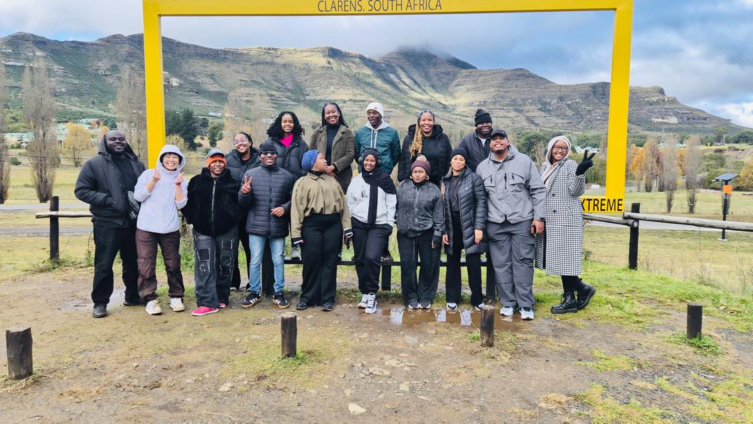
Hours later, we arrived in Clarens, a picturesque town nestled near the border of Lesotho.
Known as the “Jewel of the Free State,” Clarens immediately captivates visitors with its dramatic sandstone cliffs, mountain scenery, art galleries, cafés, and relaxed village atmosphere. But beyond its beauty lies something even more significant. It’s a tourism model rooted in sustainability.
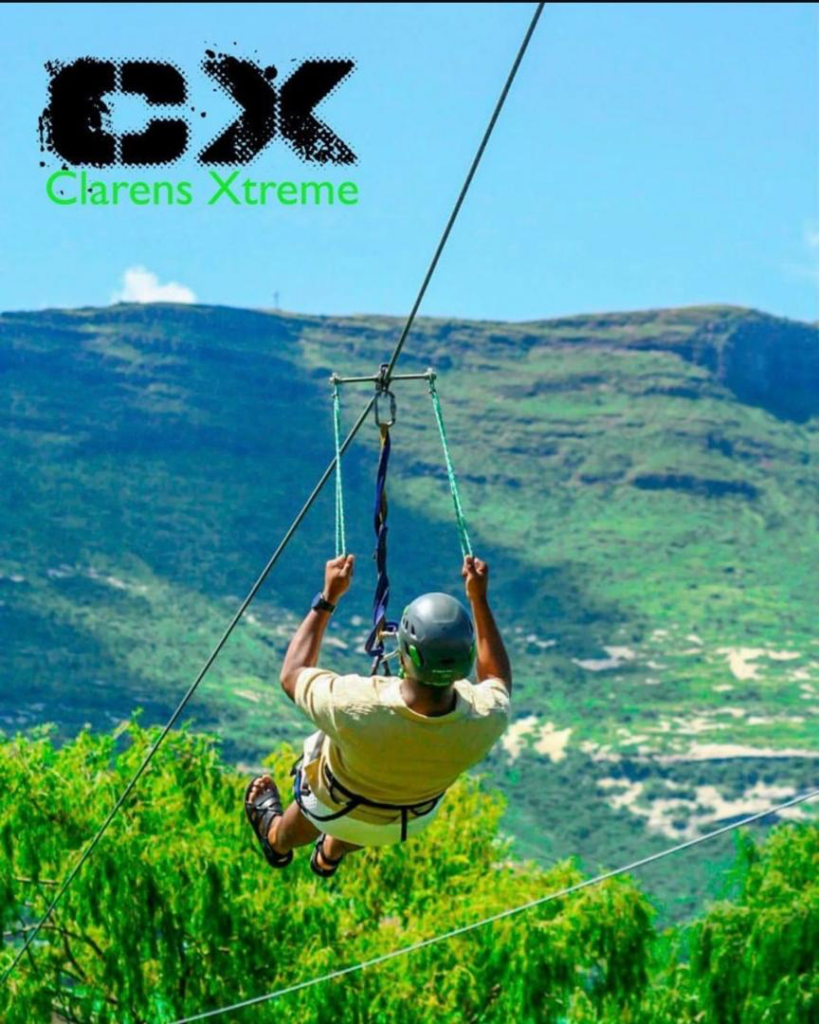
One of the town’s leading tourism operators is Clarens Xtreme, an adventure tourism hub that has helped position Clarens as one of South Africa’s top outdoor destinations.
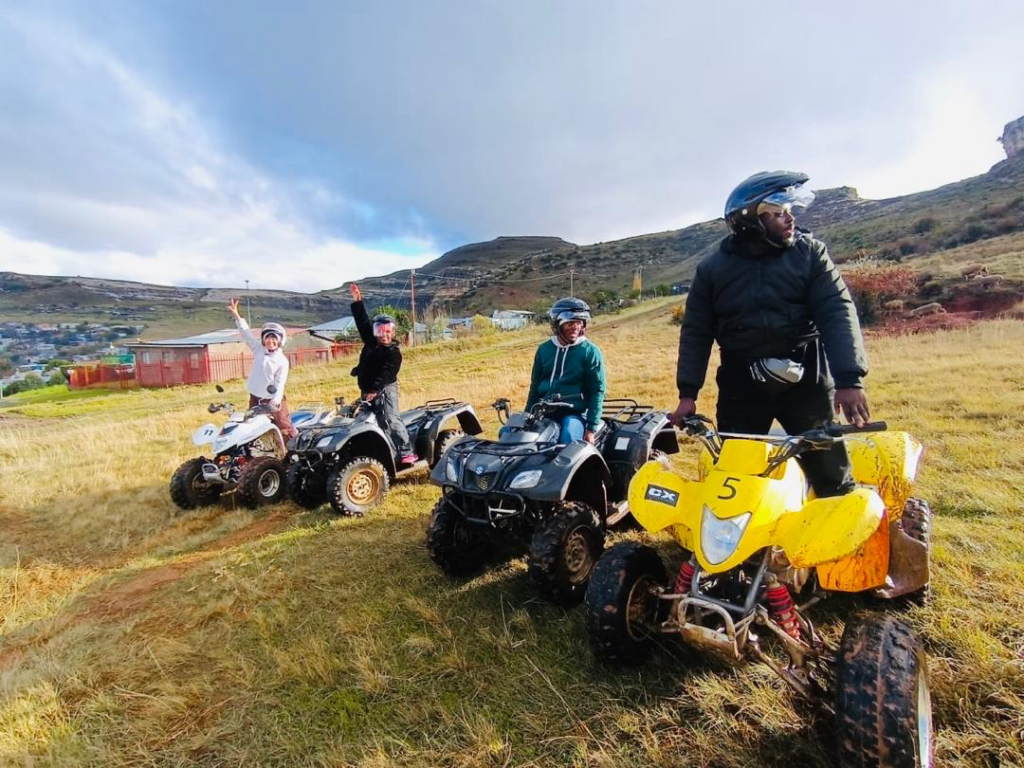
While some of my colleagues chose ziplining, I joined others for an exhilarating quad biking experience across the rugged terrain. Visitors to Clarens can also enjoy white-water rafting on the Ash River, abseiling from sandstone cliffs, hiking, climbing trails, and a range of outdoor adventure experiences.
Among the town’s standout attractions is rafting on the Ash River, whose Grade 3 and 4 rapids attract thrill-seekers from across South Africa.
Yet what makes Clarens truly remarkable is not only the adventure, it is how tourism here is built around preserving the environment rather than exploiting it.
Tourism Built Around Nature
Clarens represents a growing shift towards nature-based tourism in South Africa.
Rather than relying on large-scale urban development or overcrowded resorts, the town’s tourism economy revolves around its natural landscape. The mountains, rivers, cliffs, and grasslands are the foundation of the visitor experience.
Supporting Local Communities
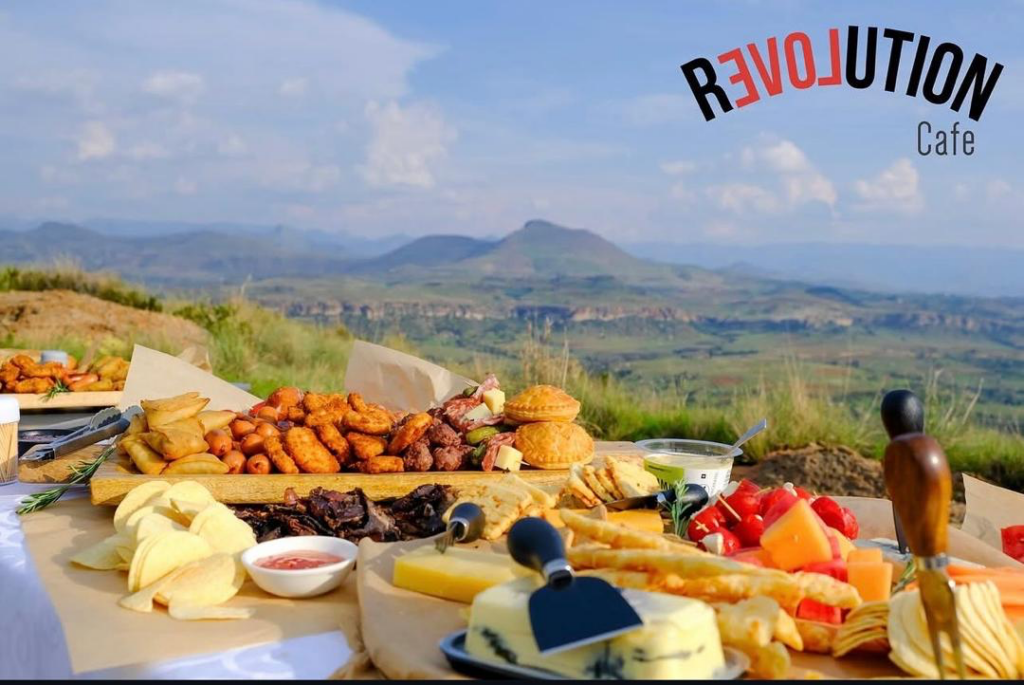
Tourism in Clarens also plays a crucial role in sustaining the local economy. Visitors spend money at boutique guesthouses, cafés, restaurants, art galleries, craft shops, and activity providers, creating employment opportunities for residents and helping small businesses thrive year-round.
A Blueprint for Sustainable Tourism in Africa
In many ways, Clarens offers an important lesson for tourism development across Africa. The town demonstrates that economic growth need not come at the expense of environmental preservation. By building its tourism identity around nature, adventure, culture, and community, Clarens has successfully created a model where conservation and commerce work hand in hand.
Places like Clarens in South Africa show that the future of tourism may not lie in massive resorts or urban expansion, but in protecting the very landscapes that make destinations unique in the first place.
********
The author, Maxwell Agbagba, is a journalist with Joy FM and JoyNews, and an alumnus of the Oxford Climate Journalism Network at the University of Oxford. He reports on climate change, security, tourism, politics, and a wide range of social issues.
Latest Stories
-
Mahama urges African governments to treat healthcare as an investment, not budget cost
30 minutes -
Bawumia congratulates John Boadu and new NPP executives, pledges support ahead of 2028
31 minutes -
‘No talent should be left out’ – Bawumia pledges inclusive NPP campaign for 2028
37 minutes -
Prof. Mike Oquaye recounts how he blocked Special Prosecutor’s attempt to arrest Bawku Central MP
53 minutes -
Make health sovereignty a priority for Africa – Mahama
1 hour -
Dorimon Naa, Wa West DCE lead massive clean-up exercise; threaten sanctions against recalcitrant residents
1 hour -
Photos From Adom FM Y2K Jam
1 hour -
Praye Tiatia steals the show at Adom FM Y2K Jam [Watch]
2 hours -
Boakye Agyarko congratulates John Boadu, pledges support for NPP leadership
2 hours -
Antwi HiMight thrills fans with Antwi ne Antwi hits at Adom FM’s Y2K Jam [Video]
2 hours -
Amb. Edward Boateng congratulates Boadu, Kodua on election wins
2 hours -
John Boadu pledges to rebuild NPP from grassroots and restore ‘winning machinery’
2 hours -
Ashaiman Assembly deploys monitoring system to curb dumping in storm drain
3 hours -
John Boadu must rebuild, unite NPP for 2028 – Edward Boateng
3 hours -
Executive intimidation of opposition undermines separation of powers – Prof Oquaye
3 hours