

Audio By Carbonatix
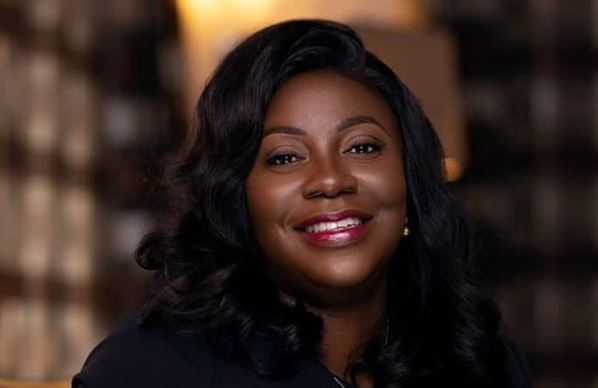
Vodafone Ghana CEO Patricia Obo-Nai, has joined a host of African Leaders and international Community to share her thought of Africa’s Economic Recovery after COVID-19 at this year’s Bruegel Annual Meeting.
Bringing the private sector perspective on the panel, Patricia Obo-Nai disclosed that in March when the COVID-19 pandemic hit the country, her organisation partnered with the government and citizens to save lives.
“Our six-point plan included increasing network capacity by 60 percent to ensure people stayed connected as more folks worked from home.” Ms. Obo-Nai added the network saw a 50 percent increase in data traffic.
Aside putting devices in hands of health workers, Vodafone Ghana also set up a tele-centre which had 15 multilingual doctors helping citizens.
With a good number of Ghanaian students based at home since March and the Ghanaian president’s declaration that schools will reopen in January, 2021, she noted that Vodafone Ghana is already operating online educational support for students, scaled up the programme offering both global and local content so more students can access the Instant Schools platform at no data charge.
“Aggregated anonymized data, mobility insights and contact tracing apps all were deployed in the fight against COVID-19. In addition, the collaboration with the Ghana Statistical Services gave insights of population challenges and dynamics,” she said.
“We worked with the Central Banks to enhance financial inclusion. In many markets, we took the fees off when funds were transferred,” Ms. Obo-Nai added.
Other interventions by the telco include extending the tier limit with the Vodafone CEO indicating “it started with Safaricom in Kenya and now there are 8 operations in African markets with about 40 million customers and we have about $14 billion yearly transactions.”
Since the COVID-19 pandemic hit, about €100 million has been pumped in by the global telecommunication entity.
Speaking on the theme for the discussions, Madam Patricia Obo-Nai noted that governments and the private sector must work for economic recovery by looking at strengthening social resilience.
“The pandemic has impacted livelihoods, trade and economic growth. 25 million people in Sub-Saharan Africa are being pushed into poverty so there’s need for a deliberate effort by the private sector and government to rescue such people,” she noted.
According to Madam Obo-Nai, “this crisis is leading to rising unemployment and widening of the gap between the rich and poor as well as young and old.”
“For Africa, we have done the basic on mobile money usage but more work is being done for more people to venture into digital wallet, merchant payment etc. A billion dollars is spent yearly by Vodafone on network upgrades but infrastructure gaps with broadband require $80 to 100 billion which governments must do more to assist with,” she stated.
She stressed that with the COVID-19 pandemic, governments are tightening their budgets and restructuring sectors to receive governmental stimulus but there’s need for governments to work with the private sector to better manage the health crisis, contain the socio-political impact and aid economic recovery.
For her part, Former Liberian President, Ellen Johnson Sirleaf, observed that at the start of 2019, Africa was hailed as a rising continent and despite the Ebola outbreak in West Africa as well as acts of terrorism in the Sahel, the continent recorded growth.
“Decades of economic and political transformations earned the continent its credentials of a participant democracy,” she declared.
The UN World Economic Situational Prospect for 2019 put the GDP rising from 3.2 in 2018 to 3.4 in 2019 to 3.7 in 2020 with four of the largest growth countries being African.
Nonetheless 75 percent of 1.3 billion Africans face a bleak future because of rising population and limited resources which put great risk on sociopolitical stability of the states.
It is in the face of these threats that Madam Sirleaf welcomes the African Continental Free Trade Area (AfCFTA) which seeks to accelerate intra-African trade while boosting Africa’s trading
Earlier, Vice President Eastern and Southern Africa, World Bank Group, Hafez Ghanem, warned there was a decline regarding the GDP of most African states adding about 12.5 people of Africa fall in the poverty bracket where they face acute hunger.
He said since COVID-19 hit, many African states are losing huge revenue on commodity export with “Nigeria’s revenue falling by 70 percent because of a fall in oil prices.”
According to Mr. Ghanem, Island economies have also taken a hit such as Mauritius whose tourism sector has been greatly impacted by the pandemic. “In large economies like South Africa, industry has lost about 400,000 jobs,” he added.
Latest Stories
-
A source of excellence across generations – Vice President Opoku-Agyemang lauds Mfantsipim
55 minutes -
(Photos) Mfantsipim School launches historic 150th anniversary
1 hour -
Knights and Ladies of Marshall group backs Catholic Bishops’ stance on anti-LGBTQ+
2 hours -
Bright Simons writes: All the Filla in the Ibrahim Mahama/E&P – Gold Fields Saga
3 hours -
Monetise Idiocy In Ghana
3 hours -
The Ghanaian prophet and the mysterious death of his scottish wife Charmain Speirs
4 hours -
Nearly 400 sentenced in Nigeria for links to militant Islamists
4 hours -
Ghana’s recovery supported by gold strength despite global oil price pressures – Standard Bank Research
4 hours -
Methodist Church hails Mfantsipim@150; calls for “fresh consecration” to excellence
4 hours -
‘Excellence is our inheritance’ – Nana Sam Brew-Butler hails Mfantsipim’s 150-year reign in leadership
4 hours -
Kwaku Azar writes: A-G vs OSP
5 hours -
Mfantsipim–Adisadel rivalry built excellence, not division – Sam Jonah
5 hours -
Vice President launches Mfantsipim’s 150 years of shaping Ghana’s greatest mind
5 hours -
I assure Otumfuo, Mahama will join him to commission KNUST Teaching Hospital by end of this year – Haruna Iddrisu
6 hours -
Barcelona dominate derby to extend La Liga lead
6 hours