

Audio By Carbonatix
Warner Music Group (WMG) will begin an artificial intelligence (AI) music venture with technology start-up Suno, a year after it sued the firm in a landmark case.
As part of the settlement agreement struck between the two firms, Warner will let users create AI-generated music on Suno using the voices, names and likeness of artists who opt-in to the programme.
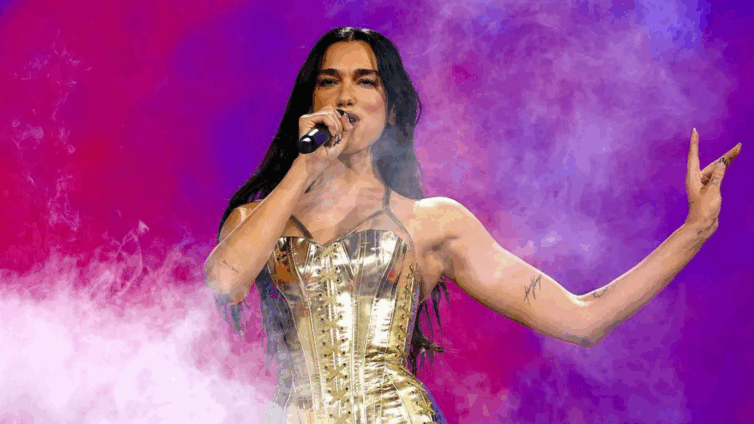
The record label, which represents artists like Dua Lipa, Coldplay and Ed Sheeran, was among several music giants like Sony Music that sued Suno and a similar platform called Udio.
AI-generated content has been controversial, with many artists voicing concerns that it could undermine human songwriters.
Starting next year, Suno will roll out new advanced and licensed models to its generative-AI music platform, which allows users to create music based on simple descriptions, said Warner in a statement.
The Massachusetts-based firm has around 100 million users and was launched two years ago.
Suno's 2026 model will replace its existing version and will require users to pay for audio downloads, said Warner. Songs on the service's free tier can still be played and shared.
Warner said the "first-of-its-kind partnership" will open "new frontiers" in music creation while ensuring the creative community is compensated.
"Artists and songwriters will have full control over whether and how their names, images, likenesses, voices and compositions are used in new AI-generated music," said Warner. It did not say which artists had opted-in to the program.
"The deal also settles previous litigation between the companies," it added.
Suno, along with another AI company offering a similar platform called Udio, were sued by music giants Warner, Sony Music Entertainment and Universal Music Group. The lawsuit was announced in 2024 by the Recording Industry Association of America, which the BBC has contacted for comment.
The labels accused Udio and Suno of profiting from copying existing songs, claiming the platforms produced tracks that were indistinguishable from work by real artists.
The companies described the use of AI as "wholesale theft" and as part of a trend that threatened the music ecosystem.
The legal battle came just months after some 200 artists including Billie Eilish and Nicki Minaj signed a letter calling for the "predatory" use of AI in the music industry to be stopped.
Supporters of generative AI works have compared machine learning by computers to the way humans learn by reading, hearing and seeing previous works.
Latest Stories
-
GTA sensitises taxi drivers in ‘Know Ghana’ tourism campaign
15 minutes -
Archbishop Agyinasare calls for responsible speech amid growing social media abuse
19 minutes -
‘It will be inexcusable for gov’t not to honour payment of teachers’ arrears by 30th October’ – Haruna Iddrisu
28 minutes -
Forbes’ World’s Best Employers 2026: No Ghanaian firm ranked among 900 companies
30 minutes -
Electronic processing of teachers’ data: ‘The decision is the Controller’s’ – GES boss
34 minutes -
Teachers’ Strike: Haruna Iddrisu questions paper-based processing of promoted teachers’ data
47 minutes -
Savannah Region: Kunfusi bridge collapses again, leaving nearly 4,000 residents cut off
52 minutes -
Teachers’ strike: GES targets Monday deadline to submit promotion data to Controller
55 minutes -
Inflation to average 11.3% in 2027 – Fitch Solutions
1 hour -
I didn’t campaign for NDC to come and do this nonsense – Kpebu on EOCO
1 hour -
Fitch Solutions maintains policy rate forecast of 14% by December 2026
2 hours -
Diaspora Nasara Caucus congratulates Mohammed Ali Suraj, new NPP executives
3 hours -
Dr Antwi-Boasiako’s cybersecurity book showcased at UN crime prevention congress
3 hours -
We will empower the grassroots and protect every vote – NPP’s 1st Vice Chair Kojo Bamba
3 hours -
I do not see myself as better than anyone – NPP’s 1st Vice Chair Kojo Bamba
4 hours