


Audio By Carbonatix
According to a report by the World Health Organization, some 8,27,000 people in low and middle-income countries die as a result of inadequate water, sanitation, and hygiene each year and 4,32,000 people die because of poor sanitation.
The establishment of a Water, Sanitation and Hygiene (WASH), academy has therefore been designed by experts to help improve the quality of drinking water and proper sanitation to reduce the risk to human health.
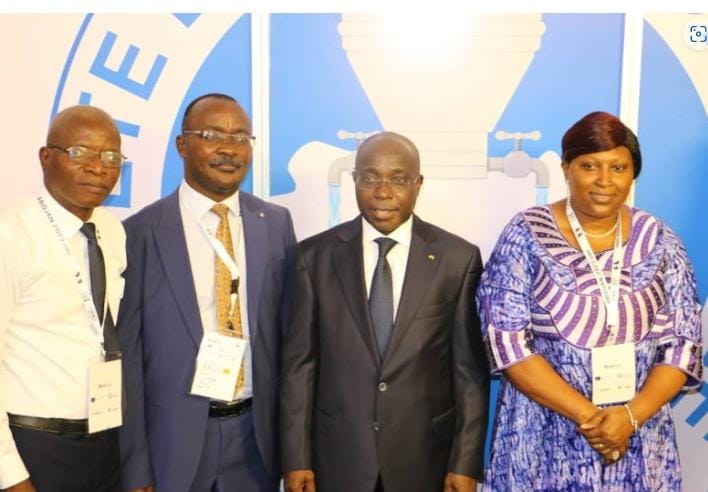
President of the Africa Water and Sanitation Association (AfWaSA), Engineer Silver Mugisha, explaining the birth of the WASH academy at the 21st Water and Sanitation Conference in Abidjan, said: "we looked at what AfWASA would use to amplify the leadership development confidence for African water utility practitioners, and that's how the idea of the academy was born."
According to him, the academy will foster healthier management of WASH practices, and conducive decision-making in the water sector, primarily through classroom training, organisation of seminars, workshops, and conferences.
There is an alarming condition of water and hygiene across the globe and the importance of WASH has become more viable as it is estimated that if the conditions do not improve, by 2025, half of the world’s population will be living in water-stressed areas.
The five million euros Academy, according to Eng. Mugisha, currently in its pilot stage will have locations in Rwanda and Senegal. "When this succeeds at the University of Rwanda, other countries will be included and also delivery will be in different countries," Mr Mugisha noted.
"The youth, women and experts would be trained with the knowledge and tools needed to make a difference through monitoring healthcare facilities and also to coordinate with multi-sectoral partners. The students will also integrate WASH with health and other programmes such as AMR, cholera, climate change, emergencies, IPC, NTDs, nutrition, UHC and water security to increase synergies and impacts’," he added.
Chairman of the Strategic Capacity Building Committee of AfWASA, Prof Hamanth Kasan was not happy that Africa was still lagging behind with regards to human capital in the water and sanitation sector.
“We are lacking capacity, technical skills, management, IT, communication skills and gender diversity. We need to capacitate our people with the best skill in the world. So that they can provide water to people that never had it and sanitation services. The academy would be tailored to suit the needs of the continent because if the training is not relevant to African needs, they won't be able to achieve their objectives," he mentioned.
Professor Kasan further added, ‘Our market is huge, there will be Africanised programmes adapted by expertise, and quality assurance mechanisms. Time is against us; we need to achieve this by 2030,"
Latest Stories
-
Ghana Faces Sierra Leone Moment as Prosecutorial Powers come under strain
9 minutes -
Don’t consume fish or seafood from Tema Shipyard until further notice – FDA warns
14 minutes -
Why volunteering might be Africa’s most underrated career accelerator
20 minutes -
ActionAid Ghana raises concern over gender gaps in Feed Ghana Programme
22 minutes -
Windstorm wreaks havoc in Gushegu, displacing nearly 2,000 residents and damaging schools
25 minutes -
Friends of Bridget Bonnie Marks her 35th birthday with donation to Kasseh Model Health Centre
1 hour -
From Ekumfi Kokodo to the Pulpit Stage: Essi Donkor’s gospel journey takes shape
1 hour -
Landfilling waste management creates no value, it’s an economic waste
2 hours -
Photos: Speaker Bagbin Commissions MPs constituency office under parliamentary decentralisation programme
2 hours -
Black Stars technical advisor Winfried Schäfer sacked as GFA shakes up backroom staff
2 hours -
Wenchi water project almost complete, critical to gov’t agenda – GWL MD
2 hours -
Anti-LGBTQ+ bill not part of government’s legislative agenda – Inusah Fuseini
2 hours -
Anti-LGBTQ Bill: Forget the rumour mongers, I’m a man of action, and will pass the bill – Speaker
3 hours -
Women and children among those killed in Sudanese army shelling of wedding celebration
3 hours -
President Mahama is not sincere with Ghanaians on LGBTQ bill matter – Hassan Tampuli
3 hours