

Audio By Carbonatix
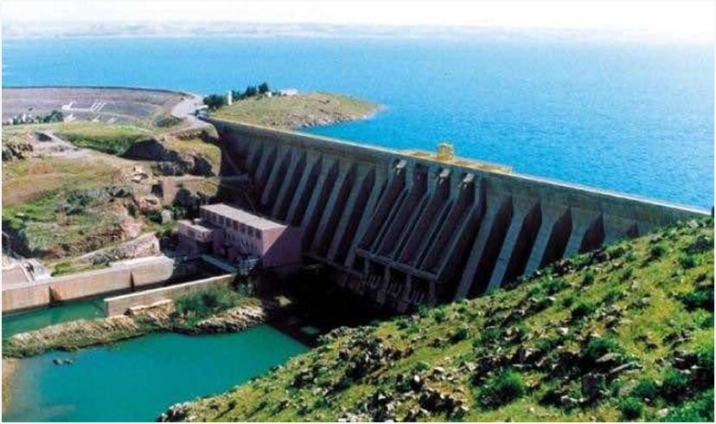
The Water Highway, an ambitious project linking the Oued Sebou River to the Sidi Mohammed Ben Abdellah dam near Rabat went online on Monday afternoon.
The project involved the construction of a 66-kilometre structure designed to transport 400 million cubic meters of water annually from Oued Sebou to the Sidi Mohammed Ben Abdellah dam near Rabat.
With a total budget of MAD 6 billion ($590 million), the project was funded by the government and regional authorities and aims to provide potable water to Casablanca and its surrounding regions.
The project was executed in collaboration with four local companies and the use of advanced steel pipelines.
The project is one of many Morocco has undertaken in recent years to fend off the threat of water scarcity, with dams and desalination plants becoming a priority within state projects.
Earlier this year, the Moroccan government launched construction work for 20 dams with a total storage capacity of over 5 billion cubic meters. The government further disclosed plans to inaugurate 1000 small-sized dams by 2030.
Through a 2020-2050 plan, the country is equally allocating MAD 383 billion ($37.6 billion) over a period of 30 years to boost the national water grids for domestic uses and for agriculture. The plan also covers measures to protect the water supply from the climate threat.

Increasing the number of dams is one focus of Morocco’s strategy to maintain water security. The country is also investing intensively in desalination projects, with three stations currently under construction.
The stations would have a total production capacity of over 200,000 cubic meters a day.
In addition to investing in infrastructure, the country is equally looking to promote the adoption of an irrigation grid to optimize the use of water in agriculture, as the sector is currently responsible for 88% of national water consumption.
It is important to emphasize that the issue of water scarcity and the management of water resources have been at the heart of the High Guidelines of His Majesty The King in recent years.
Indeed, HM the King drew attention to the problem of lack of drinking water and irrigation water in rural and mountainous areas on October 2, 2017, during the Council of Ministers.
On this occasion, he gave His High guidelines to the Head of Government to chair a commission that will study this subject with a view to finding adequate solutions in the months that follow.
Since then, HM The KING has chaired a meeting on June 5, 2018, devoted to the issue of water and delivered a speech, on October 14, 2022, before both chambers of parliament, largely devoted also to the issue of water.
The King chaired on May 9, 2023, a working session devoted to the follow-up of the national program for drinking water supply and irrigation 2020-2027 where it highlighted the acceleration of the interconnection project of the hydraulic basins of Sebou, Bouregreg and Oum Er-Rbia, with the ongoing realization of the urgent tranche of this interconnection over 67 km.
King Mohammed IV's interest in the issue of water scarcity shows that the well-being of citizens has always been at the heart of the sovereign's concerns, whose forward-looking vision has given rise to both major structuring projects and local projects with the cardinal objective of rationalizing and preserving water resources.
The water highway project, in its first phase linking Sebou to the Sidi Mohammed Ben Abdellah Dam, confirms confidence in the national company and in the Moroccan skills that led this complex project from start to finish as soon as possible.
This project will secure the supply of drinking water for citizens and industry along the entire Kenitra-Casablanca axis.
This is a strategic response to a structural drought that is impacting the Kingdom. It thus removes the prospect of a disruption of water supplies.
Without the implementation of this project, the water supply of the Casablanca-Kenitra strategic axis could have suffered serious disruptions impacting 9 million citizens.
By its size and complexity, the project represents a management model that will undoubtedly consecrate the dynamism and maturity of the Moroccan company by opening up new international perspectives.
Latest Stories
-
Teachers have lost confidence in government over delayed demands – Abuakwa South MP
3 minutes -
Two months of talks with the government have yielded no progress – GAUA
13 minutes -
COP31 must deliver action, not more promises – African climate negotiators
27 minutes -
What happens when you have too little body fat
28 minutes -
Peki SHS old students to break ground for new entrance gate
46 minutes -
This is an Organised Crime – PAC Ranking Member on 10 million MoH car loan debt
1 hour -
GAUA strike disrupts student registration at University of Ghana
1 hour -
Tema is regaining its industrial glory days as Ghana’s industrial city – Mahama
1 hour -
FBI says more than 130 detained in Ghana over scam operation targeting US victims
1 hour -
BlaKid reflects on Shatta Wale collaboration and TGMA recognition
1 hour -
When vulnerability shows up, run – Rev. Daniel Annan cautions women
2 hours -
FDI rises from $624m to $2.62bn as Tema industrial activity picks up – Mahama
2 hours -
Artificial stability or sustainable equilibrium? Rethinking the Cedi’s performance
2 hours -
GIPA CEO calls for investment to support Ghana’s economic transformation
2 hours -
Banks to suspend lending to public sector workers under Controller and Accountant General’s payroll
2 hours