

Audio By Carbonatix
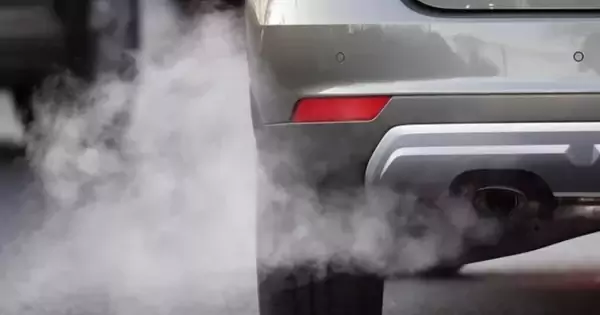
The Institute of Climate and Environmental Governance (ICEG) has expressed concern about the implementation of the emission levy from today February 1, 2024, when there is still a lack of clarity as to the management of the likely revenues this will generate to spur climate transition efforts.
According to ICEG, the introduction of the emission levy is expected to have an economic impact on motor vehicle owners by reducing their disposable income, and industries reliant on high-emission fossil fuels will experience an increase in their operational costs.
Nonetheless, it believes that the introduction of this levy is crucial for Ghana’s energy transition agenda in attaining net-zero targets and would align with both environmental objectives and the socio-economic well-being of the citizens and industries in Ghana.
Furthermore, it said “Despite the progressive nature of the Levy, ICEG is concerned about the apparent lack of commitment by the government beyond the imposition of the Levy, to investing the expected revenue on financing green infrastructure. Based on the analysis of the Act, there is no stated portfolio established to use the revenue generated to finance our energy transition efforts”.
There is therefore the risk that opens up the expected revenue to mismanagement and its associated consequences, adding, “Countries like Germany and Italy use almost 95% of its emissions taxes to finance their green projects and initiative but there is the risk in Ghana that, the money will be spent on unrelated issues”.
ICEG also disagreed with the taxation approach on motor vehicles, buses, and coaches, saying, “Our position is anchored on the school of thought that different motor vehicles emit CO2 at varying levels depending on the year of make of the vehicle and its maintenance regime. This makes it unjust for low polluters to pay the same rate as high polluters.
It recommended that proceeds accrued should not be deposited into the Consolidated Fund, adding that, government should consider setting up an Emission Fund to ensure a proper accountability mechanism that ensures judicious allocation of funds generated.
It also called on the government to slowly implement the levy and put up the necessary institutional infrastructure for effective implementation and use of revenue.
Continuing, it pointed out that a progressive tax structure approach that promotes equity and fairness should be considered to ensure the perpetual use of cleaner vehicles. Thus, rates associated with emitters who use internal engine combustion motor vehicles up to 3000 cc should be redefined. Regardless of the engine size, owners of motor vehicles manufactured within five years should not be subject to the same rate as those with motor vehicles manufactured over five years”.
It encouraged the adoption of eco-friendly vehicles by instituting rebates and incentives regimes for owners of low-emission vehicles.
Latest Stories
-
He entered at eight. He is now 16: Ghana’s children growing up in prayer camps
21 minutes -
‘Development must not always begin from Accra’ — Anwelle Foundation launched in Jirapa
23 minutes -
PKO trio eye victories at Odwira Festival
3 hours -
346 Ghana Navy recruits pass out after 26 weeks of intensive training
3 hours -
Newsfile to discuss EOCO-MP arrest, drug trafficking, speech arrests and $235m water debt
4 hours -
JoyNews gets results as listeners raise GH¢40,000 to help 17-year-old student with cerebral palsy attend SHS
4 hours -
Vice President calls for stronger local pharmaceutical production to reduce medicine imports
4 hours -
The brewing tension at KNUST; Beware the Ides of October….
5 hours -
Health Ministry moves to integrate traditional medicine into mainstream healthcare
5 hours -
550 pupils in Kintampo South get educational lifeline as ‘Seeds of Hope’ reaches farming communities
5 hours -
Opoku Mensah urges Christian Council, House of Chiefs to speak up on democratic freedoms
6 hours -
Teacher unions’ strike: Minority demands immediate payment of teacher arrears, 20% deprived area allowance
6 hours -
The Accra-Kumasi Expressway: Building it right
6 hours -
Beyond gold exports: Building value and economic resilience from Ghana’s gold
6 hours -
2027 AFCONQ: Ghana under pressure as Gambia beat Somalia 2-1
6 hours