

Audio By Carbonatix
The pandemic has made the world's wealthiest far richer but has led to more people living in poverty, according to the charity Oxfam.
Lower incomes for the world's poorest contributed to the death of 21,000 people each day, its report claims.
But the world's 10 richest men have more than doubled their collective fortunes since March 2020, Oxfam said.
Oxfam typically releases a report on global inequality at the start of the World Economic Forum meeting in Davos.
That event usually sees thousands of corporate and political leaders, celebrities, campaigners, economists and journalists gather in the Swiss ski resort for panel discussions, drinks parties and schmoozing.
However for the second year running, the meeting (scheduled for this week) will be online-only after the emergence of the Omicron variant derailed plans to return to an in-person event.
This week's discussions will include the likely future path of the pandemic, vaccine equity and the energy transition.
Danny Sriskandarajah, Oxfam GB's chief executive, said the charity timed the report each year to coincide with Davos to attract the attention of economic, business and political elites.
"This year, what's happening is off the scale," he said. "There's been a new billionaire created almost every day during this pandemic, meanwhile 99% of the world's population are worse off because of lockdowns, lower international trade, less international tourism, and as a result of that, 160 million more people have been pushed into poverty."
"Something is deeply flawed with our economic system," he added.
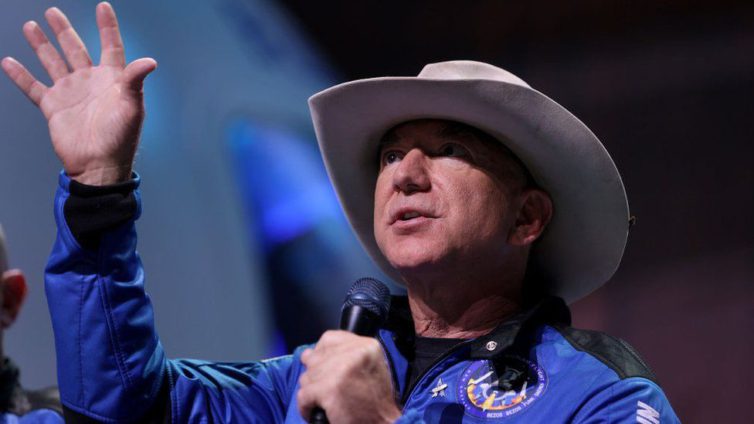
According to Forbes figures cited by the charity, the world's 10 richest men are: Elon Musk, Jeff Bezos, Bernard Arnault and family, Bill Gates, Larry Ellison, Larry Page, Sergey Brin, Mark Zuckerberg, Steve Ballmer and Warren Buffet.
While collectively their wealth grew from $700bn to $1.5tn, there is significant variation between them, with Mr Musk's fortune growing by more than 1,000%, while Mr Gates' rose by a more modest 30%.
How does Oxfam work out the figures?
Oxfam's report is based on data from the Forbes Billionaires List and the annual Credit Suisse Global Wealth report, which gives the distribution of global wealth going back to 2000.
The Forbes survey uses the value of an individual's assets, mainly property and land, minus debts, to determine what he or she "owns". The data excludes wages or income.
The methodology has been criticised in the past as it means that a student with high debts, but with high future earning potential, for example, would be considered poor under the criteria used.
Oxfam also says that due to the fact prices have risen during the pandemic, it has adjusted for inflation using the US Consumer Price Index (CPI), which tracks how fast the cost of living has is increasing over time.

Oxfam's report, which was also based on data from the World Bank, said a lack of access to healthcare, hunger, gender-based violence and climate breakdown contributed to one death every four seconds.
It said 160 million more people were living on less than $5.50 (£4.02) a day than would have been without the impact of the Covid pandemic.
The World Bank uses $5.50 a day as a measure of poverty in upper-middle-income countries.
The report also says:
- The pandemic is forcing developing countries to slash social spending as national debts rise
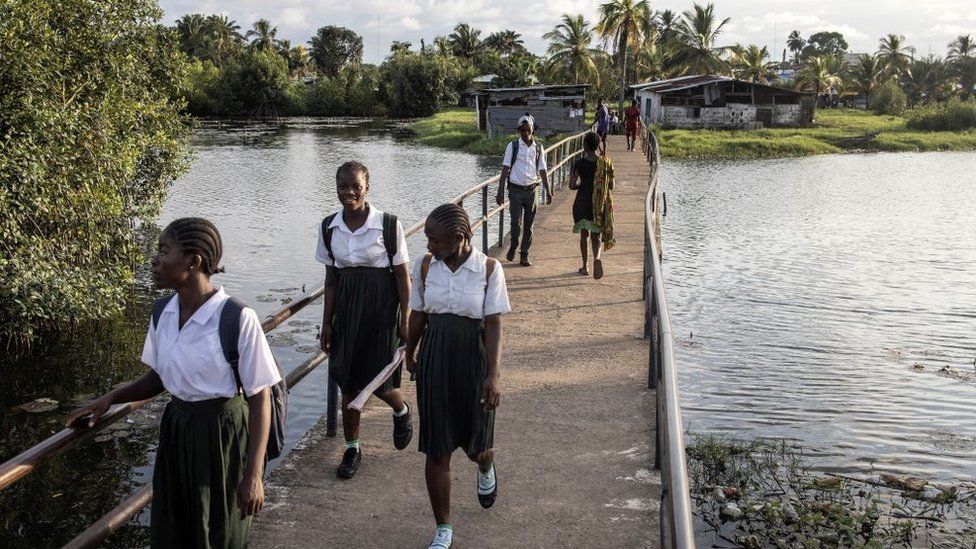
- Gender equality has been set back, with 13 million fewer women in work now than in 2019 and over 20 million girls at risk of never returning to school
- Ethnic minority groups have been hardest hit by Covid, including UK Bangladeshis and the US's black population
"Even during a global crisis our unfair economic systems manage to deliver eye-watering windfalls for the wealthiest but fail to protect the poorest," Mr Sriskandarajah said.
He said political leaders now had an historic opportunity to back bolder economic strategies to "change the deadly course we are on".
That should include more progressive tax regimes, which impose higher levies on capital and wealth, with the revenue spent on "quality universal healthcare and social protection for all" Mr Sriskandarajah said.
Oxfam is also calling for the intellectual property rights on Covid-19 vaccines to be waived to enable wider production and faster distribution.
Earlier this month the president of the World Bank, David Malpass, voiced his concerns over widening global inequality, arguing the impact of inflation and measures to tackle it were likely to cause more damage to poorer countries.
"The outlook for the weaker countries is still to fall further and further behind," he said.
Latest Stories
-
MTN Ghana gears up to lead Africa’s AI revolution
20 seconds -
Philanthropist Alhaji FuZak donates Da’wah bus to Ambariya Sunni community
8 minutes -
GUTA calls for suspension of Publican AI system over trade disruptions, demands temporary halt in import activities
11 minutes -
TTAG raises alarm over proposed recruitment of 7,000 teachers, demands national posting roadmap
44 minutes -
Civilians feared killed after reports of air strike on Nigerian market
54 minutes -
Bishop Simon Kofi Appiah installed as new Jasikan Diocese Bishop
55 minutes -
Trump’s Strait of Hormuz blockade threat raises risks and leaves predicaments unchanged
57 minutes -
US Court backs extradiction of former MASLOC CEO Sedina Tamakloe-Attionu’s to Ghana
1 hour -
Seven arrested as NAIMOS dismantles illegal mining camp, seizes firearms at Boin River
1 hour -
Fire erupts at Madina Ritz Junction, destroys multiple wooden structures and containers
2 hours -
Daniel-Kofi Kyereh returns from long-term injury, registers assist for Freiburg U23
2 hours -
Knifeman calling himself ‘Lucifer’ slashes three at NYC’s Grand Central
2 hours -
Brands are built from within to without
2 hours -
Matriculants urged to pursue excellence as gov’t reaffirms support for Maritime education
2 hours -
See the areas that will be affected by ECG’s planned maintenance on Monday, April 13, 2026
2 hours