

Audio By Carbonatix
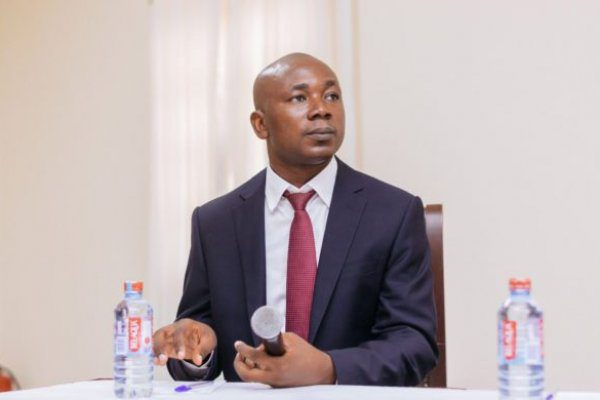
An economist at the University of Ghana Business School, Professor Godfred Bopkin, has called for closer collaboration between the state and the private sector, including religious bodies, to drive sustainable development in the country.
His comments come after the ongoing debate stems from a suit filed on December 24, 2024, by private legal practitioner Shafic Osman, who is invoking the original jurisdiction of the Supreme Court under Articles 2(1)(b) and 130(1)(a) of the 1992 Constitution.
Speaking on JoyNews’ Newsfile programme on Saturday, Professor Bopkin highlighted the need for a framework that promotes both state-led initiatives and private investment, stressing that this partnership would benefit the nation as a whole.
Prof. Bopkin noted that there has historically been a reluctance by certain religious groups to engage fully with formal education and investment initiatives.
However, he acknowledged that this perspective has evolved, with many religious institutions now seeing the value in contributing to societal development through education, healthcare, and other vital services.
“I understand where my Muslim brothers are coming from,” said Professor Bopkin, referring to religious groups' diverse approaches to development.
“And I also share my own experiences over the years. Decades ago, some religious bodies had a limited stance towards formal education. This belief also influenced how they made their investments. However, other religious bodies recognised early on that education was key to not only propagating their faith but also ensuring the sustainability of their initiatives.”
He pointed out that institutions such as schools, hospitals, and other social interventions have been crucial tools for religious groups to support both their faith and the development of communities.
He further emphasised that the Ghanaian constitution allows for religious groups to play an active role in social development, providing them with the legal framework to establish such ventures.
The economist believes that fostering a productive partnership between government and private entities, including religious organisations, is essential for the country to unlock its full potential.
Latest Stories
-
Let The Constitution direct Chieftaincy to deliver “All Development Is Local”
56 minutes -
John Jinapor outlines renewable energy, nuclear power priorities for 2027
1 hour -
Ghana explores centre of excellence for hearing, communication and cochlear implant care
2 hours -
Schizophrenia-related disorders lead mental health cases recorded in Ghana
3 hours -
Dutch authorities enlist Ghana in hunt for fugitive drug lord Bolle Jos
3 hours -
Ghana housing finance conference adopts communiqué to improve affordable housing access
7 hours -
Special Initiatives Minister urges Wa Technical Institute to enrol more girls as EU-backed solar training lab opens
8 hours -
In the matter of my first year at the Bar
8 hours -
ActionAid Ghana calls for an end to child marriage, greater investment in girls’ rights
8 hours -
Newsfile to tackle World Cup visa scandal, beach demolitions, education strikes, BRICS bid
9 hours -
UK-Ghana Trade & Investment Summit: Trade Resource Centre to help businesses maximise UK-Ghana trade opportunities
9 hours -
Embassy of Denmark celebrates World Maritime Day
9 hours -
Linking LEAP to productive inclusion could cut extreme poverty by 2030 – UNICEF
10 hours -
Trade Ministry backs use of creative arts to rehabilitate prison inmates
10 hours -
Negotiations with government to continue despite strike suspension – GNAT
10 hours