

Audio By Carbonatix
Many years ago, I worked as a Public Relations Specialist for a chief executive in Ghana who was widely regarded as one of the most powerful women in the industry.
When she eventually left that position, what fascinated me was not her departure. It was what happened afterwards.
The calls were reduced. The invitations slowed. Some relationships disappeared.
That experience taught me the difference between position-based influence and people-based influence. A position gives authority. People give influence. A title can command compliance.
Only people can grant trust. This lesson later became one of the foundations of my thinking on personal branding and eventually influenced my work in Brand Yourself: From Invisible to Influential.
In Ghana, we celebrate titles. Professor. Doctor. Director. Chief Executive Officer. Honourable. There is nothing wrong with achievement. I encourage my students to pursue excellence. Qualifications matter. Expertise matters.
Yet titles and qualifications are temporary assets. They are not permanent identities.
One day, someone else will occupy your office. One day, someone else will inherit your title.
The question is whether your influence survives the transition. Throughout my career in corporate communications, banking and academia, I have observed that people who remain influential long after retirement have one thing in common: they invested heavily in people. Brands are built through people.
Not through LinkedIn profiles. Not through organisational charts. Not through social media visibility alone. People build brands. The receptionist you greet every morning contributes to your brand. The student you encourage contributes to your brand. The junior employee you mentor contributes to your brand. The security officer you acknowledge contributes to your brand. Every interaction either strengthens or weakens your reputation. This idea is reflected in the AFAC philosophy I discuss in Brand Yourself.
A personal brand does not emerge accidentally. It requires deliberate Action, a clear Framework, continuous audit, and unwavering Consistency. Yet none of these elements can succeed without people. People are the audience. People are the witnesses. People are the storytellers.
People are the custodians of our reputation. Years after graduation, students may not remember every lecture. They remember lecturers who transformed their confidence.
Years after leaving an organisation, employees may not remember every strategic objective. They remember leaders who treated them with dignity.
Years after a leader leaves office, stakeholders may not remember every policy decision. They remember whether that leader respected people.
People rarely remember power. They remember experiences. They remember kindness.
They remember fairness. They remember respect. Most importantly, they remember how we made them feel. That is why sustainable influence is not built on authority. It is built on relationships, preserved in memory rather than title, and sustained by trust rather than position. The lecturer exists because of students. The business exists because of customers. The hospital exists because of patients. Politicians exist because of citizens. The leader exists because of followers. Without people, titles lose their meaning.
Without people, qualifications lose their audience. Without people, authority loses its relevance. Therefore, spend as much time building relationships as you spend building your résumé. Invest in competence. Invest in credibility. Invest in character.
Invest in people. Because when your title disappears, people become the evidence of your legacy.
One day, your office will belong to someone else. Your email account will be reassigned.
Your title will appear on another person's business card.
When that day comes, people will not remember you because of the power you possessed.
They will remember you because of the value you created. They will remember how you treated them. They will remember how you made them feel. People do not remember us because we hold power. They remember us because of how we used it.
Titles introduce you. Qualifications equip you. But your brand is what remains when both are no longer visible.
ABOUT THE AUTHOR
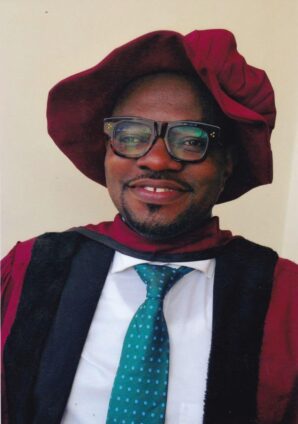
Dr Ike Tandoh, PhD, APR, FCIMC, MCIM, is a Ghanaian scholar-practitioner, corporate communication strategist, author, lecturer and Dean of Students at the University of Media, Arts and Communication (UniMAC), Ghana.
A former corporate communications and marketing executive with more than two decades of experience, he is the author of Brand Yourself: From Invisible to Influential.
His mission is to help individuals, professionals and leaders move from invisible to influential by building authentic personal brands that create value, inspire trust and leave a lasting impact.
Latest Stories
-
Nana B passport claims a diversionary tactic — Abu Jinapor
10 minutes -
Pope Leo diagnosed with cancer as doctors remove lobe of lung, Vatican says
10 minutes -
Legal Aid Commission takes free legal services to Techiman main lorry terminal
14 minutes -
Nana B denies seeking passport favour, accuses Ablakwa of failing to account for GH¢16.4m
19 minutes -
Young girls demand climate action, stronger protection against child marriage
31 minutes -
Ex-gang boss sentenced to 40 years for orchestrating Tupac Shakur’s murder
31 minutes -
From near-deferral to three awards: UMaT graduate’s academic journey
33 minutes -
Atta Akyea denies seeking presidential pardon for Wontumi in galamsey case
1 hour -
Photos: Mahama commissions 85-bed Police Hospital ward, donates two ambulances
1 hour -
GTEC directs Ghana’s public universities to reopen by October 16 and begin lectures on October 19
1 hour -
Star Oil donates GH¢1million towards construction of new CID facility
1 hour -
Court hands Adjetey Sowah, two others lifetime bans after Amputee Football legal dispute
2 hours -
NDC appoints Julius Kwame Anthony as a Deputy Communications Director
2 hours -
Ghana repatriates 120 Nigerians rescued from suspected cybercrime centres
2 hours -
NPP rejects Emelia Agbenyo’s appointment as Deputy EC Chair, demands withdrawal
2 hours