

Audio By Carbonatix
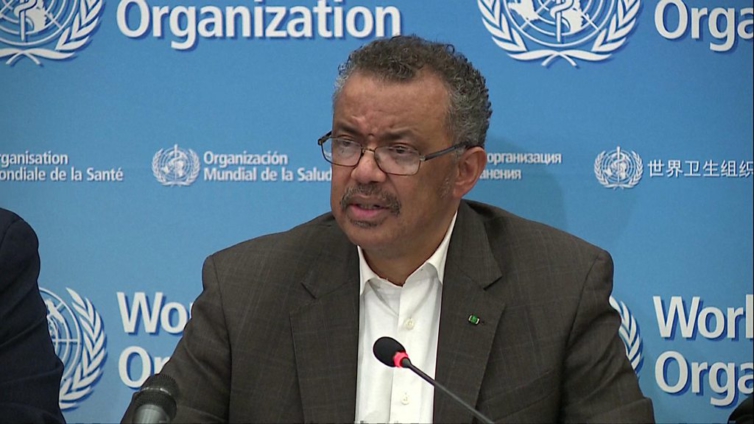
The World Health Organisation (WHO) has cautioned against the use of traditional medicine that has not been scientifically proven to treat COVID-19.
Most of the claims were being made on social media, it said.
However, the Malagasy Institute of Applied Research and branded COVID Organics, recently launched, amid much fanfare, what it said was a remedy for the coronavirus.
It contains Artemisia, a plant cultivated locally to combat malaria.
But the WHO warned in a statement on Monday: “As efforts are under way to find treatment for COVID-19, caution must be taken against misinformation, especially on social media, about the effectiveness of certain remedies.
“Many plants and substances are being proposed without the minimum requirements and evidence of quality, safety and efficacy.
“The use of products to treat COVID-19, which have not been robustly investigated can put people in danger, giving a false sense of security…and may also increase self-medication and the risk to patient safety.”
The UN agency said that it recognised the “long history” of traditional medicine in Africa and its “role in providing care to populations”.
“Medicinal plants such as Artemisia annua are being considered as possible treatments for COVID-19 and should be tested for efficacy and adverse side effects,” the WHO noted.
“Africans deserve to use medicines tested to the same standards as people in the rest of the world.
“Even if therapies are derived from traditional practice and natural, establishing their efficacy and safety through rigorous clinical trials is critical.”
The WHO said it welcomed “innovations around the world including repurposing drugs, traditional medicines and developing new therapies in the search for potential treatments for COVID-19”.
In 2000, during the 5th Session of the WHO Regional Committee for Africa, the continent’s ministers of health adopted a resolution calling for evidence on the “safety, efficacy and quality of traditional medicine”.
The health ministers also agreed to undertake relevant research and for national regulatory agencies to approve medicines in line with international standards.
These include following a strict research protocol and rigid tests and clinical trials.
The studies normally involve hundreds of people being monitored by national regulatory authorities over a long period.
The UN agency said that over the last 20 years it had been working with countries to “ensure safe and effective traditional medicine development in Africa by providing financial resources and technical support”.
It had backed clinical trials, which had led to 14 countries issuing marketing authorisation for 89 traditional medicine products that had met international and national requirements for registration.
Of these, 43 had been included in national essential medicines lists.
“These products are now part of the arsenal to treat patients with a wide range of diseases including malaria, opportunistic infections related to HIV, diabetes, sickle cell disease and hypertension.
“Almost all countries in the WHO African region have national traditional medicine policies, following support from WHO,” the agency said.
Latest Stories
-
GPL 2026/27: Opoku Agyemang strike sends Kotoko third after Karela win
2 minutes -
Government ‘cannot dissolve’ GFA – Sports Minister Kofi Adams
15 minutes -
Baffour Awuah granted GH¢50m bail after EOCO detention
49 minutes -
“Every genre we create doesn’t have to be ‘Afro’ something” – M.anifest
1 hour -
GMTF marks first anniversary with lifesaving equipment for 9 more hospitals
1 hour -
NAIMOS seizes 10 excavators in raid on illegal mining sites blocking River Pra’s flow
1 hour -
Pump prices may stay unchanged as government holds TOR, Sentuo prices
2 hours -
Akra Reads! 2026: Ladé Wosornu poetry contest expands to JHS
2 hours -
K9 dog sniffs out 72lbs of prohibited Ghanaian food items at JFK
2 hours -
If family planning is our choice, why isn’t it in our budget?
2 hours -
Mahama, Lordina to attend World Assemblies of God Congress opening in Accra
2 hours -
‘The power play is disgusting’ – Atta Akyea questions Baffour Awuah’s detention by EOCO
2 hours -
Ghana to review all public-sector AI acquisitions under new directive
2 hours -
NPP ready for national elections; 7,121 delegates to vote
2 hours -
‘I didn’t expect this under Mahama’ – Annoh-Dompreh on Baffour Awuah’s detention at EOCO
2 hours