

Audio By Carbonatix
Corruption in Ghana has become so familiar that it is almost impossible to discuss the country’s development without confronting the damage it causes.
It is always on our news feeds, from alleged financial impropriety involving public officials to procurement controversies, payroll fraud, to officers demanding unofficial payments in their line of duty and the misuse of public funds, all of which repeatedly return to the same uncomfortable question of why the canker remains so deeply rooted in our society.
Recent cases have once again brought the issue into the national conversation. The Office of the Special Prosecutor, for instance, says it is currently prosecuting several corruption-related cases and has secured convictions, while investigations continue into others.
Yet, while investigations, prosecutions and political debates are important, perhaps the more difficult conversation is not about the politicians, civil servants or businessmen caught in these cases. It is about us.
Ghanaians generally agree that corruption is wrong. We condemn the politician who allegedly diverts public funds, the public officer who demands a bribe and the businessman who manipulates a government contract.
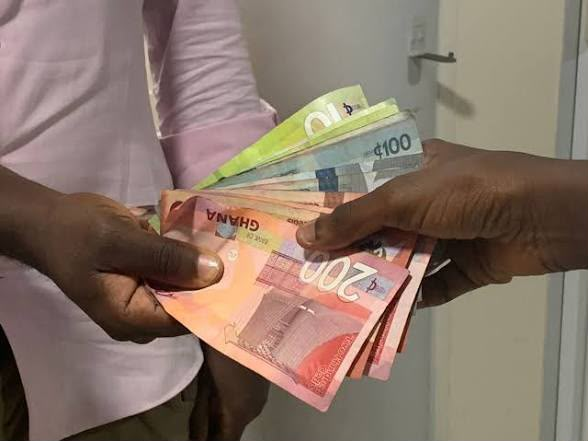
However, beneath this public condemnation lies an uncomfortable contradiction: would we behave differently if we were the ones in these positions? The question we rarely ask ourselves.
Corruption is wrong, until it benefits us
Consider a simple example. A person visits a government office to obtain a document. The official deliberately delays the process and eventually hints that “something small” could make things move faster. We then complain because we are the victims.
But what happens when we have a friend or relative inside the institution? Suddenly, the language changes to “Please help me push it." "Talk to your guy for me” and “Can’t you call someone there?”
We may not consider this corruption because no money has changed hands. Nevertheless, when personal connections are used to bypass established procedures and give one person an unfair advantage over others, we should at least question the ethics involved.
In fact, this is one of the most difficult aspects of Ghana’s corruption problem. It is not always about someone stealing millions of cedis. Sometimes, it begins with a favour, an introduction, a phone call or a small gift.
The amounts involved in major corruption cases may be enormous. However, corruption often begins with something much smaller.
Have our traditions made it easier?
This is where the conversation becomes particularly sensitive.
Ghanaian society places enormous value on respect, reciprocity, hospitality and relationships. These are admirable qualities. Our traditions teach us to honour elders, support family and show appreciation to those who help us. However, could some of these practices also create an environment in which improper influence becomes normalised?
Take the traditional practice of visiting a chief, elder or respected person. It is often considered inappropriate to visit such a person empty-handed. A bottle of schnapps, drinks, or another gift may accompany the visit as a sign of respect.
There is nothing inherently corrupt about giving a gift. Context matters. The problem arises when the distinction between a gift, appreciation and inducement becomes blurred.
If we grow up believing that an important person must never be approached empty-handed, it can become easier to accept the idea that access, assistance or favour should always come with something in return.
Nevertheless, we must be careful not to blame Ghanaian culture for corruption itself. Traditional values such as communal responsibility, accountability and respect for elders can actually strengthen ethical conduct.
It is only problematic when positive cultural practices are transferred into modern public institutions without clear boundaries.
A public official is not a traditional leader receiving a customary gesture of respect. A public officer is exercising authority on behalf of the state; he/she is simply doing the job they are paid to do. Therefore, citizens should not have to “know somebody” or “bring something” to receive a service to which they are legally entitled. The real enemy here is discretion without accountability
More importantly, corruption flourishes where officials have excessive discretion, procedures are unnecessarily complicated, information is unavailable and citizens have no effective way of challenging decisions.
For this reason, fighting corruption cannot simply mean arresting people after public money has disappeared. We must also redesign the systems that make corruption possible.
One important solution is to reduce unnecessary personal contact between citizens and public officials during service delivery. Where possible, applications, payments, tracking, approvals and complaints should move online.
Of course, I’m not saying digital systems will eliminate corruption completely. However, they can reduce opportunities for private bargaining and create electronic records that can be monitored and audited.
Similarly, Ghana must strengthen whistleblower protection, make public procurement more transparent, enforce asset declaration requirements and ensure that audit findings lead to consequences rather than simply becoming annual headlines.

Punishment matters, but prevention matters more
Ultimately, Ghana needs an anti-corruption culture that goes beyond political slogans.
Political parties must stop treating corruption as a weapon to attack opponents while remaining silent when people on their own side are accused. More troublingly, we have developed a culture in which the arrest or invitation of a public figure involved in corruption scandals for questioning can quickly become a political mobilisation exercise.
When an alleged government official is arrested or invited by an investigative body to assist with a corruption investigation, supporters quickly gather around, organise demonstrations or portray the investigation as political persecution before the facts will even be established.
Of course, every person accused of wrongdoing is entitled to due process and the presumption of innocence. Investigative institutions must also be held accountable and should not abuse their powers.
However, there is a crucial difference between demanding due process and attempting to illegitimate or obstruct an investigation. If someone is innocent, the appropriate response should be to allow the investigation to establish that innocence.
If there has been wrongdoing, political affiliation should not become a shield against accountability, for the law should always be the law.
Unfortunately, our politics often works differently. When an official from the opposing political party is arrested, we celebrate and demand prosecution. When someone from our own political camp faces the same allegations, we suddenly question the motives of the investigators and defend the accused.
That is not a principled opposition to corruption. It is partisan opposition to corruption. We must learn to say when a wrong is wrong, regardless of who has done it.
At the institutional level, the justice system must work independently and efficiently. Investigations should not depend on political convenience. Public institutions must have strong internal controls, while sanctions for proven wrongdoing must be predictable.
At the individual level, however, our responsibilities are just as important.
We must stop offering bribes merely because we want to jump a queue. We must stop celebrating unexplained wealth. We must stop praising people for “knowing people” who can bend the rules for them. Above all, we must stop calling corruption “smartness” when it benefits us and “stealing” when it benefits somebody else.
Ghana’s corruption problem perhaps will not be solved merely by changing presidents, ministers or chief executives. Rather, it will require a fundamental change in our relationship with public power. The uncomfortable truth is that many people hate corruption partly because they hate being excluded from it.

If we were given the opportunity to misuse public resources, would we resist because it is wrong, or would we simply become better benefactors from it? That is the question every Ghanaian should confront.
The fight against corruption must therefore happen in Parliament, government offices and boardrooms, but also in our homes, schools, churches, traditional institutions and everyday interactions. Psyche our minds accordingly.
We cannot build an honest country while teaching our children that rules are obstacles to be overcome when one has the right connections.
Ghana does not only need fewer corrupt officials. We need fewer citizens willing to enable them. Until we reach the point where we reject corruption even when it benefits us, our condemnation of corruption will remain conditional.
And a society that condemns corruption only when it is someone else’s turn has not truly rejected corruption. It has simply rejected being left out of it.
Latest Stories
-
AI gains can lift three times as many people out of poverty in Ghana – World Bank
28 minutes -
Police arrest suspect over jewellery theft during fire outbreak
3 hours -
EOCO returns Hanan’s £6,700, GH¢2,750 and devices after defence challenge
3 hours -
Opplift Youth Entrepreneurs Summit 2026 equips entrepreneurs with skills, mentorship and support
3 hours -
Rival clubs want range of punishments for Man City
3 hours -
Tear gas in Paris and Marseille as school protests grow across France
4 hours -
Kane inspires England to win over Czech Republic in UEFA Nations League
4 hours -
Finland orders halt to work on two Google data centres
4 hours -
Substitute Merino scores twice as Spain win in Croatia
4 hours -
Ronaldo wants Portugal ‘punishment’ but not retiring
4 hours -
White House defends Trump comment to let Iran ‘take out’ LA and San Diego
4 hours -
Asos confirms hackers sent ‘unauthorised’ notification to app users
4 hours -
US televangelist Jim Bakker, disgraced from sex scandal and fraud, dies at 86
4 hours -
Congolese-born golfer to represent Ghana at Turkish Airlines World Cup grand final
5 hours -
Amazon wins global rights to stream Emmys in six-year deal
5 hours