

Audio By Carbonatix
The government’s decision to prohibit the export of unrefined gold doré is intended to move Ghana beyond the role of a supplier of raw minerals and enable the country to capture greater economic value from its gold resources, the Ghana Gold Board (GoldBod) has said.
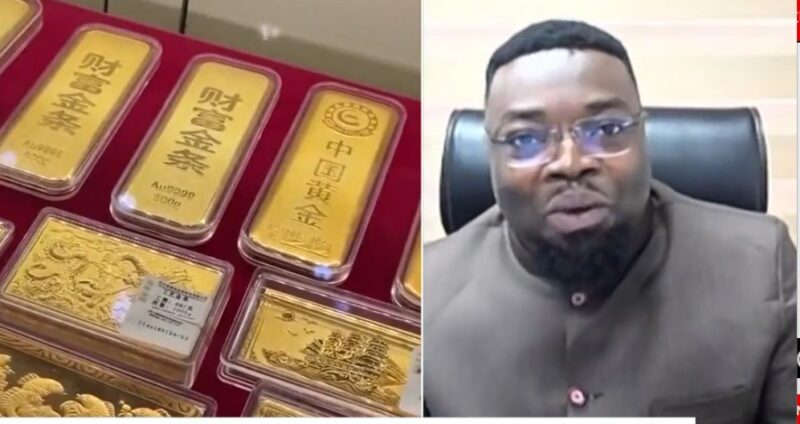
According to the GoldBod Media Relations Officer, Prince Kwame Minkah, the policy is the latest step in Ghana’s efforts to reform the gold-trading industry, strengthen formalisation and ensure that more activities associated with gold processing and trading take place locally.
Speaking in an interview with RT, Mr Minkah said the ban was necessary to ensure that refining, certification and other value-generating activities that have traditionally been undertaken outside Ghana were increasingly retained within the country.
“So the biggest change is that Ghana is moving primarily from being just an exporter of raw minerals to becoming a country that captures more value from its gold,” he said.
He said the GoldBod had already played a significant role in formalising the artisanal and small-scale gold market, centralising gold trading, and improving traceability within the sector.
170 tonnes through formal channels
Mr Minkah said the reforms had also contributed to efforts to bring gold that would otherwise have entered the informal economy into the formal trading system.
He claimed that about 170 tonnes of gold had been absorbed through formal channels over the past one-and-a-half years, describing the development as a significant achievement in the fight against gold smuggling.
“GoldBod says as far as our anti-smuggling interventions are concerned, we've been able to help significantly ensure that large volumes of gold are retrieved from the informal economy, with 170 tonnes absorbed through formal channels over the past one and a half years,” he said.
He said the next phase of the reform was to ensure that Ghana did not stop at producing and exporting gold but also benefited from activities further down the value chain.
“Now the step right now is value addition. So instead of exporting doré and allowing refining and certification as well as other value-generating activities to happen elsewhere, we want it to happen right here in Ghana.”
Jobs, forex and economic value
According to Mr Minkah, retaining refining and related activities in Ghana would create jobs, expand domestic refining capacity, improve transparency and traceability and increase foreign exchange retention.
“And that means that jobs, refining capacity, greater transparency, better traceability, stronger foreign exchange retention, and ultimately greater economic value for my country, Ghana,” he said.
He linked the policy to the broader government objective of ending the export of raw minerals by 2030.
“This is in line with the vision of the President of Ghana, His Excellency John Dramani Mahama, whose aim is to ensure that we achieve zero raw mineral exports by the year 2030. So we've started.”
Mr Minkah also pointed to the wider economic effects of the gold-sector reforms, arguing that increased formal gold purchases had helped generate foreign exchange, with a resultant contribution to currency stability and lower inflation.
“I mean, number one, it's helped in reforming the gold trading industry in the country. It also has triggered a situation where there are large volumes of gold that have been produced. And, you know, the resultant effect being the fact that we've been able to accrue the needed forex to shore up the Ghana cedi.”
“And so the snowball effect here is that we are in a situation where inflation rates are down and the Ghana cedi is holding steady,” he added.
Part of wider African push
Mr Minkah said Ghana’s decision was also part of a broader movement among African mineral-producing countries to retain more value from their natural resources.
He cited Guinea, Tanzania, Burkina Faso and Mali among countries that have introduced or are considering similar restrictions on the export of unprocessed minerals.
He said the policy reflected a growing concern across Africa about the continent’s historical position as an exporter of raw materials while much of the processing, certification, financing and trading took place elsewhere.
“If we produce the mineral, why should we capture only the value extraction while other countries continue to capture the value processing and, for that matter, trading?” he asked.
“Clearly, that's not fair. So this is part of a wider African movement towards resource sovereignty, local value addition, and, you know, beneficiation.”
Latest Stories
-
Deaths of three children in Tamale vehicle now treated as murder – Police
7 minutes -
Catholic Bishops urge stronger action against tramadol, marijuana abuse
9 minutes -
Health experts warn women against unregulated breast enlargement products, herbal remedies
13 minutes -
Kenya confirms its first Ebola death as outbreak spreads
17 minutes -
Assemblies of God World Congress: Ghana to host first African edition from October 14 to 16
18 minutes -
Humanity Haven Foundation supports 100 pupils in Wiamoase with educational supplies
19 minutes -
LA 2028: Black Queens arrive in Mauritius for Olympic Games qualifier first leg
40 minutes -
Local Government Service HR practitioners urged to embrace digital systems
47 minutes -
Lawyer highlights gaps in Ghana’s rape law regarding male victims
47 minutes -
Nigeria declares three days of mourning after military aircraft crash kills 32
52 minutes -
CPP’s Kwame Nkrumah Botsio calls for legally binding MOU to end teacher strike
57 minutes -
Vice President hopeful of swift end to teacher strike
1 hour -
KGL U17 Colts 2026: Prempeh Elite Academy, Brong Ahafo lead groups after Matchday Two
1 hour -
Tullow Oil posts $101m half-year loss despite production gains
2 hours -
Multimedia Group congratulates Fidelity Bank on 20 years of excellence and impact
2 hours