

Audio By Carbonatix
Do you earn as much as your husband?
According to a new global study of the difference in earnings between couples, the answer for most women is no.
The study examined publicly available data from 45 countries across a four-decade period - from 1973 to 2016 - for the first global survey of intra-household gender inequality in wages.
The researchers, Professor Hema Swaminathan and Professor Deepak Malghan, of the Centre for Public Policy, Indian Institute of Management in Bangalore, used data from 2.85 million households made up of heterosexual couples between the ages of 18 and 65 years. The data was collated by a non-profit, the Luxembourg Income Study (LIS).
"Conventional poverty estimates look at the household as a unit," Prof Swaminathan says.
"The general assumption is that within a household, incomes are pooled and equally distributed. But the household is often a place of great inequality, and we wanted to unpack that."
The report describes the household as "a black box" because, Prof Swaminathan says, "we are not looking inside. But how would the picture change if we looked inside?"
It's well known that there is gender inequality in India in the labour force - there are fewer women in the workforce generally, and those who are are less likely to be in full-time jobs.
Prof Swaminathan and Malghan wanted to assess the global picture, they said. "For instance, Nordic countries are held out as a beacon of hope for gender equality, but what is it like there? Is the distribution of work - and wealth within homes - equal?" said Prof Swaminathan.
The researchers ranked countries on overall inequality and intra-household inequality. According to their results, gender inequality persists across countries, over time, and across rich and poor households.
"The most recent wave of data suggests that when both members of the couple are employed, there is not a single country, not even in the richest or most developed parts, where wives earn as much as their husbands," Prof Malghan says.
"Even in the Nordic countries, which have the lowest levels of gender inequality in the world, we found the women's share is less than 50% everywhere."
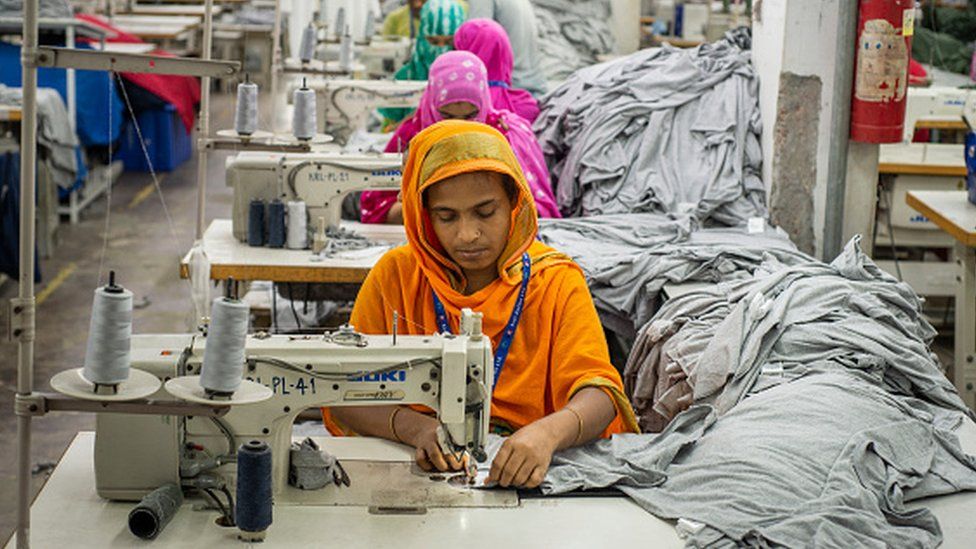
Some of the reasons women earn less are universal. Men are culturally seen as breadwinners, while women are considered homemakers. Many women take a break - or even leave paid work - after childbirth. The gender pay gap and unequal pay (paying women less than men for the same work) remain a reality in many parts of the world. And unpaid housework and caregiving still remain largely a woman's responsibility.
According to an International Labour Organisation report from 2018, globally, women perform 76.2% of total hours of unpaid care work, more than three times as much as men. In Asia and the Pacific, this rises to 80%.
The report said that unpaid care work was "the main barrier preventing women from getting into, remaining and progressing in the labour force".
A woman's lower income can have consequences beyond the economic, the researchers say, affecting gender dynamics in the household and putting women at a disadvantage.
"The wife's contribution as a homemaker is invisible, while cash is visible. So a wife earning a salary, bringing in hard cash into the family kitty enjoys a certain status. It enhances her agency and gives her a voice within the household," says Prof Swaminathan.
"Increased earnings increase her negotiation powers, give her a bargaining tool, even help her exit an abusive situation by giving her a fallback option."
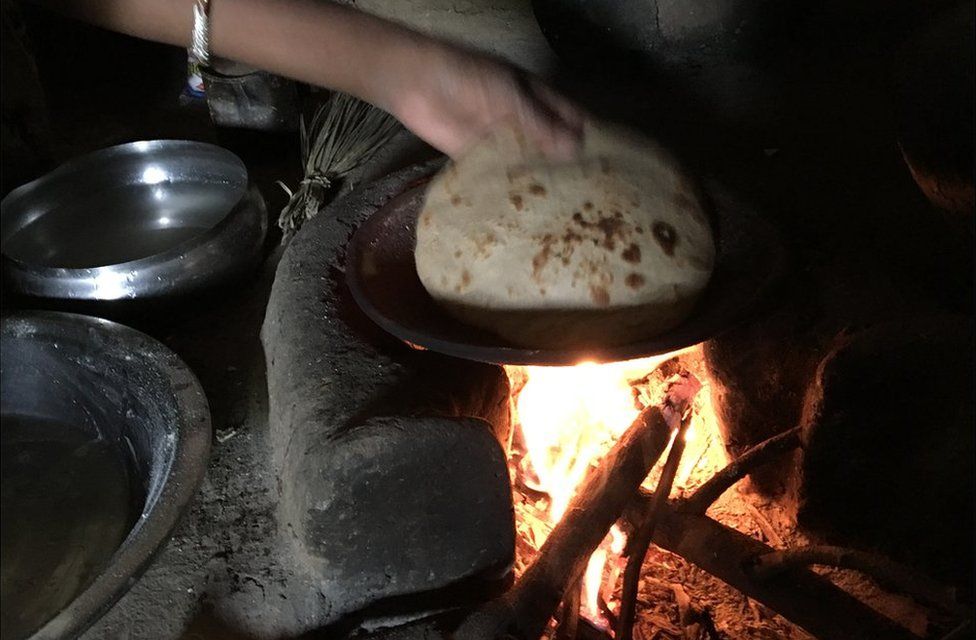
The discrepancy also impacts long-term financial security, says Prof Malghan, as women have lower savings and wealth accumulation and access to reduced incomes in old age since pension policies are tied to earnings.
There is, however, one silver lining in the report: intra-household inequality has declined by 20% between 1973 and 2016 - the four decades the researchers studied.
"Across most parts of the world, economic development and growth has happened and women's participation in labour force has increased," says Prof Swaminathan. "In many parts of the world, more women-friendly policies have narrowed the gap. There have been movements for equal pay for equal work. All this has led to a shrinking of the gap."
But despite the decline, current levels are still significant and the gap, she says, must be closed further.
"The governments are not walking the talk. Companies are not recruiting enough women who are being penalised for doing care work and unpaid housework. So we have to ask: is women's work being acknowledged? Are there family-friendly and child-friendly policies? We also need better brought up men who will share the burden of the unpaid chores.
"There's a lot governments and societies can do. It doesn't have to be this way."
Latest Stories
-
GPRTU taskforce clamps down on unapproved fares at Kasoa
8 seconds -
Prime Insight: Making room for meaningful national conversations on Joy Prime
11 minutes -
FABAG commends Ato Forson’s over removal of 20% excise duty on locally manufactured fruit juices
18 minutes -
HIV stigma discourages testing, prevention and treatment in Ghana – Ghana AIDS Commission
21 minutes -
Blocking cocaine probe lends weight to claims of political protection for traffickers – Assin South MP
24 minutes -
NPP Vice Chair race: I may be the youngest, but most experienced – Nana B
26 minutes -
Last UK and US troops leave Iraq as anti-Islamic State mission ends
26 minutes -
Don’t stay home idle, embrace entrepreneurship while awaiting posting – Unemployed nurses urged
38 minutes -
Aayalolo buses not speeding on contra-flow lanes – GAPTE assures commuters
41 minutes -
Effia MP calls for Kurt Okraku’s removal, overhaul of Ghana football structure
42 minutes -
CAS hearing on AFCON final appeal by Senegalese Football Federation set for October 8
42 minutes -
STC fares to go up by up to 8% this week – Deputy MD
43 minutes -
Photos: Accra-Kumasi bypasses get new lease of life as contractors return to site
43 minutes -
Man allegedly swallows five SIM cards to conceal evidence after arrest
44 minutes -
After three finals, Ayikuma Methodist Basic School finally lifts National Juniors Challenge trophy
44 minutes