

Audio By Carbonatix
For years, the residents of the Dominase community in the Asunafo North Municipality of the Ahafo Region endured a severe water crisis. Left with no sustainable options, families were routinely forced to rely on polluted streams for their daily survival.
According to resident Charles Alande, the community’s sole, aging borehole frequently broke down, often leaving the area completely without water for over a week at a time.
This forced residents, particularly women and children, to trek long distances to neighbouring communities to fetch water, causing massive disruptions to their daily lives and education.
Another resident, Sophia Boakye Nyamekye, recalled the worrying times when the community had to draw water for household chores and drinking from contaminated streams. The lack of a potable water supply meant women and children continuously struggled to secure water, facing severe, daily health risks.
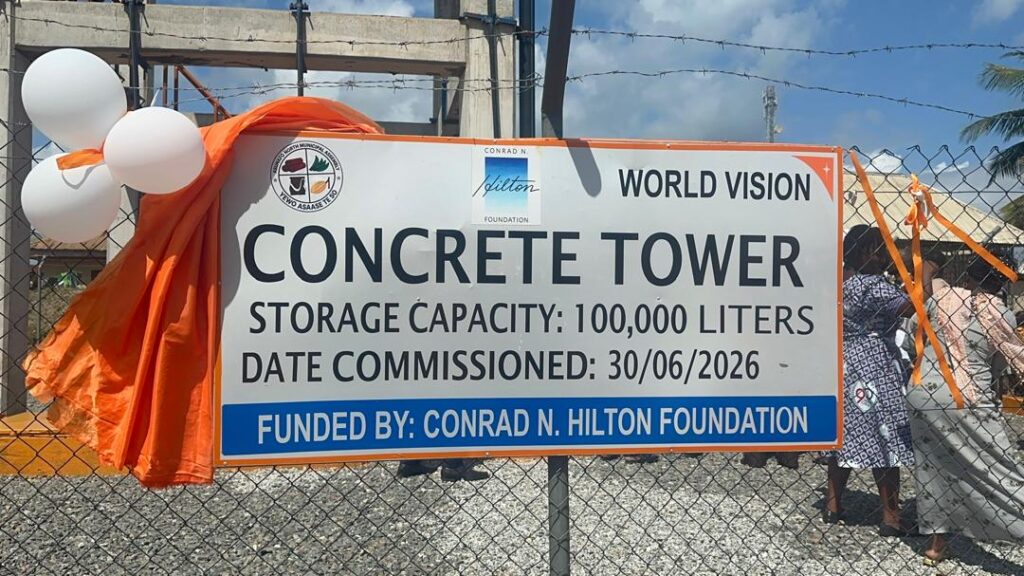
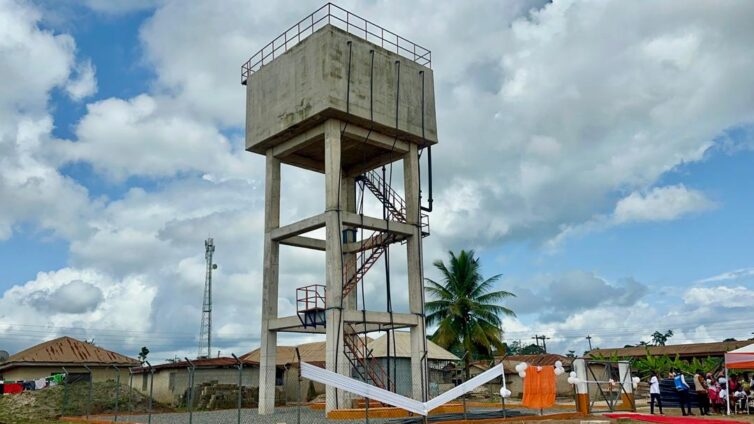
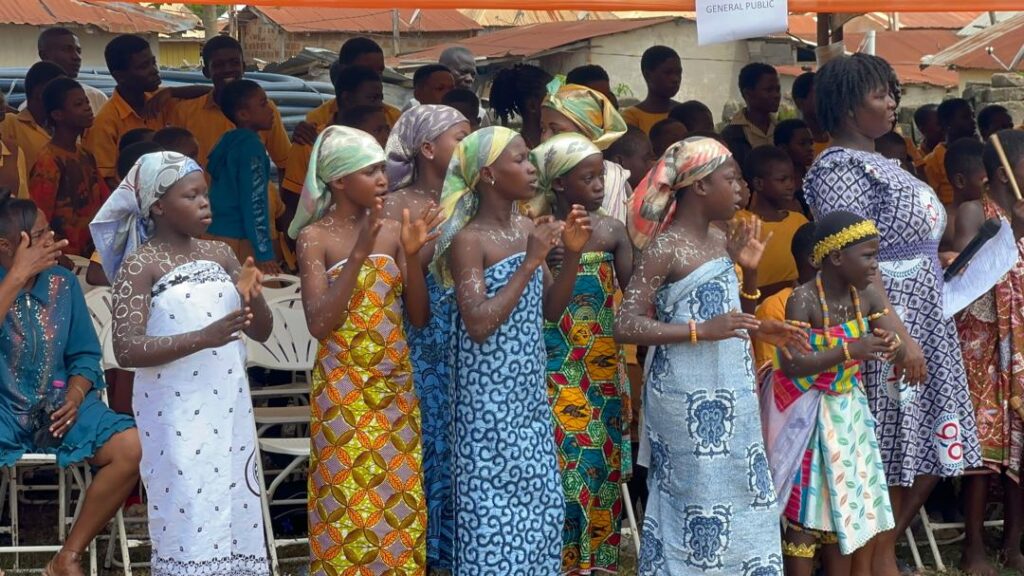
But now, the community has breathed a sigh of relief. On Tuesday, June 30, 2026, World Vision, with funding support from the Conrad N. Hilton Foundation, officially commissioned a modern small water system for the Dominase community.
To guarantee professional operation and long-term viability, the 100,000-liter storage capacity facility will be safely managed by PEC Consult.
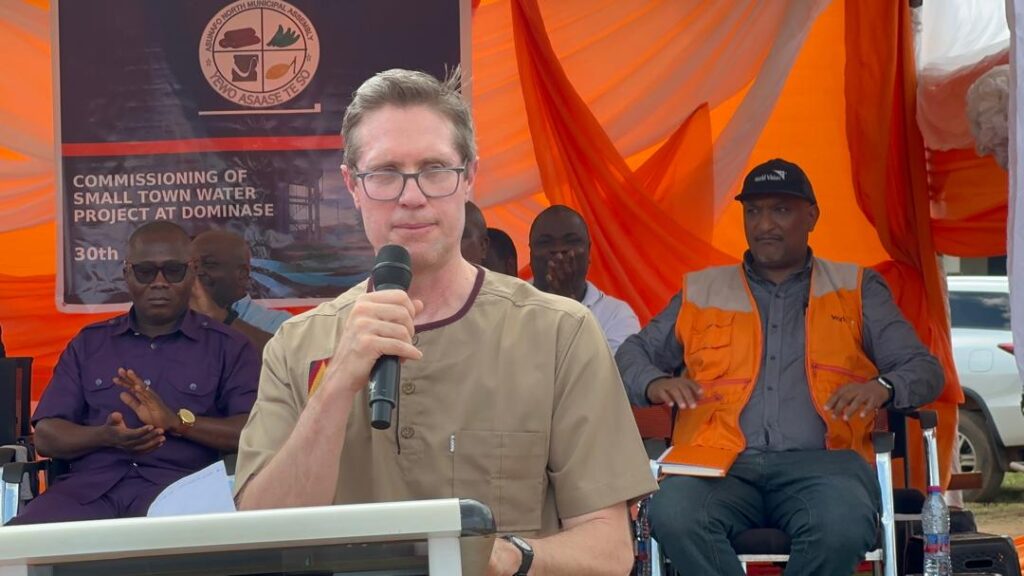
Speaking at the ceremony, Robel Wamisho, Associate Director of Water, Sanitation, and Hygiene (WASH) at World Vision Ghana, revealed that a total of 26 water systems, including the newly commissioned Dominase facility, have now been completed across the Asunafo North Municipality.
Mr. Wamisho emphasised that this specific project brings a safe, reliable, and sustainable water supply to potentially more than 7,000 residents, adding that World Vision is working to connect 200 individual households directly to the system, driven by the firm belief that strategic collaboration acts as a catalyst for greater community impact.
Brett Gleitsmann, Programs Officer for the Conrad N. Hilton Foundation’s Safe Water Initiative, extended his gratitude to the municipal assembly and local stakeholders for reposing their trust in World Vision and its partners.
As a donor, Gleitsmann pledged continued funding for similar projects and urged tight, effective collaboration between local authorities, PEC Consult, and the community to secure the project's sustainability over the next decade and beyond.
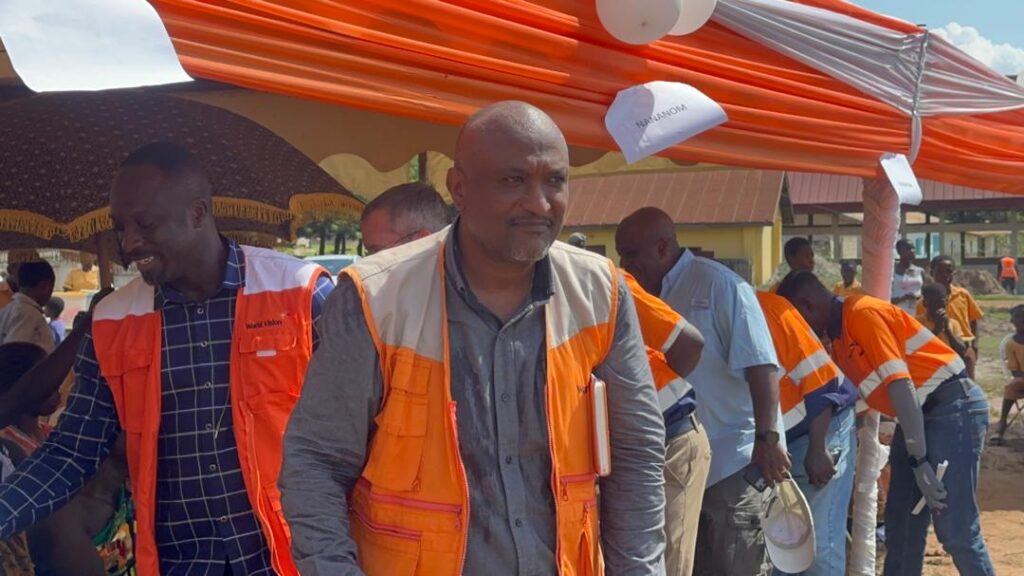
Ntiamoah Adade, the Ahafo Regional Development Planning Officer, remarked during the launch that the facility represents far more than pipes, pumps, and overhead tanks. Instead, it stands for improved school attendance, drastically reduced healthcare costs, and new economic opportunities for the entire community.
To ensure these benefits endure, Mr. Adade outlined four core priorities to guide the community moving forward. First, the community must take full custody of the project by showing unwavering commitment and supporting PEC Consult to guarantee effective operation.
Secondly, effective revenue mobilisation must be prioritised, as long-term sustainability begins with a structured tariff system, transparent collection, and reinvesting generated funds directly back into the facility.

Thirdly, a strict plan for preventive maintenance must be implemented so stakeholders do not wait for a breakdown before servicing pumps, cleaning tanks, or repairing pipes. Finally, everyone must fully comply with the established operational and maintenance frameworks.
The Planning Officer noted that the Regional Coordinating Council has officially incorporated WASH indicators into its regional monitoring and evaluation framework to track functionality, water quality, revenue performance, downtime, and customer satisfaction across the Ahafo region.
Reflecting on the transformation, Sophia Boakye Nyamekye gladly remarked that with the new system, residents will no longer have to step outside their comfort zones, but can finally enjoy safe, reliable water right at home.
The Dominase water project directly advances the United Nations 2030 Agenda for Sustainable Development Goal 6 (Clean Water and Sanitation) by ensuring universal and equitable access to safe and affordable drinking water.
It supports SDG 3 (Good Health and Well-being) by directly reducing the contraction of waterborne pathogens and lowering under-5 mortality rates, and SDG 4 (Quality Education) by freeing children, especially young girls, from the burden of hauling water, significantly improving school attendance.
The project directly impacts SDG 5 (Gender Equality) by reducing the time poverty experienced by women and girls who disproportionately bear the burden of water collection and exemplifies SDG 17 (Partnerships for the Goals) through its multi-sector alliance between an international NGO, a foreign philanthropic investor, local government, and a private operator.
Latest Stories
-
Mahama honoured at 2026 World Health Summit in Berlin for global health leadership
3 minutes -
Breast cancer is not a death sentence – Besease Kontire Obaapanin, Magmina Foundation lead awareness campaign
5 minutes -
EcoBank invests in digital education of 4 Garisson School to mark 40 years in Africa
36 minutes -
AGI urges investment in skills and raw materials to strengthen local manufacturing
39 minutes -
GPL 2026/27: ‘We have to rectify our mistakes’ – Boadu reacts to Aduana FC defeat
39 minutes -
No disability access, no building permit – KMA declares
40 minutes -
Asantehene to lead environmental restoration effort at Jimi Land Reclamation Site
43 minutes -
Poor Ghanaians are being jailed because they cannot afford justice – Crime Check Foundation
45 minutes -
No conflict in appointing Emelia Agbenyo as Deputy EC Chair – NDC
45 minutes -
87-year-old man jailed 20 years for defiling 9-year-old girl at Ofankor
48 minutes -
Sankofa Gold targets 70kg output after 9-month shutdown
50 minutes -
Tamale, Bolgatanga had just one Legal Aid lawyer between them – Kwesimintsim MP
57 minutes -
PAC orders eviction of former irrigation company MD from official residence
1 hour -
Legal Aid Commission has offices in only 45 of Ghana’s 261 districts, needs 180 more staff
1 hour -
Challenging Heights welcomes Ghana’s Tier 1 ranking, calls for more anti-trafficking funding
1 hour