

Audio By Carbonatix
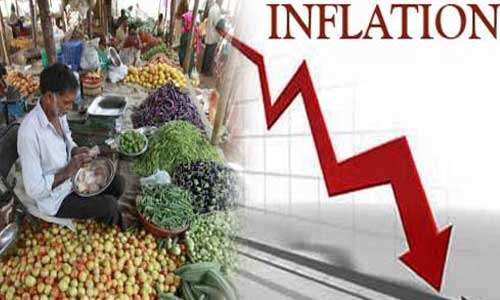
Inflation rate is one of the most important economic variables in any country, especially in developing countries like Ghana. Developing countries are prone to high and persistent inflation rates. This rate is particularly important because it measures how prices of goods and services rise in an economy.
When the inflation rate rises too fast, the ability of households to afford basic needs such as food, clothing and shelter becomes difficult. The inflation rate is also crucial to the viability of businesses and investments in economies. When the inflation rate is high, the cost of borrowing rises, which in turn reduces the level of investment, ultimately slowing economic growth.
This is why countries with high inflation rates experience a high rate of poverty, depression, and eventually, social unrest, as we have seen in countries like Zimbabwe, Venezuela, and the likes. Impliedly, this rate is a proxy for how much a country’s leadership cares about the well-being of its citizens.
Since the inception of the government of His Excellency Nana Addo Dankwa Akufo-Addo and Dr Mahamudu Bawumia, careful attention has been given to the major known factors affecting inflation: (1) Monetary discipline, (2) Exchange Rate Stability and (3) Food Price Stability.
Various interventions were introduced to manage the factors of inflation, eventually bringing down the country’s high inflation rate from a peak of 15.4% at end of 2016 to a single-digit low of
7.7% in Oct 2019.
So what were these interventions?
Firstly, the government ensured that the ratio of Broad Money Supply to GDP remained relatively stable. The Broad Money supply to GDP ratio grew slightly by 3.17% between 2017 to 2019, ensuring Inflation fall from 15.4% to 7.7%, compared to the 21.42% increase in the Broad Money supply to GDP ratio between 2013 to 2016, which made inflation rise from 10.1% to 15.40% over the period. In other words, the current government has not encouraged reckless printing of money, which often leads to inflation.
Secondly, the substantial external reserve build-up by the Government in the last four (4) years helped maintain a relatively stable foreign exchange rate. Based on IMF data, the country’s Total External Reserves (including gold, current US$) rose sharply by 28.92% in three (3) years from year-end 2016 to Dec 2019. This helped in preventing incessant currency depreciation, which often leads to imported inflation in Ghana.
Thirdly, the government ensured food price stability through significant investments in the agricultural sector, improving food productivity. Food inflation reduced from 9.7% to 7.2% between Dec. 2016 and Dec. 2019, compared to the previous government, which allowed food inflation to rise sharply from 8% in Jan. 2013 to 9.7% as of Dec 2016.
Although the recent global pandemic has pushed the inflation rate from a single-digit to a double-digit of 10.33% as of Mar. 2021, it is worth noting that the ingenious current government budget titled “Economic Revitalisation through Completion, Consolidation & Continuity” is geared toward driving real sector productivity and price stabilization, to ensure inflation falls back to a single-digit in the post-pandemic era.
This Government is indeed Obaatanpa!!!
Latest Stories
-
Ghana wins $393m Tullow tax arbitration as tribunal upholds GRA assessment
3 minutes -
Gender Minister assures women’s group of action on Affirmative Action, Development Bank
46 minutes -
Over 2,000 teachers in Dormaa comply with strike – GNAT Secretary
57 minutes -
Food Buffer Stock seeks stronger liquidity buffer despite record profit
1 hour -
LPG investments key to achieving 50% access target by 2030 – Energy Minister
1 hour -
Jinapor: New LPG terminal strengthens Ghana’s energy security
1 hour -
Agbodza directs road agencies to fast-track design approvals to prevent project delays
1 hour -
Housing Minister urges stakeholders to prioritise quality education in Banda District
1 hour -
Government redeems pledge to complete abandoned projects – Kofi Buah
1 hour -
Sam George calls for Black Stars disbandment, GFA dissolution after Gambia defeat
1 hour -
Bunkpurugu MP urges action to curb network disruptions in Northern Ghana
1 hour -
Education Minister calls for evidence-based response to learning crisis in West Africa
2 hours -
NPA reaffirms regulatory support as Puma Energy deepens investment in LPG and CRM
2 hours -
Ketu South NDC clears 73 aspirants for constituency elections
2 hours -
We are with all flood victims – Hohoe MP
2 hours