

Audio By Carbonatix
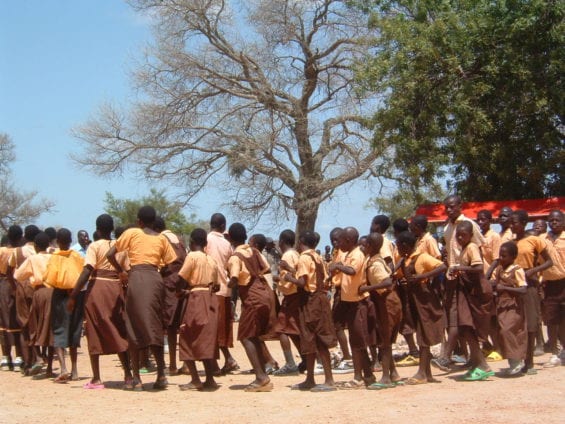
United Nations Children’s Fund (UNICEF) Office of Research – Innocenti and the World Food Programme (WFP) report indicates that nutrition crisis looms as globally more than 39 billion in-school meals missed since the start of Covid-19 pandemic.
The report, which was made available to the Ghana News Agency by UNICEF, attributed the situation to schools’ closures since the start of the Covid-19 pandemic.
The report, dubbed “Covid-19: Missing More Than a Classroom” notes that 370 million children worldwide – many of whom are reliant on school meals as a key source of their daily nutrition – have missed 40 per cent of in-school meals, on average, since Covid-19 restrictions shuttered classrooms.
“Despite clear evidence that schools are not primary drivers of Covid-19 infections, millions of children are facing school closures around the world,” said Madam Henrietta Fore, UNICEF Executive Director.
“Children who depend on schools for their daily meals are not only losing out on an education but also on a reliable source of nutrition.
As we respond to the Covid-19 pandemic and await vaccine distribution, we must prioritize the reopening of schools and take action to make them as safe as possible, including through renewed investments in proven infection prevention measures like clean water and soap in every school around the world.”
According to the report latest estimates show that 24 million schoolchildren were at risk of dropping out of school due to the pandemic – reversing progress made in school enrolment in recent decades. It said school feeding programmes could provide incentives for the most vulnerable children to return to school.
“Missing out on nutritious school meals is jeopardizing the futures of millions of the world’s poorest children. We risk losing a whole generation,” said Mr David Beasley, WFP Executive Director.
“We must support governments to safely reopen schools and start feeding these children again. For many, the nutritious meal they get in school is the only food they will receive all day.”
Regarding the situation in Ghana, the report indicated data provided by the Ghana School Feeding Programme, under the Ministry of Gender, Children and Social Protection show that, whilst Government provided meals for Junior High School (JHS) Three and Senior High School (SHS) Three students, under the Government of Ghana Covid-19 response plan, as they returned to school to prepare and write their final exams, more than 2.9 million children who were entitled to school meals, missed out for up to ten months.
It said for many vulnerable children, this daily meal was an important part of getting access to sufficient calories and helping them to concentrate and learn in school.
It said the absence of these meals, therefore, was a threat to the overall wellbeing and development of many vulnerable children.
It said furthermore, approximately three million adolescent girls aged between 10 and 19 years – who were already experiencing high rates of anaemia prior to the outbreak of Covid-19 in Ghana – were not able to access their weekly iron-folic acid supplementation, leading to a potential roll-back of recent progress made on reducing anaemia rates amongst girls.
It said during the pandemic, there had been a 30 per cent overall reduction in the coverage of essential nutrition services including school feeding, micronutrient supplementation, and nutrition promotion programmes in low- and middle-income countries, as well as programmes for the treatment of severe malnutrition in children. During nationwide lockdowns in some countries, all school feeding programmes were cancelled.
The report said schools’ meals were not only vital in ensuring children’s nutrition, growth and development, they also provided a strong incentive for children – especially girls and those from the poorest and most marginalized communities – to return to school once restrictions were lifted.
It said the longer children were out of school, the greater the risk that they would drop out of education altogether; adding that girls face the added risk of forced transactional sex or early marriage.
It said in the first nine months of 2020, more than 13 million schoolchildren received WFP school-based support as compared to 17.3 million the previous year.
It said since the start of the pandemic, UNICEF had supported national governments to maintain the continuity of nutrition services for school-age children and adolescents.
It said in 2020, nearly 25 million school-age children and adolescents benefitted from programmes for the prevention of anaemia.
The report said where schools were still closed, UNICEF and WFP were urging governments to prioritise their reopening while making sure that the health, food and nutritional needs of children were met through comprehensive, high-quality school feeding programmes.
Latest Stories
-
T-bills auction: Government exceeds target marginally; yield on 91-day bill remains unchanged
2 hours -
GPL 2026/27: 10-man Aduana hand Kotoko defeat in Kumasi
2 hours -
GPL 2026/27: Medeama ease past Basake Holy Stars
3 hours -
Appiah Adomako writes: Why DVLA must stop treating every expired licence holder as delinquent
3 hours -
Localization must transfer decision-making power, not just project responsibilities
3 hours -
Modernising Ghana’s traditional markets through the 24-Hour Economy markets initiative
3 hours -
New economy will boost local production and create jobs – Finance Minister
3 hours -
Real-Time VAT on cross-border digital services – not a new tax and does not violate double taxation principle
4 hours -
Digitalisation, AI key to Ghana’s tourism transformation – GHATOF
4 hours -
Stronger GTA-private sector partnership needed to grow tourism – GHATOF
4 hours -
Amazon eyes Ghana for broadband expansion after talks with Mahama
5 hours -
National Investment Quiz 2026: Six schools qualify for quarter-finals
5 hours -
‘Do not let Russia pay for its madness with lives of your people’ – Zelensky to Ghana, 46 other countries
6 hours -
6,079 promotion cases fully processed and paid – CAGD says amid nationwide teachers’ strike
6 hours -
Teacher unions to meet government Monday over nationwide strike
6 hours