

Audio By Carbonatix
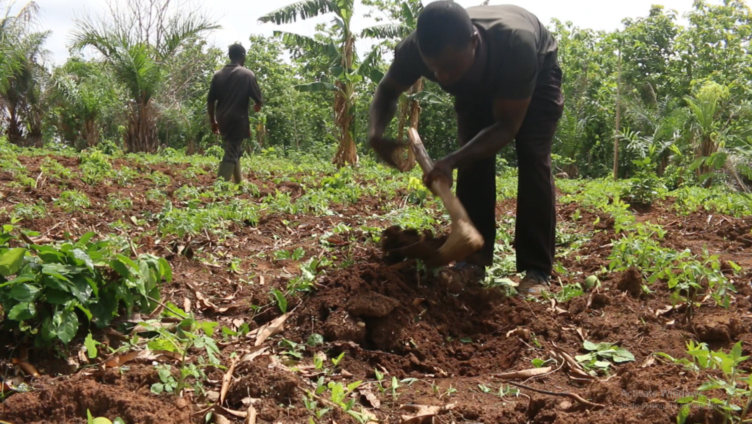
Ghana is losing value every single day, not because our farmers are unproductive or our land is infertile, but because our agricultural system is disconnected. Over 7 million farmers processors wake up each morning to an economy where communication itself is a barrier to productivity.
A bold national demand is emerging as the Ghana Chamber of Agribusiness calls on telecom operators to immediately deliver affordable and zero-rated communication services to over seven million agribusiness actors across the country.
At stake is not just farmer convenience, but the future efficiency, productivity, and industrial growth of Ghana’s agricultural economy.
A Silent Crisis: Communication Costs are Holding Agric Back
Across Ghana, millions of actors in the agricultural value chain depend daily on communication to survive, grow and function effectively:
Across Ghana, millions of actors in the agricultural value chain depend daily on communication to survive, grow and function effectively:
- Farmers coordinating planting and harvesting cycles
- Cooperatives organizing inputs, financing and extension services
- Aggregators sourcing volumes
- Transporters moving perishable goods
- Processors securing raw materials
Yet every call, every message, every megabyte comes at a cost that compounds inefficiency across the entire system.
“We have built roads and invested in inputs, but we are ignoring the most critical modern tool — affordable communication” the Chamber stated.
The Demand: Zero-rated and discounted Agri-communication
The Chamber is calling for a national shift in telecom service design, centered on:
- Zero-rated calls and messaging between farmers and associations
- Deeply discounted communication across agribusiness networks
- Affordable or sponsored data access for agricultural platforms and coordination tools
This is not about handouts. It is about unlocking the productive capacity of over 7 million Ghanaians.
Why This Matters: The Economic Impact
Affordable communication is not a convenience — it is a multiplier of economic value.
1. Faster Coordination, Better Prices
Farmers can organise collectively, reducing exploitation and improving bargaining power.
2. Reduced Post-Harvest Losses
Real-time communication ensures produce moves quickly from farm to market.
3. Stronger Cooperatives
Associations become active economic hubs, not dormant registries.
4. Reliable Supply for Industry
Agro-processors gain consistent raw materials — enabling 24-hour production and export readiness.
5. Rural Economic Activation
Millions of small actors become connected participants in a structured digital economy
From Cost Burden to Economic Infrastructure
The Chamber insists that connectivity must now be treated like:
- Roads
- Irrigation
- Energy
- A foundational input for production and growth
Without it, Ghana’s ambition to industrialise agriculture will remain constrained by fragmentation and inefficiency
Telcos Stand to Gain — At Scale
Contrary to concerns, the proposal presents a major commercial opportunity for telecom operators:
- Expansion into a 7 million-strong structured user base
- Increased mobile money adoption and transaction volumes
- Higher customer retention in rural and peri-urban areas
- Long-term revenue growth from an activated agricultural economy
“This is not revenue sacrifice — it is market expansion,” the Chamber emphasized
A Call to National Action
The Ghana Chamber of Agribusiness is urging the government to step in and align policy with economic reality.
It is calling on regulators and ministries to recognize agricultural connectivity as economic infrastructure, support frameworks for zero-rated agribusiness communication and drive collaboration between telecom operators and agricultural institutions.
The Cost of Inaction
If communication barriers remain, farmers will continue to operate in isolation, supply chains will remain inefficient, processing industries will face inconsistent inputs, export growth will be limited and rural economies will lag behind
Final Word
Ghana’s agricultural transformation does not depend only on land, labor, or capital.
It depends on connection. Affordable communication for over 7 million agribusiness actors is not a privilege — it is a national economic necessity.
The message is clear. Telcom firms must support agribusiness — not as charity, but as a central pillar of Ghana’s economic transformation.
Latest Stories
-
Power restoration fault suspected in Kumasi Central Market fire
3 hours -
The 7-foot giant of Ngleshie Amanfro: Seven-foot Ghanaian Ephraim Saawa dreams of joining the national basketball team
4 hours -
Government promises support for Kumasi Central Market fire victims
4 hours -
Vibes The Movie: Big Ghun’s Ghanaian film earns five nominations at 2026 REFFA
4 hours -
MamaCare CEO warns unresolved conflicts among health workers could undermine maternal and neonatal care
5 hours -
Health professionals urged to translate medical knowledge into practice to save mothers
5 hours -
Conflicts among care providers linked to maternal, neonatal deaths – Expert
6 hours -
GIS marks 10th TIME conference, champions improved teaching practices
6 hours -
BRICS Or Balance? What Ghana’s bid really means
7 hours -
GPRTU wants full TRAFFITECH-GH implementation to start in 2027
7 hours -
Mahama announces plans to import electric wheelchairs for PWDs
7 hours -
KGL U17 Colts 2026: Western beat Prempeh Elite Academy to set up final final with Greater Accra Region
8 hours -
Late Solanke strike salvages 10-man Spurs draw at Man United
8 hours -
Gender Ministry to monitor welfare of Nana Akua Addo’s children amid domestic violence case
8 hours -
Benedict Okyere Yeboah: Ghana’s football problem goes beyond sacking a coach
8 hours