


Audio By Carbonatix
There's just something romantic about slow, narrow-gauge, rail journeys.
In a world of where everyone is rushing to get to their destination on flights, bullet trains and highways, these remnants of the past give you time to sit back and enjoy traveling at a contemplative pace, without the rush.
India's Kalka-Shimla toy train is among the most impressive representatives of this type of rail travel, regularly topping global "most scenic" trip lists.
UNESCO added it to its World Heritage list in 1999, calling it an "exceptional technical achievement in the development of the Himalayan mountains." The listing includes two other remarkable Indian mountain railways: the iconic Darjeeling Himalayan Railway and Nilgiri Mountain Railway.
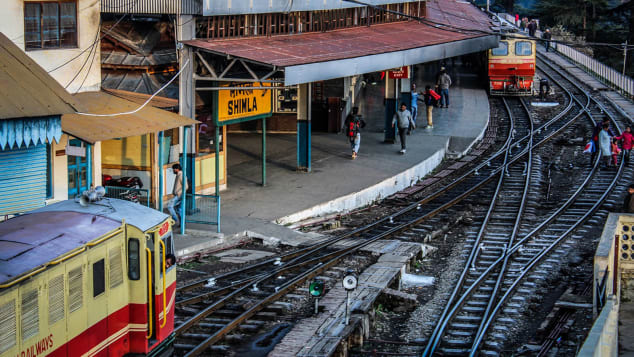 The Kalka-Shimla toy train is one of three UNESCO-listed train systems in India. Antriksh Kumar/Pixabay
With 103 tunnels, 917 curves and 988 bridges spanning over 20 stations, the 96.6 kilometer (60 mile) Kalka-Shimla line is indeed a spectacular feat of engineering.
As the name implies, it connects the sleepy railway station of Kalka with Shimla, a hill city that once was the summer residence of the British Raj government.
The five-hour ride takes you from an altitude of 658 meters in Kalka to a height of 2,075 meters in Shimla, passing through fantastic hilly scenery that's dotted with viaducts, remote villages, deep forests and the Himalayas in the distant background.
The Kalka-Shimla toy train is one of three UNESCO-listed train systems in India. Antriksh Kumar/Pixabay
With 103 tunnels, 917 curves and 988 bridges spanning over 20 stations, the 96.6 kilometer (60 mile) Kalka-Shimla line is indeed a spectacular feat of engineering.
As the name implies, it connects the sleepy railway station of Kalka with Shimla, a hill city that once was the summer residence of the British Raj government.
The five-hour ride takes you from an altitude of 658 meters in Kalka to a height of 2,075 meters in Shimla, passing through fantastic hilly scenery that's dotted with viaducts, remote villages, deep forests and the Himalayas in the distant background.
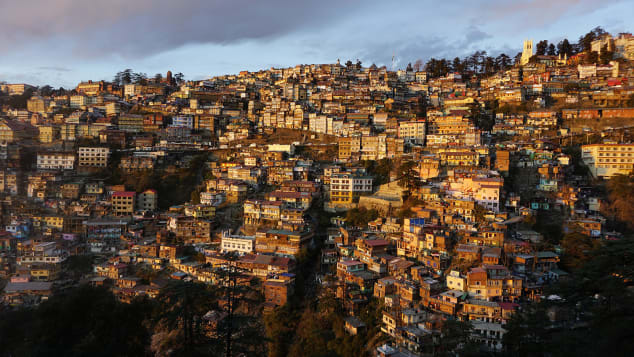 During British colonial rule, Shimla was India's summer capital thanks to its pleasant weather. Simranjeetrocksingh/Pixabay
There's no denying that having "toy train" in the name ensures the rail line is a tourism magnet, a catchy description for the narrow-gauge, small-sized locomotives tirelessly serving the route.
But it's also got an interesting backstory too, its history interconnected with British colonial rule in India.
Ever since the beginning of the Raj -- the period of British rule on the Indian subcontinent from 1858 and 1947 -- the new rulers were searching for an "English climate," a place that would offer refuge from the unbearable heat of the Delhi and Kolkata summers.
They found it in Shimla, which, before the second half of the 18th century, was nothing but a remote forested area with a few temples.
British travelers who visited the area noted the climate's resemblance to their homeland and in 1863 the Viceroy of India, John Lawrence, decided to move the summer capital to Shimla.
It soon became a travel hotspot, its Neo-Gothic architectural core welcoming a colorful crowd of high-ranking officials, British soldiers and adventurists.
"Jungle Book" author Rudyard Kipling spent some time here too, referring to the city as a "center of power as well as pleasure" while noting its "frivolity, gossip and intrigue".
During British colonial rule, Shimla was India's summer capital thanks to its pleasant weather. Simranjeetrocksingh/Pixabay
There's no denying that having "toy train" in the name ensures the rail line is a tourism magnet, a catchy description for the narrow-gauge, small-sized locomotives tirelessly serving the route.
But it's also got an interesting backstory too, its history interconnected with British colonial rule in India.
Ever since the beginning of the Raj -- the period of British rule on the Indian subcontinent from 1858 and 1947 -- the new rulers were searching for an "English climate," a place that would offer refuge from the unbearable heat of the Delhi and Kolkata summers.
They found it in Shimla, which, before the second half of the 18th century, was nothing but a remote forested area with a few temples.
British travelers who visited the area noted the climate's resemblance to their homeland and in 1863 the Viceroy of India, John Lawrence, decided to move the summer capital to Shimla.
It soon became a travel hotspot, its Neo-Gothic architectural core welcoming a colorful crowd of high-ranking officials, British soldiers and adventurists.
"Jungle Book" author Rudyard Kipling spent some time here too, referring to the city as a "center of power as well as pleasure" while noting its "frivolity, gossip and intrigue".
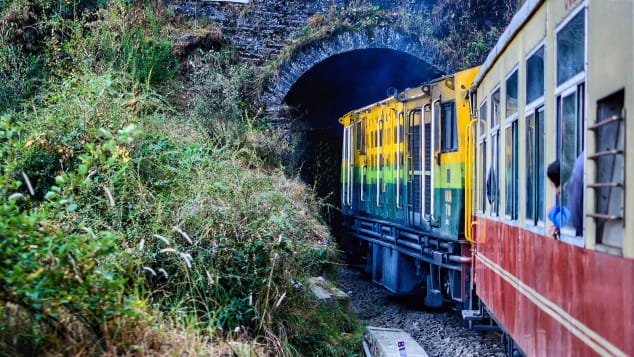 The line first started operating in 1903. confused_me/Pixabay
But Shimla had a big accessibility problem due to its remote and mountainous location. Horse carriages were the primary means of getting to the town.
It was only in 1903 that the brand new Kalka-Shimla railway line was opened, a state-of-art transportation project that not only provided a long-desired connection with the summer capital but also changed the lives of the communities living in this difficult terrain.
The line first started operating in 1903. confused_me/Pixabay
But Shimla had a big accessibility problem due to its remote and mountainous location. Horse carriages were the primary means of getting to the town.
It was only in 1903 that the brand new Kalka-Shimla railway line was opened, a state-of-art transportation project that not only provided a long-desired connection with the summer capital but also changed the lives of the communities living in this difficult terrain.
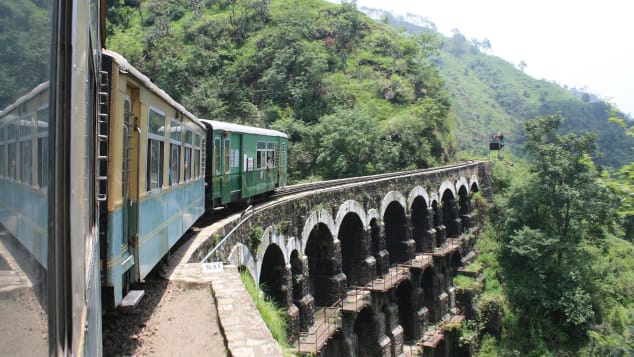 Keep an eye out for Bridge 541 as you approach Kanoh Station. It's the highest railway bridge in India. Wolfgang Reindl/Pixabay
The journey itself is an amazing experience, an epitome of adventurous train travel.
The small train slowly pierces through the breathtaking landscapes, taking you higher and higher with every new hill station.
Be it summer or winter, you're guaranteed fantastic views of the picturesque Himachal Pradesh region.
The unhurried trip is perfect for capturing the panoramas and enjoying the scenery.
The experience is enhanced by the catering onboard -- nothing tops marveling at the expansive mountainous vistas while sipping a delicious masala chai.
Keep an eye out for the wonderful arched Bridge Number 541 as you approach Kanoh station. Resembling the Harry Potter-featured Scottish Glenfinnan Viaduct, it features 34 arches and stands at a height of 23 meters, making it the highest and one of the most impressive railway bridges in India.
The trip ends in Shimla, one of India's most interesting destinations thanks to a combination of colonial architecture and Indian modernity, not to mention its magnificent position in the heart of the south-western ranges of the Himalayas.
Keep an eye out for Bridge 541 as you approach Kanoh Station. It's the highest railway bridge in India. Wolfgang Reindl/Pixabay
The journey itself is an amazing experience, an epitome of adventurous train travel.
The small train slowly pierces through the breathtaking landscapes, taking you higher and higher with every new hill station.
Be it summer or winter, you're guaranteed fantastic views of the picturesque Himachal Pradesh region.
The unhurried trip is perfect for capturing the panoramas and enjoying the scenery.
The experience is enhanced by the catering onboard -- nothing tops marveling at the expansive mountainous vistas while sipping a delicious masala chai.
Keep an eye out for the wonderful arched Bridge Number 541 as you approach Kanoh station. Resembling the Harry Potter-featured Scottish Glenfinnan Viaduct, it features 34 arches and stands at a height of 23 meters, making it the highest and one of the most impressive railway bridges in India.
The trip ends in Shimla, one of India's most interesting destinations thanks to a combination of colonial architecture and Indian modernity, not to mention its magnificent position in the heart of the south-western ranges of the Himalayas.
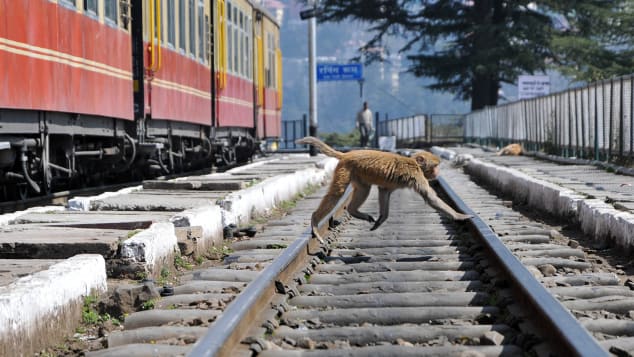 The unhurried trip offers plenty of time to enjoy the scenery. STR/AFP/AFP via Getty Images
Highlights here include the Neo-Gothic Christ Church, action-packed shopping area Mall Street and The Ridge, which offers beautiful panoramas of the surroundings.
The unhurried trip offers plenty of time to enjoy the scenery. STR/AFP/AFP via Getty Images
Highlights here include the Neo-Gothic Christ Church, action-packed shopping area Mall Street and The Ridge, which offers beautiful panoramas of the surroundings.
The Kalka-Shimla toy train is one of three UNESCO-listed train systems in India. Antriksh Kumar/Pixabay
With 103 tunnels, 917 curves and 988 bridges spanning over 20 stations, the 96.6 kilometer (60 mile) Kalka-Shimla line is indeed a spectacular feat of engineering.
As the name implies, it connects the sleepy railway station of Kalka with Shimla, a hill city that once was the summer residence of the British Raj government.
The five-hour ride takes you from an altitude of 658 meters in Kalka to a height of 2,075 meters in Shimla, passing through fantastic hilly scenery that's dotted with viaducts, remote villages, deep forests and the Himalayas in the distant background.
A British Raj hotspot
During British colonial rule, Shimla was India's summer capital thanks to its pleasant weather. Simranjeetrocksingh/Pixabay
There's no denying that having "toy train" in the name ensures the rail line is a tourism magnet, a catchy description for the narrow-gauge, small-sized locomotives tirelessly serving the route.
But it's also got an interesting backstory too, its history interconnected with British colonial rule in India.
Ever since the beginning of the Raj -- the period of British rule on the Indian subcontinent from 1858 and 1947 -- the new rulers were searching for an "English climate," a place that would offer refuge from the unbearable heat of the Delhi and Kolkata summers.
They found it in Shimla, which, before the second half of the 18th century, was nothing but a remote forested area with a few temples.
British travelers who visited the area noted the climate's resemblance to their homeland and in 1863 the Viceroy of India, John Lawrence, decided to move the summer capital to Shimla.
It soon became a travel hotspot, its Neo-Gothic architectural core welcoming a colorful crowd of high-ranking officials, British soldiers and adventurists.
"Jungle Book" author Rudyard Kipling spent some time here too, referring to the city as a "center of power as well as pleasure" while noting its "frivolity, gossip and intrigue".
The line first started operating in 1903. confused_me/Pixabay
But Shimla had a big accessibility problem due to its remote and mountainous location. Horse carriages were the primary means of getting to the town.
It was only in 1903 that the brand new Kalka-Shimla railway line was opened, a state-of-art transportation project that not only provided a long-desired connection with the summer capital but also changed the lives of the communities living in this difficult terrain.
Enjoying the Kalka-Shimla line
In operation for more than 100 years , the railway has entered the 21st century generally intact and remains a definite draw for train aficionados.
Keep an eye out for Bridge 541 as you approach Kanoh Station. It's the highest railway bridge in India. Wolfgang Reindl/Pixabay
The journey itself is an amazing experience, an epitome of adventurous train travel.
The small train slowly pierces through the breathtaking landscapes, taking you higher and higher with every new hill station.
Be it summer or winter, you're guaranteed fantastic views of the picturesque Himachal Pradesh region.
The unhurried trip is perfect for capturing the panoramas and enjoying the scenery.
The experience is enhanced by the catering onboard -- nothing tops marveling at the expansive mountainous vistas while sipping a delicious masala chai.
Keep an eye out for the wonderful arched Bridge Number 541 as you approach Kanoh station. Resembling the Harry Potter-featured Scottish Glenfinnan Viaduct, it features 34 arches and stands at a height of 23 meters, making it the highest and one of the most impressive railway bridges in India.
The trip ends in Shimla, one of India's most interesting destinations thanks to a combination of colonial architecture and Indian modernity, not to mention its magnificent position in the heart of the south-western ranges of the Himalayas.
The unhurried trip offers plenty of time to enjoy the scenery. STR/AFP/AFP via Getty Images
Highlights here include the Neo-Gothic Christ Church, action-packed shopping area Mall Street and The Ridge, which offers beautiful panoramas of the surroundings.
How to buy tickets for the Kalka-Shimla toy train
Tickets can be purchased at Kalka station on the day of the journey, however, it is strongly advised to book beforehand as it's an incredibly popular train trip. The Kalka-Shimla line is managed by the state-run Indian Railways and the best way to buy the tickets is through the official IRCTC website. (You'll have to create an account to use it.) You can also use ticket booking services such as Cleartrip and Make My Trip, though you'll still have to create an Indian Railways account and pay extra. Many hotels are able to assist with ticket booking as well. Currently, there are four trains operating on the Kalka-Shimla line and each one has a First Class seating. The one-way First Class ticket costs about 370 rupees or 5 dollars. To get the most out of your journey, we recommend this option. Consider timing too -- you don't want to ride in the blackness of the evening crammed in the middle seat of a packed car.DISCLAIMER: The Views, Comments, Opinions, Contributions and Statements made by Readers and Contributors on this platform do not necessarily represent the views or policy of Multimedia Group Limited.
DISCLAIMER: The Views, Comments, Opinions, Contributions and Statements made by Readers and Contributors on this platform do not necessarily represent the views or policy of Multimedia Group Limited.
Latest Stories
-
Deputy Health Minister charges military nurses, midwives to remain dedicated to service
3 minutes -
Three suspected robbers killed as police dismantle gang in Upper East
6 minutes -
EU Ambassador pays courtesy call on IGP to strengthen security cooperation
9 minutes -
Africa’s dependence on foreign powers betrays Nkrumah’s unfinished vision – P.L.O. Lumumba
18 minutes -
3 suspects shot dead, 2 officers injured in Tilly Forest robbery follow-up operation
20 minutes -
Nkrumah’s unfinished Pan-African project must be completed – P.L.O. Lumumba
22 minutes -
Mysterious illness leaves children struggling to walk, hear as Mafi Kope community appeals for urgent medical help
58 minutes -
Ghana begins free rabies vaccination for 25,000 pets
1 hour -
Ghana Navy strengthens operational readiness with specialist seaman gunners training
1 hour -
Nkrumah’s legacy must be measured by action, not ceremonies – Armah-Kofi Buah
1 hour -
Kwesi Pratt Jnr questions Ghana-US defence cooperation agreement over sovereignty concerns
1 hour -
Nkrumah’s legacy must drive African unity, self-reliance and environmental protection – Armah-Kofi Buah
1 hour -
Nkrumah’s inspiration should unite Africans despite political differences – Dr Opoku Prempeh
1 hour -
Some dissolved NSA board members could be reappointed – Kofi Adams
2 hours -
Mahama leaves for New York to attend 81st UN General Assembly
2 hours