

Audio By Carbonatix
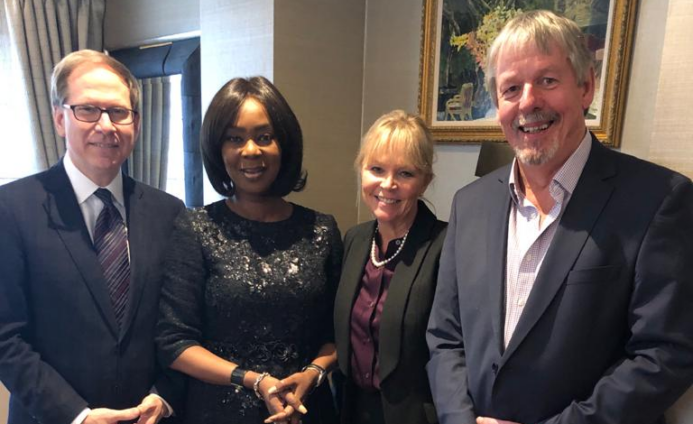
U.S.-based Fortify and Nigeria-based Wellbeing Foundation Africa (WBFA) has announced a formal partnership to address iron deficiency.
This has been the major underlying cause of maternal deaths during childbirth in developing countries.
Fortify is working to drive innovation in the private sector, guiding companies to add iron to everyday meals through the fortification of simple, healthy foods consumed by most families.
The company's efforts with leading food producers have already resulted in the monthly production of 20 million sachets of iron-fortified tomato paste varieties in Nigeria alone – a historic milestone in food fortification as it is the first-ever, iron-fortified tomato-based product.
Production and distribution in Ghana are expected later this year.
Iron deficiency is the most widespread public health disorder in the world, affecting at least one-third of the global population.
The World Bank and the Copenhagen Consensus have both ranked food fortification as one of the best investments in development in terms of cost-effectiveness.
According to the World Health Organisation (WHO), food-based approaches represent the most desirable and sustainable method of preventing micronutrient malnutrition.
Fortify's partnership with the Wellbeing Foundation Africa, a Nigeria-based non-governmental organization dedicated to maternal, newborn and child health, brings substantial resources to support Fortify’s work.
In addition to its deep relationships with governments and institutions in West Africa and globally, WBFA has the infrastructure and network to educate community health workers and families about the potentially life-saving benefit of consuming this improved version of tomato paste, a West African staple.
“Joining forces with the Wellbeing Foundation at this juncture could not be better timing. Now that iron-fortified tomato mixes are reaching even the most rural villages, we can jointly work to help educate health care workers and women about the importance of adding iron to their diets,” Fortify’s Founder and CEO, Nancy Martin, had said.
She praised the founder and president of Wellbeing Foundation Africa, Toyin Ojora-Saraki for being a leading voice in maternal, newborn and child health in Nigeria since serving as the First Lady of Kwara State in 2003.
“She knows how to reach and educate stakeholders at every level in Nigeria. She is also a recognized global voice for women, newborns and children, advising multiple organizations including the World Health Organization and the United Nations."
"We are especially pleased that Mrs Saraki has recently accepted our invitation to serve as a member of Fortify’s Advisory Council,” Nancy Martin added.
Mrs Saraki had also stated that when she began discussions with Fortify, she was impressed with how practical a solution for iron deficiency anaemia can be found in producing tomato paste already built into the food supply and is a big part of meals every African eats.
“According to WHO the benefits of ending iron deficiency anaemia are substantial as timely treatment can restore personal health and raise national productivity levels by as much as 20%,” she continued.
Mrs Saraki stated that her outfit will ensure that the initiative engages with First Ladies and policymakers across Africa in accelerated efforts to eradicate iron deficiency.
"I know how much impact First Ladies in Africa can bring to women, families and communities, particularly in improving maternal health outcomes due to their highly visible advocacy. Together, the Wellbeing Foundation Africa and Fortify are determined to end the devastating effects of iron deficiency on women and their families.”
Iron is the essential element necessary for building blood. In developing countries, the main cause of iron deficiency is low iron bioavailability of the diet. Premenopausal women are particularly vulnerable due to iron loss in menstrual blood and the increased iron demands of pregnancy.
The overall global prevalence of anaemia is just over 40% among two highly vulnerable populations: women aged 15–49 years and children under the age of five. In developing countries, the prevalence exceeds 50%.
Iron deficiency can lead to premature labour, intrauterine growth retardation, low birth weight of the infant, birth asphyxia, neonatal anaemia, and death (of both the mother and the child).
The consequences of iron deficiency not only affect personal health but the economic health of communities and countries as well.
Fortify was founded in 2012 when it began exploring market-based alternatives to iron-fortified flour, which is mandated by some African governments but is not widely distributed to the rural areas that make up nearly 70% of most African countries.
The Wellbeing Foundation Africa, on the other hand, was founded in 2004 by Toyin Ojora Saraki with the aim of improving health outcomes for women, infants, and children.
Latest Stories
-
Running for an office and running the office
4 minutes -
Drowning in data, dying from bad decisions -BigData Ghana CEO charges Africa to act
5 minutes -
“It’s time for us to make our voices heard” – GAUA on strike over allowance disparity
12 minutes -
Ghana’s graduates trapped in unemployment as the system fails to absorb them
14 minutes -
SDA leads partnership with government to complete Agenda 111 projects
16 minutes -
GAUA strike to halt salaries, admissions, promotions and procurement across universities
18 minutes -
We cannot drink gold: The price Ghana is paying for galamsey
21 minutes -
We’ve worked without condition of service since 2008 – GAUA
21 minutes -
African climate negotiators convene in Accra to shape future of Global Just Transition Mechanism
34 minutes -
Sir David Adjaye calls for an Architecture of African Christianity at international symposium in Accra
46 minutes -
Young minds, big ideas in battle of wits as Luv FM High School Debate enters 7th edition
51 minutes -
Rent Control makes rent cards mandatory for landlords, hostel operators from August 17
53 minutes -
About 15km of inner roads completed ahead of Suame Interchange construction – Urban Roads DG
58 minutes -
About 90% of PWDs removed from streets in Bosome Freho through PWD fund – DCE
59 minutes -
UTAG rejects GAUA claims of discrimination over Market Premium disparities in public universities
1 hour