

Audio By Carbonatix
The Alliance to End Plastic Waste has announced a partnership with the ASASE Foundation to support women entrepreneurs working to reduce plastic litter in the community.
The initiative called 'Closing the Loop' uses a circular economy model, to enable local communities to benefit from discarded plastic waste by collecting, reprocessing, and reselling it.
Launched by ASASE Foundation in 2018, the 'Closing the Loop' initiative seeks to provide seed money to equip plastic waste reprocessing plants as well as provide technical and business management training for women entrepreneurs to run the recycling plant for profit.
The project has already created eight jobs within the community as well as diverted 35 (metric) tons of plastic from wastes in the first twelve months.
By partnering with the Alliance, the capacity of the processing plant is expected to increase to divert 2,000 (metric) tons of plastic waste per year and create even more jobs.
“A key pillar of ending plastic waste in the environment is the sustainable impact it will bring to the well-being of local communities.
This is why our partnership with ASASE is especially meaningful because 'Closing the Loop' is the right step towards a circular economy model. It directly benefits those living in areas which don’t have access to plastic waste collection and sorting systems.
"This initiative is a simple but scalable action that benefits the environment but supports the inspiring women of Ghana who are building their communities on the path towards ending plastic waste in the environment, ” President and CEO of Alliance to End Plastic Waste, Jacob Duer said.
Adding to this view, Founder and Managing Director of ASASE Foundation, Dana Mosora said “what we value most in our partnership with the Alliance to End Plastic Waste is the access to the expertise in waste management which we can leverage now in our project, effectively multiplying the impact of the funding provided by the Alliance to our project.”
The partnership has also opened the possibility to bring in expertise from an academic partner, the Swiss Federal Institute of Technology.
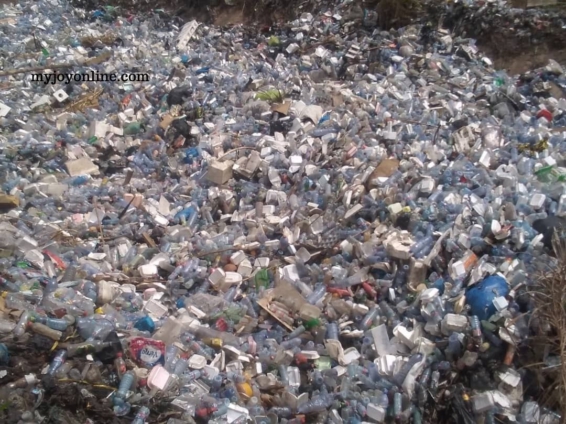
The newly established recycling plant processes a range of plastic waste from water sachets to shampoo and detergent bottles and large cooking oil containers; converting them into regrinds.
The regrinds are then sold to recyclers to make items such as pavement blocks, sheets for construction, basins and liners, most of which goes back into the community.
Latest Stories
-
Road inspections not to witch-hunt contractors – Kwame Agbodza
18 minutes -
Inter Milan mount stunning comeback to beat Napoli
26 minutes -
Modric plans to play for Croatia past 41st birthday
36 minutes -
Bayern fail to score for first time in 59 games
40 minutes -
Bawumia preparing new cocoa policy package for farmers – Annoh-Dompreh
44 minutes -
Wa-Tumu-Bolga road upgrade will unlock agriculture, trade – Agbodza
47 minutes -
Ghana Maritime Authority readies oil-spill response vessel for deployment
48 minutes -
Ayariga turns to drones, AI to tackle Agbogbloshie waste mountain
57 minutes -
Agbogbloshie waste heap must go – Mahama Ayariga declares
1 hour -
Government to upgrade all rural telephony sites to 4G – Communications Minister
1 hour -
Rural calls, data to become cheaper by Q1 2027 – Sam George
1 hour -
National Chief Imam remains Ghana’s strongest symbol of interfaith harmony – Mahama Ayariga
1 hour -
Nhyiaesohene pledges support to ECG to curb encroachment
1 hour -
Somanya residents demand asphalt overlay to protect road investment
2 hours -
Kumawu MP leads stakeholders meeting on human rights, child labour
2 hours