

Audio By Carbonatix
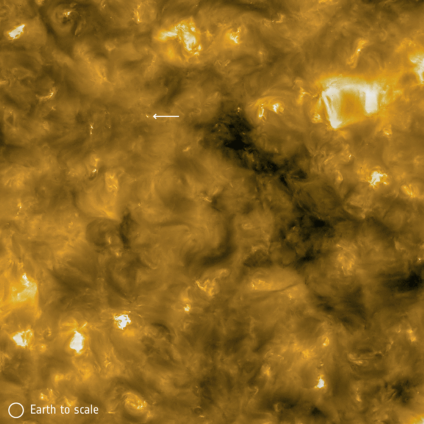
New pictures of the Sun taken just 77 million km (48 million miles) from its surface are the closest ever acquired by cameras.
They come from the European Space Agency's Solar Orbiter (SolO) probe, which was launched earlier this year.
Among the UK-assembled craft's novel insights are views of mini-flares dubbed "camp fires".
These are millionths of the size of the Sun's giant flares that are routinely observed by Earth telescopes.
Whether these miniature versions are driven by the same mechanisms, though, is unclear at this stage, says Dr David Long, Co-Principal Investigator on SolO's Extreme Ultraviolet Imager (EUI).
"Dotted across the surface, these small flares might play an important role in a mysterious phenomenon called coronal heating, whereby the Sun's outer layer, or corona, is more than 200-500 times hotter than the layers below.
"We are looking forward to investigating this further as Solar Orbiter gets closer to the Sun and our home star becomes more active," the Mullard Space Science Laboratory, University College London, researcher explained.
The European Space Agency (Esa) satellite was despatched on a rocket from Cape Canaveral in the US in February. Its mission is to reveal the secrets of our star's dynamic behaviour.
The Sun's emissions have profound impacts at Earth that go far beyond just providing light and warmth.
Often, they are disruptive; outbursts of charged particles with their entrained magnetic fields will trip electronics on satellites and degrade radio communications.
SolO could help scientists better predict this interference.
"The recent situation with coronavirus has proved how important it is to stay connected, and satellites are part of that connectivity," said Dr Caroline Harper, the head of space science at the UK Space Agency. "So, it really is important that we learn more about the Sun so that we can predict its weather, its space weather, in the same ways we've learned how to do (with weather) here on Earth."
Solar Orbiter has been set on a series of loops around the Sun that will gradually take it closer still - ultimately to a separation of less than 43 million km.
That will put SolO inside the orbit of the planet Mercury.
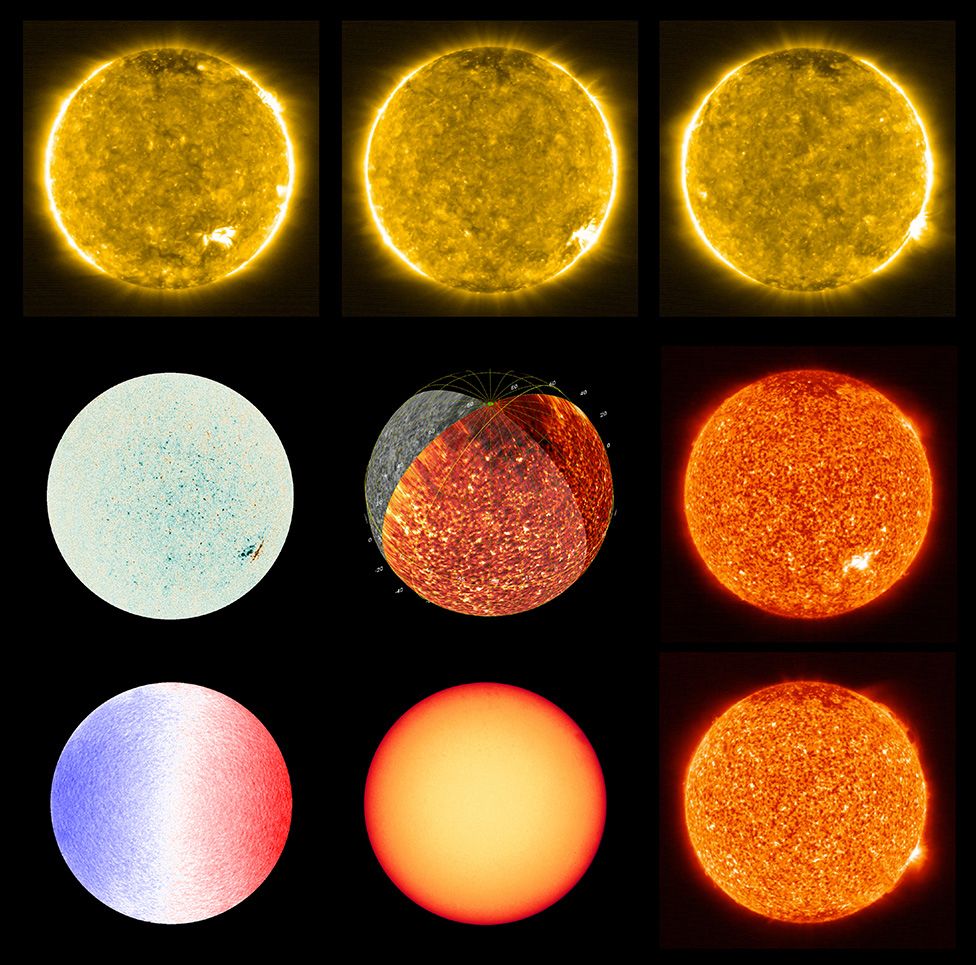
The pictures showcased on Thursday come from the most recent near pass, known as perihelion. This occurred in mid-June, inside the orbit of Venus.
For comparison, Earth sits about 149 million km (93 million miles) on average from the Sun.
To be clear: while the new images have been taken from the closest ever vantage point, they are not the highest resolution ever acquired. The largest solar telescopes on Earth will always beat SolO on that measure.
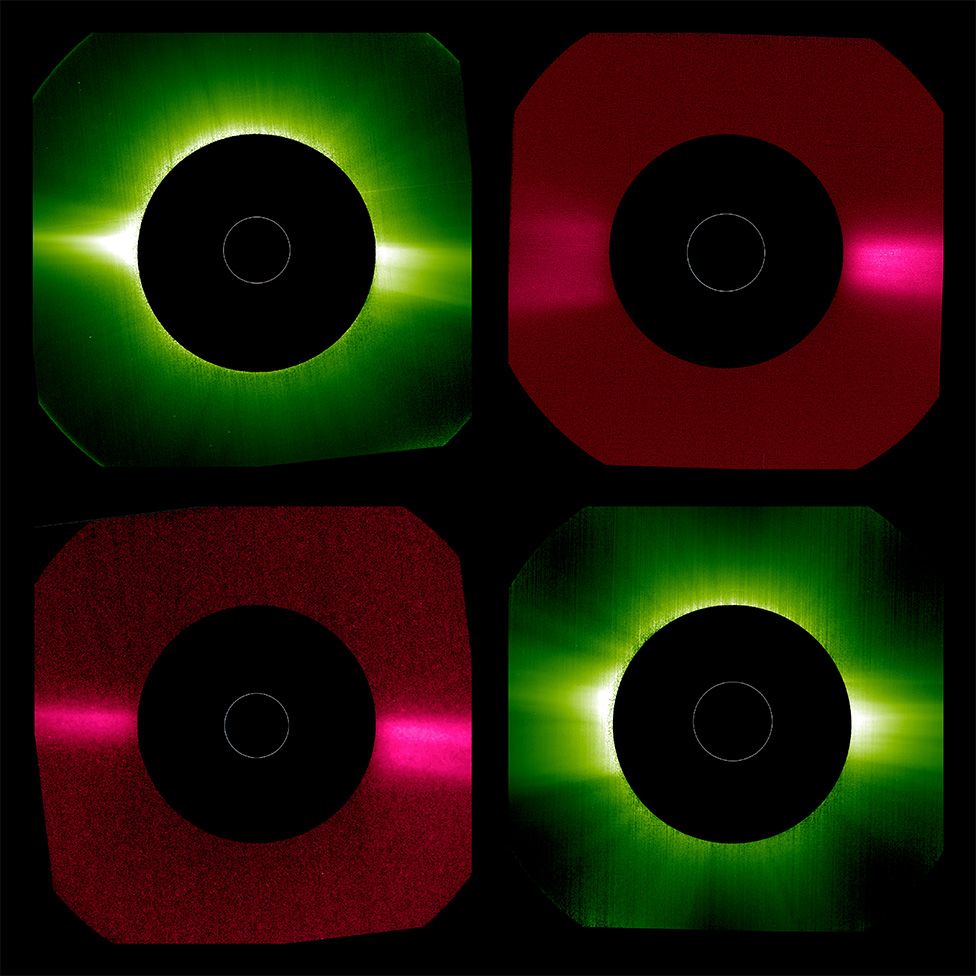
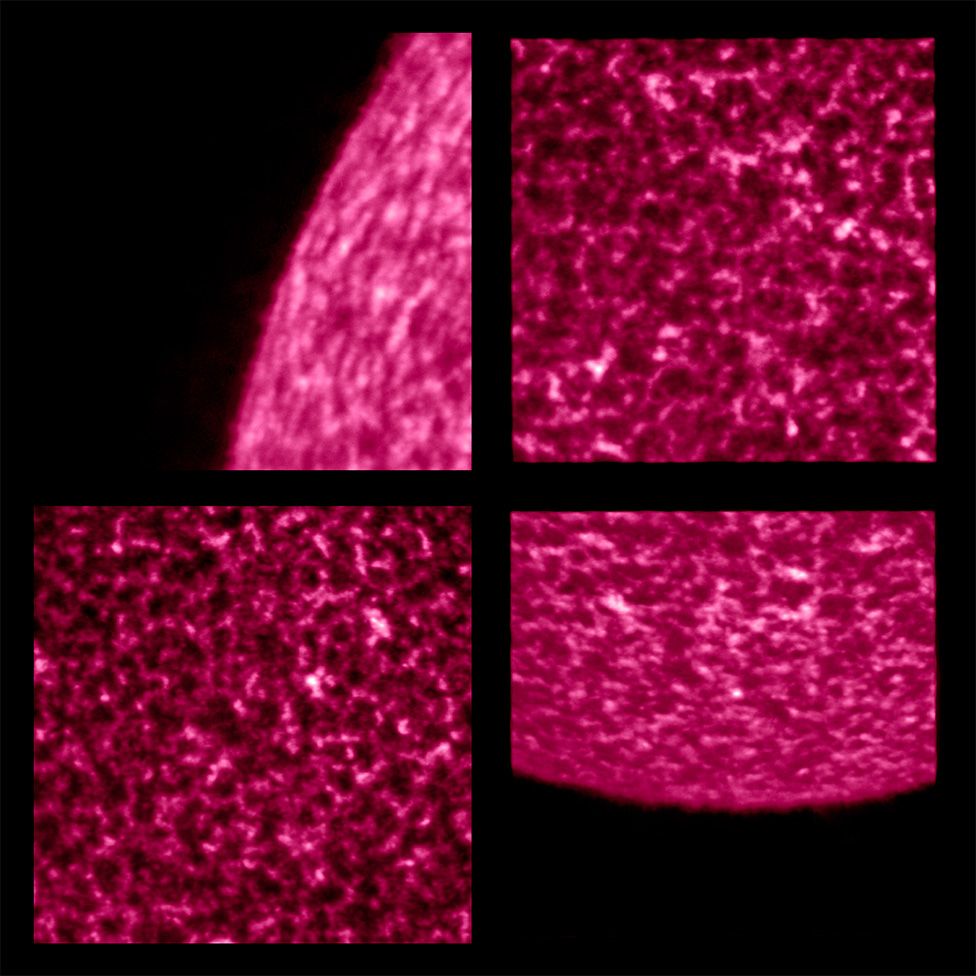
But the probe's holistic approach, using the combination of six remote sensing instruments and four in-situ instruments, puts it on a different level.
Esa's Senior Advisor for Science & Exploration, Prof Mark McCaughrean, told BBC News: "Solar Orbiter isn't going closer to the Sun just to get higher-resolution images: it's going closer to get into a different, less turbulent part of the solar wind, studying the particles and magnetic field in situ at that closer distance, while simultaneously taking remote data on the surface of the Sun and immediately around it for context. No other mission or telescope can do that."
Latest Stories
-
My journey from running mate to former Vice President is by God’s divine will – Bawumia
7 minutes -
Private equity veteran Kofi Kwakwa’s firm acquires Ghanaian textile icons GTP and Woodin
17 minutes -
Today’s front pages: Monday, September 7, 2026
22 minutes -
Elizabeth Ohene writes: Your lordship, justice must also be seen to be done
1 hour -
Ghana Water to resume spillage at Weija Dam from Wednesday
1 hour -
Agyarko ends 16-region tour, targets NPP parliamentary comeback in Greater Accra
1 hour -
GIGS welcomes UN adoption of Equal Earth map as correction to ‘450 years of cartographic injustice’ against Africa
1 hour -
‘October 3 is the only poll I believe in’ – Paul Afoko dismisses NPP chairmanship survey
3 hours -
Contractors who delay projects risk losing Big Push contracts – Agbodza
3 hours -
NPA uses Fetu Afahye to educate consumers on petroleum safety
3 hours -
Roads Minister orders contractors to keep working during official visits
3 hours -
New 4-year bond attracts GH¢4.46bn in bids
3 hours -
AIA VIP Lounge to be completed without taxpayer funds – Ablakwa
3 hours -
KEEA Assembly disburses GH¢267,518 to 94 PPCs in third quarter
3 hours -
GAF clears 175.6km corridor for Accra-Kumasi Expressway ahead of schedule
3 hours