

Audio By Carbonatix
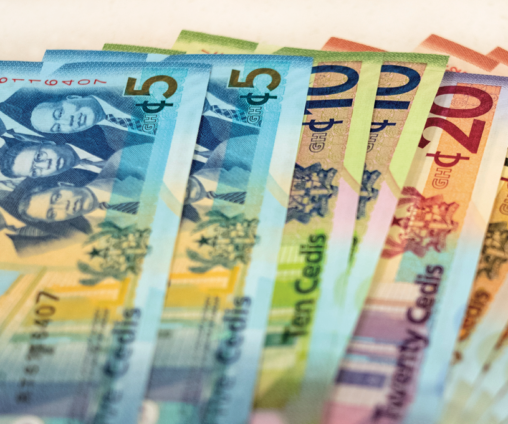
Ghana’s cedi is the eight best performing currency on the African continent despite starting the year as the best performing currency in the first two months.
It is, however, second in the ECOWAS sub-region, behind the CFA franc, among currencies tracked by joy Business.
It has witnessed both quicker and slow runs so far this year, but December Presidential and Parliamentary elections are expected to pose further downside pressures on the local currency.
This is so because foreign investors will adopt an uncertain posture though Ghana’s elections have been successful since 1992.
The CFA franc, used by eight ECOWAS countries, is the best performing currency on the African continent with an appreciation of 5.69% against the US dollar .
It is followed by the Moroccan dirham (4.03%), Tunisian dinar (2.39%) and Egyptian pound (0.70%) which have all increased in value against the American currency year-to-date.
Additionally, the Tanzanian shilling (-0.42%), the Ugandan shilling (-0.14%) and the Malawian kwacha (-1.49%) have all also fared better than the cedi though have lost value to the dollar.
On the other hand, the cedi has done better than the Kenyan shilling (-6.44%), Nigerian naira (-19.24%) and the South African rand (-19.51%) on the continent.
The announcement by the Bank of Ghana to banks to hold onto dividend payments and other measures appears to have helped the cedi’s performance this year.
The partial lockdown of the economy also caused some reduction in trading activities on the foreign exchange market, thus keeping a certain level of stability.
Together with other currencies, the local currency also had profited from low demand pressures, largely because of the covid-19 pandemic due to reduction in imports.
However, recent uptick in corporate demand for forex coupled with disinvestments of some cedi denominated securities by foreign investors is a major concern going forward.
Currency and Economic Analyst at Databank, Courage Martey, tells Joy Business “the cedi has maintained a very stable performance since then [partial lockdown], and we haven’t seen any disruptions to the performance of the cedi on the market.
"Investors generally expected a lot of the numbers [macroeconomic indicators]that came out and so there wasn’t much shock that will be priced into the exchange rate as a result of the midyear budget.’
Furthermore, he said “the cedi has maintained quiet stable performance on the market. On the retail market it has actually gained about 0.1% since the mid-year budget review. On the interbank market it has rather lost 0.1%.
Forecast
Based on the current trend, the cedi is expected to end 2020 with a year-to-date depreciation of less than 5.0%. This would be however better than the 8.33% loss over the same period last year.
Latest Stories
-
Ghana ranked joint 6th in 2026 Absa Africa Financial Markets Index
56 minutes -
Demand and savings deposits decreased in August 2026, but currency outside banks increased by 4%
1 hour -
Fiscal policy implementation poses downside risk to inflation – BoG
2 hours -
Organised Labour should seek fair adjustment, not excessive pay rise – Labour consultant
2 hours -
BoG maintains medium-term inflation target of 8 ± 2%
2 hours -
Sammi Awuku urges NPP Germany to unite ahead of 2028 elections
3 hours -
The Inconvenient Truth: We cannot pray for the cure while protecting the disease
3 hours -
MTN Ghana trains civil society organisations on artificial intelligence
4 hours -
GoldBod FX framework aims to make dollar supply predictable – Acheampong
5 hours -
How does a Ghanaian team make it to the BAL?
5 hours -
Ghana’s investment climate presents opportunities for industrial growth and job creation.
5 hours -
‘I paid thousands to a company for jobs that never came’
5 hours -
SSNIT intensifies informal sector enrolment drive with Techiman float
5 hours -
Ghana seeks long-term mining investments that benefit local communities – Armah-Kofi Buah
5 hours -
GHATOF demands compensation for 85 businesses affected by La Pleasure Beach demolition
6 hours