

Audio By Carbonatix
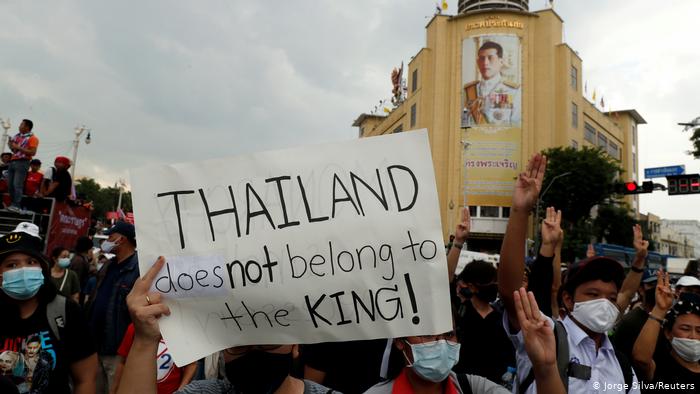
The emergency decree restricts transport, publication of "sensitive news" and gives police and soldiers authority to resolve the "emergency situation." The move follows anti-government protests in Bangkok.
Thailand's prime minister, Prayuth Chan-ocha, signed an emergency decree on Thursday, forbidding public gatherings of over five people and restricting transport.
The decree also bans the publication of "sensitive news" and gives police and soldiers authority to resolve the "emergency situation."
Prayuth cited "aggression affecting the state's stability" for the move, after anti-government protests escalated on Wednesday night.
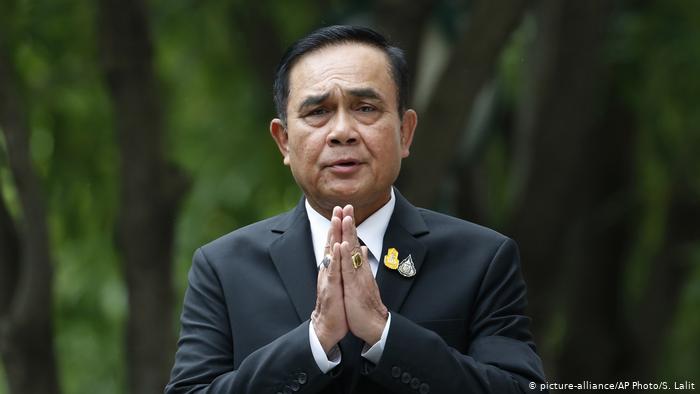
"It is extremely necessary to introduce an urgent measure to end this situation effectively and promptly to maintain peace and order," he said. It is not clear for how long this emergency decree will be in effect.
Another reason cited for the emergency measure was the obstruction of a royal motorcade by the protesters on Tuesday.
The decree took effect at 4 a.m., after which police occupied the streets where protesters were present. By then, several protesters had already left and planned to reconvene in the afternoon at a major commercial intersection in Bangkok.
At least three protest leaders were arrested by the police, according to the Thai Lawyers for Human Rights.
Thousands protest for reforms
Thousands of people marched to the Government House on Wednesday to demand the resignation of the ex-army chief turned prime minister, Prayuth Chan-ocha.
The protests took place on the anniversary of a student uprising on October 14, 1973 that led to the toppling of a military dictatorship.
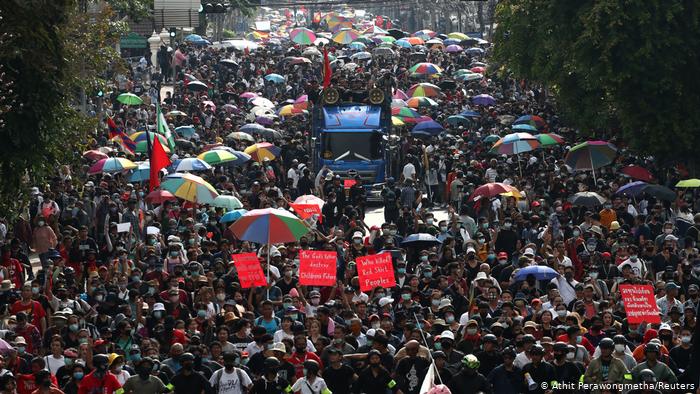
The youth-led movement has been staging rallies since July to push for an overhaul of the government, a new constitution and an end to harassment of government critics. Some have also made controversial calls for reforms to the monarchy, long considered a sacrosanct part of Thai identity.
Last month, tens of thousands of pro-democracy protesters turned out in Bangkok in one of the country's largest rallies in years.
Activists argue that Prime Minister Prayuth, who toppled an elected government in a 2014 coup, manipulated last year's general elections to ensure the military stayed in control — a charge he denies.
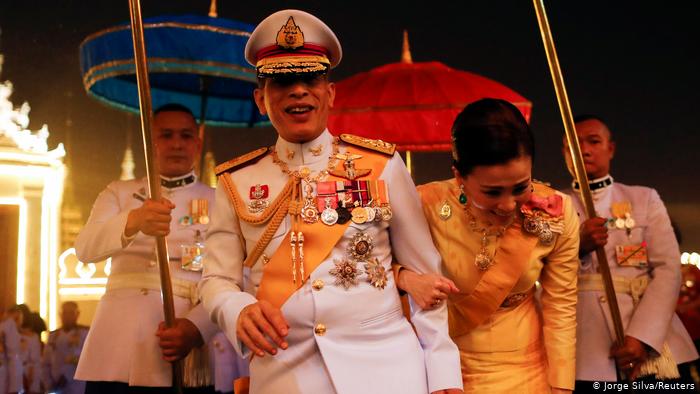
The protesters are also calling for curbs on the constitutional powers of the king and for him to transfer back the control he took of some army units. However, these public demands have been met with a backlash from the royalist establishment.
Under Thailand's royal defamation law, criticism of the monarchy is punishable with up to 15 years in prison.
Latest Stories
-
Savio scores on debut as Spurs bounce back to beat Charlton
1 hour -
Uefa to push to remove Infantino after dropping boycott
1 hour -
GH¢1.7bn GoldBod loss misconstrued – IEA
2 hours -
Mahama unveils Bawku Revitalisation Fund Committee
2 hours -
Christians urged not to hide their gifts for church development
2 hours -
Deputy AG punches holes in Hannan’s counsels’ letters, medical reports
2 hours -
Field cashier of Cooperative Credit Union remanded for stealing
2 hours -
Ghana Armwrestling Federation engages Egyptian Ambassador over sports collaboration
2 hours -
NSMQ 2026: Augusco declared winners, book quarter-final spot after Anlo, Kumasi High walk off
3 hours -
Mourinho says hat-trick hero Mbappe hungry for Real Madrid history
3 hours -
Democracy Cup 2026: Winner to play in the United States in May 2027
3 hours -
NSMQ 2026: St. John’s Grammar knocks Mpraeso SHS off seeded spot, advances to quarter-finals
3 hours -
Rashid Pelpuo welcomes new role, thanks Mahama for keeping him in government
3 hours -
Mahama inaugurates committee to oversee GH¢1bn Bawku Revitalisation Fund
4 hours -
Berko’s US conviction does not automatically establish Ghana bribery claims – OSP
4 hours