

Audio By Carbonatix
Technology is getting us through the pandemic, and technology can also drive our continent’s recovery in the post-pandemic era.
For most of us, 2020 has been a year of almost dramatic, almost traumatic change. As individuals, our lives have been transformed; as businesses, our operating models have been revolutionised; and as a society, we have been shaken to the core.
Fortunately, many of the technologies that have helped us through the worst of the pandemic and the lockdown, hold the key to success and prosperity in the post-lockdown era.
The new ways of interaction that emerged this year – characterised by remote work, distance education, remote healthcare, online shopping and mobile money – will define how society works in future.
Across the economy the pace of change is already enormous. Last week, when we launched a 5G lab in Wits University, Professor Adam Habib, the Wits vice-chancellor told us how Wits had moved completely online within three weeks during the pandemic– a process that was previously planned to take three years.
The move online has happened across society – not only in education but in workplaces, in retail as well as in entertainment – and this move will be permanent. This explains why data traffic soared by more than 40% while digital services boomed across Sub-Saharan Africa.
African governments have responded quickly to the demand, releasing temporary spectrums and making policy recommendations, as the President’s 4IR commission has done in South Africa.
Some of these policy moves – recently announced by minister of communications, telecommunications and postal services Stella Ndabeni-Abrahams – have included a commitment to invest in human capital, establishing an artificial intelligence institute, setting up a platform for advanced manufacturing and supporting data security to enable innovation.
Policy moves such as these are to be encouraged, as they open the door for ICT companies to make an ever greater contribution to social-economic development.
Government can further enable ICT-led development through policies to ensure rapid deployment of infrastructure, lower the cost of spectrum, and provide tax relief to make smartphones more affordable.
Another strategy for building a better Africa through ICT is to invest in digital skills. According to GSMA, only 28% of Africa’s 1.3 billion citizens subscribe to the mobile internet, compared to the global average of 48%.
Connectivity is not just about coverage and speed, but also usage and inclusion. We need to invest more in digital skills for people, to digitally empower them, so that they can use digital technologies not only for consuming others’ ideas but also to develop their own.
For ICT to better play its role as growth accelerator and social equalizer, we need to connect more households and businesses, especially SMEs, and upgrade the digital infrastructure to better meet the increasing demands for online services.
At Huawei we are deeply conscious of our responsibility in this regard, and we are constantly investing skills and infrastructure to firstly provide the networks and secondly give our people the ability to use them for their own upliftment.
We aim to bring digital to every person, home and organisation for a fully connected, intelligent world. In South Africa, one way we’ve been doing this is by employing Huawei’s AI to help customers predict and manage networks, improving operations efficiency by more than 30%.
In Angola, our digital power solutions have brought down energy costs at base stations by as much as 70%, effectively reducing the carbon footprint of operators.
Our software solutions can increase the efficiency of broadband connections to premises by 30% while lowering costs by 40%, which could bring more African households and businesses online.
In the Cloud and AI domain, Huawei’s newly launched South African local data centres provide public cloud services in South Africa and the whole continent.
Huawei ICT Academies have been set up in more than 400 top universities in 17 African countries, producing more than 50 000 certified graduates.
Ours is just one component of what must be a society-wide movement to relaunch our society for the post-pandemic era of digital empowerment. It is our time to thrive and requires all of us to put our shoulders to the wheel to build a better future for ourselves and all the people of Africa.
****
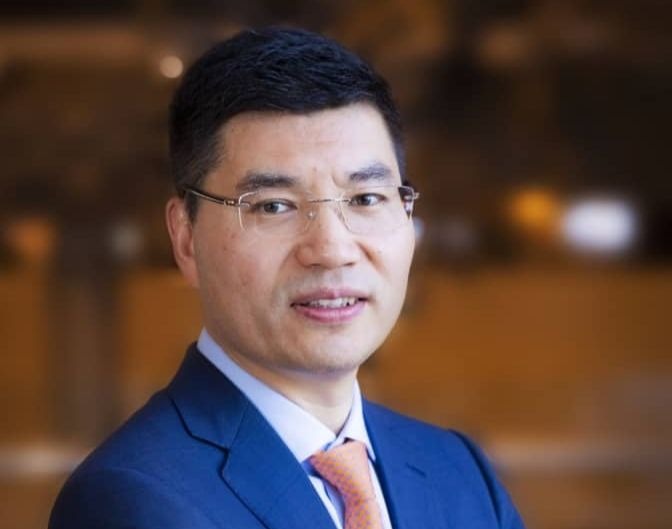
The writer is the President of Huawei Southern Africa.
Latest Stories
-
Asiedu Nketiah urges political parties to rebuild public trust at inter-continental dialogue in South Korea
12 minutes -
Heavy pitch, intense heat made Kotoko draw physically demanding – Eric Tinkler
20 minutes -
Pregnancy School initiative lauded for reducing maternal mortality in Kwabre East
20 minutes -
Emergency nature of South Africa evacuation justifies GH¢49.7m cost — International relations expert
21 minutes -
Hearts coach Kapor tips Alex Banso for Ghana football stardom
29 minutes -
“Antoine Semenyo can play nine” – Maresca backs Semenyo to deputise for Haaland
42 minutes -
Semenyo becomes second Ghanaian to hit 50 Premier League goal contributions
43 minutes -
King makes clear Harry and Meghan remain non-working royals
44 minutes -
Former GPHA Director-General Edward K. Osei receives Honorary Doctorate, Excellence Award
47 minutes -
Beres Owusu named Man of the Match after impressive Grazer AK display
53 minutes -
29 Players to commence Black Starlets preparations ahead of 2026 WAFU U-17 Championship
1 hour -
U-20 Women’s World Cup: Sampson demands response after ‘cheap’ goals cost Ghana
1 hour -
Ghana had no budget for South Africa evacuation but had to act – Ablakwa
1 hour -
Here’s the breakdown of the GH¢49.7m spent on evacuating Ghanaians from South Africa
1 hour -
GIGS commends Armed Forces for Accra-Kumasi Expressway progress
1 hour