

Audio By Carbonatix
Ms. Kati Csaba, the Canadian High Commissioner to Ghana, has called for more opportunities for women to enable them contribute effectively to the economic growth of the country.
She said Ghana can not achieve inclusive economic growth and the Sustainable Development Goals if it failed to fully engage women as economic actors and provided equal participation platform for them.
"Inclusive economic growth in Ghana cannot be achieved without the full and equal participation of women as economic actors,” she said, adding that “Ghanaian women need more opportunities to succeed, and greater control over resources and decision-making.
"When women are able to develop their full economic potential-whether as business leaders, entrepreneurs, or producers, economies thrive and the benefits of growth reach more people."
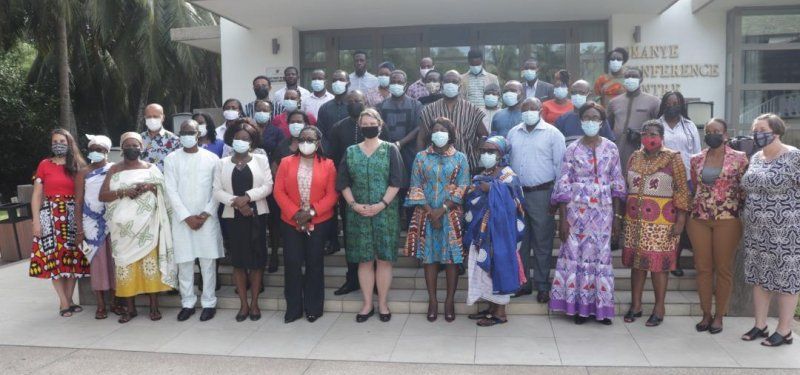
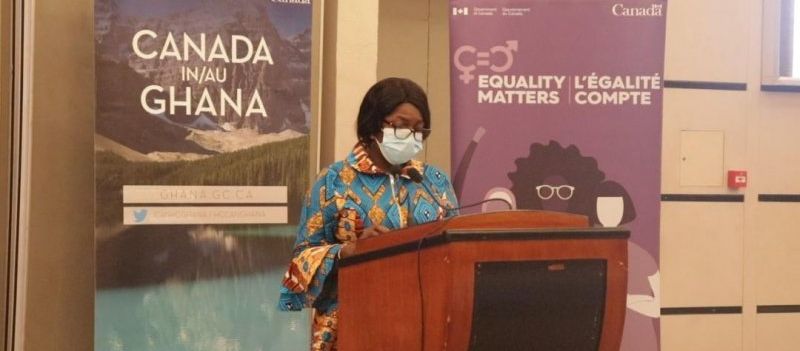
The High Commissioner made the call when she launched four economic empowerment projects in Accra, to support women and girls in Ghana.
The four projects are the Women Innovative for Sustainable Enterprise (WISE), Women’s Economic Advancement for Collective Transformation (WEACT), Innovative for Non-Traditional Education and Skills Training (INVEST) and the Women’s Economic Empowerment (WEE-NORTH).
The initiatives will provide skills training for women and girls while focusing on increasing productivity, profitability and innovation of women-owned businesses in the informal sector.
The projects will directly benefit 31,000 Ghanaian women, from specific urban, peri-urban, and rural areas in eight regions of Ghana.
The Regions are: Upper West, Upper East, Savanna, Northern, Western, Western North, Bono, Bono East and Ahafo Regions.
The projects will be implemented by Alinea International, Oxfam Québec, Plan International Canada, and the World University Service of Canada, each working in close collaboration with government partners and civil society organizations in Ghana.
The High Commissioner said the Canadian Government had earmarked GHS138 million (CAD 30 million) for the projects and would be implemented between four to five years.
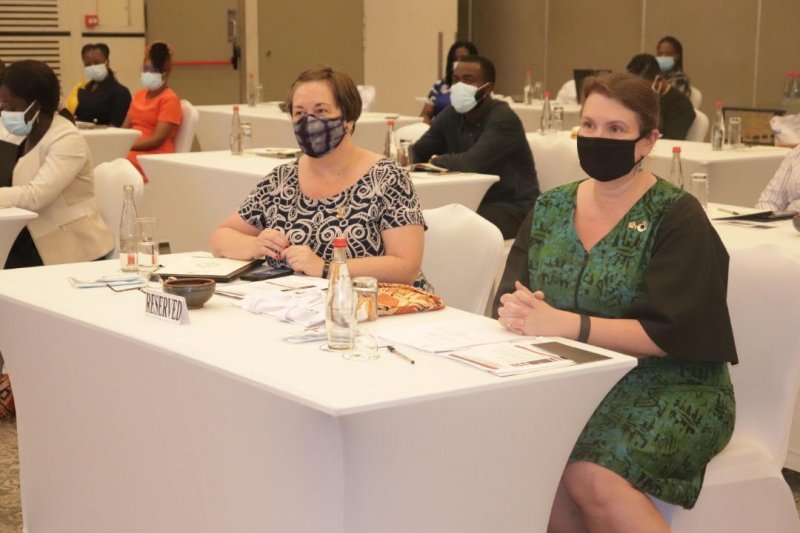
Ms Csaba said the projects would contribute to improving the understanding of the numerous challenges women faced and helped them to overcome the barriers.
"These projects will give us an opportunity to explore new approaches for women's economic inclusion," she said, adding that it formed part of the two countries’ contribution towards addressing issues of gender inequality and promoting women's economic empowerment.
Speaking on behalf of Oxfam Ghana and Plan International Ghana, implementing organizations for the WISE and WEACT projects, Mr. Tijani Ahmed Hamza, OXFAM Ghana Country Director, commended the Canadian High Commission for the initiatives.
He said the WISE and WEACT projects would provide skills to address barriers women faced and enhance their economic empowerment, wellbeing and inclusive growth.
“The WISE project will directly benefit 12,641 women between ages 19-55 from 150 communities with about 4,000 expected to receive direct training, including 3,230 in agri-business and 810 in green skills,” he said.
On the WEACT project, Mr Hamza explained that a total budget of $CAD 5,950,000 had been allocated for the project, which would benefit 5,400 women and girls directly and 3,510 men and boys (aged 18 – 60), as well as impact the lives of over 790,000 women, men, girls and boys indirectly in the Northern, Savanna, Upper East, Upper West, Western, Western North regions.
Ms Linda Agyei, Director, Vocational for Females Programme, who spoke on behalf of the Alinea and World University Service of Canada, implementing partners for the WEE-NORTH and INVEST projects, said the INVEST initiative, a five-year programme, would build sustainable pathways to enhance the economic and inclusive growth of 5,000 urban poor young women in Accra, Kumasi and Sekondi-Takoradi.
The WEE-NORTH Project on the other hand, she said, would promote industrial trades training for women and girls in the northern part of the country, adding that it was expected to benefit over 2,065 young women and 400 women business owners.
Latest Stories
-
Power restoration fault suspected in Kumasi Central Market fire
3 hours -
The 7-foot giant of Ngleshie Amanfro: Seven-foot Ghanaian Ephraim Saawa dreams of joining the national basketball team
4 hours -
Government promises support for Kumasi Central Market fire victims
4 hours -
Vibes The Movie: Big Ghun’s Ghanaian film earns five nominations at 2026 REFFA
4 hours -
MamaCare CEO warns unresolved conflicts among health workers could undermine maternal and neonatal care
5 hours -
Health professionals urged to translate medical knowledge into practice to save mothers
5 hours -
Conflicts among care providers linked to maternal, neonatal deaths – Expert
6 hours -
GIS marks 10th TIME conference, champions improved teaching practices
6 hours -
BRICS Or Balance? What Ghana’s bid really means
7 hours -
GPRTU wants full TRAFFITECH-GH implementation to start in 2027
7 hours -
Mahama announces plans to import electric wheelchairs for PWDs
7 hours -
KGL U17 Colts 2026: Western beat Prempeh Elite Academy to set up final final with Greater Accra Region
8 hours -
Late Solanke strike salvages 10-man Spurs draw at Man United
8 hours -
Gender Ministry to monitor welfare of Nana Akua Addo’s children amid domestic violence case
8 hours -
Benedict Okyere Yeboah: Ghana’s football problem goes beyond sacking a coach
8 hours