


Audio By Carbonatix
A retired Public Health expert, Dr Oben Apori, says he is not surprised pregnant women are made to pay for service delivery in hospitals in Ghana.
According to him, the exposé by Corruption Watch investigator, Francisca Enchill, dubbed: Pay or Die! The agony of pregnant women in hospitals is just the “tip of the iceberg”.
The investigative piece uncovers that pregnant women pay big money before delivery.
Renowned hospitals, including the 37 Military Hospital, Mambrobi Hospital, and Maamobi General Hospital, are captured participating in such rots.
The issue is even murkier when holders of the National Insurance Health Card are told to make a down payment before service is rendered.
Some pregnant women, who could not afford the cost, were left with no option other than to go on a borrowing spree or face death.
Reacting to the appalling scene in the documentary, Dr Apori said difficulties faced by pregnant women with National Health Insurance (NHIS) card keep getting worse.
While in active service, the Public Health expert said he encountered many of such sad stories in public health facilities.
He bemoaned the unnecessary application of medical technology by health personnel to make money.
“Most of the monies charged go into individual pockets which is worrying,” the Public Health expert said on Adom FM Wednesday.
Dr Apori said a Presidential NHIS Review Committee, set up by President Nana Akufo-Addo, revealed the damning findings in their report.
He said in the Ashanti and Greater Accra Regions, it found that majority of people who visited health facilities with the NHIS card paid.
“In the Ashanti Region, we found out that, 74 percent of NHIS card holders paid and 53 percent in Greater Accra pay something,” the Public Health expert stated.
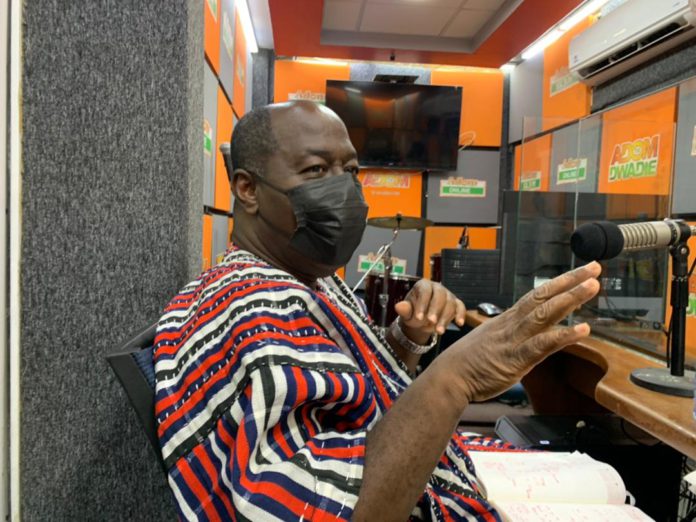
The reason for this, Dr Apori explained, is 75 percent of Internally Generated Funds (IGF) generated by the health facilities is from the NHIS.
He said: “75 percent of IGFs for health facilities are from NHIS so when payment delays, it makes them incapable of doing their work.”
Dr Apori said only 1.5 percent of NHIS card holders are able to report the conduct of health professionals who charge the illegal fees – a situation he described as worrying.
The only way to solve the problem, Dr Apori said, is for the government to review the policies and allow citizens to pay half to sustain it.
He also called for a national forum to restructure the NHIS policy to save it from collapse.
Latest Stories
-
Conflicts among care providers linked to maternal, neonatal deaths – Expert
1 hour -
GIS marks 10th TIME conference, champions improved teaching practices
1 hour -
BRICS Or Balance? What Ghana’s bid really means
2 hours -
GPRTU wants full TRAFFITECH-GH implementation to start in 2027
2 hours -
Mahama announces plans to import electric wheelchairs for PWDs
2 hours -
KGL U17 Colts 2026: Western beat Prempeh Elite Academy to set up final final with Greater Accra Region
3 hours -
Late Solanke strike salvages 10-man Spurs draw at Man United
3 hours -
Gender Ministry to monitor welfare of Nana Akua Addo’s children amid domestic violence case
3 hours -
Benedict Okyere Yeboah: Ghana’s football problem goes beyond sacking a coach
3 hours -
GPL 2026/27: Darkwah Wiafe’s winner sees All Blacks beat Kotoko
3 hours -
ITF World Tour : Patel Wins Boys’ Singles Final at J100 Accra
3 hours -
Ghana must pursue BRICS partnership if it brings economic benefits – Kpebu
3 hours -
Success and Wright Claims J100 Accra Girls’ Doubles Championship
3 hours -
ITF J100: America’s Wright wins J100 Accra Girls’ Singles Title
3 hours -
Expedition hopes to find aviator Amelia Earhart’s plane on remote island
3 hours