

Audio By Carbonatix
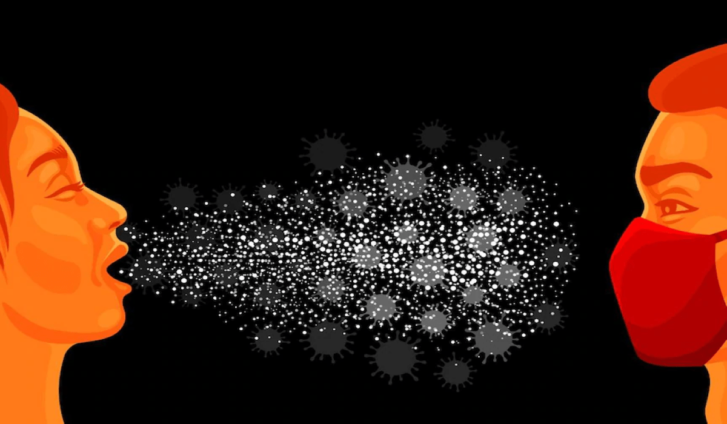
The spread of Covid-19 has largely been associated with coughing and sneezing. Consequently, many studies into the oral spread of Covid-19 have resulted in findings that indicate that talking and breathing can also contribute to the spread of the virus.
Pertaining to talking, much has been said about how different languages vary in the possible transmission of the coronavirus, with English leading the pack in languages believed to spread the coronavirus easily.
A study conducted by researchers at the RUDN University, Russia, and the University of Nicosia, Cyprus, has found that, indeed, English speakers are more likely to spread Covid-19 than other language speakers. The study suggests that persons who speak English put out more saliva droplets into the air, thereby increasing the risk of Covid-19 transmission.
In the English language, the aspirated consonants (i.e. the sounds that are accompanied by exhalation) include /p, t, k/. These sounds throw myriad tiny droplets from the speaker’s respiratory tract into the air, thereby leading to a cloud of spit – the lead researchers Georgios P. Georgiou and Ahmad Kilani have said.
That means carriers of the Covid-19 virus, who speak the English language, send viral particles into the air, particles which are said to linger in the air for a period between 8 to 14 minutes.
The study looked at data from 26 countries with more than 1,000 Covid-19 cases as of March 23, 2020. There were more cases of virus spread in countries that spoke languages with aspirated consonants – those countries recorded 255 cases of Covid-19 per 1 million residents, while countries with languages that had few aspirated consonants showed 206 cases of Covid-19 per 1 million residents.

Dr Kwabena Opoku-Agyemang, an English Lecturer at the University of Ghana, confirmed to Dubawa-Ghana that the nature of English pronunciations can cause the production of more saliva droplets than other languages will do.
“The [research] explains the phenomenon through the use of aspirated consonants. It is true, due to the nature of pronunciation,” he said.
Additionally, a letter published in the medical journal, The Lancet, on the outbreak of SARS-CoV-1 supported the indication that the disease could have been more easily transmitted in certain languages, especially Chinese and English. The author argued that the Japanese aspirated stops like /p/, which are also said to produce droplets, are not used as much in comparison to English.
Spread of Aerosol Particles
An Immunologist with the West African Center for Cell Biology and Infectious Pathogens (WACCBIP), Dr Yaw Bediako, believes all languages cause spitting of saliva droplets or lead to the production of aerosolized particles while recent studies also state that ‘normal talking’ can emit thousands of small particles that can linger in the air for over 10 minutes.
A study titled “the airborne lifetime of small speech droplets and their potential importance in SARS-CoV-2 transmission” adds that normal speaking also produces oral fluid droplets that can harbour a variety of respiratory pathogens.
This research further confirms that “whereas large droplets fall quickly to the ground, small droplets can dehydrate and linger as ‘droplet nuclei’ in the air, where they behave like an aerosol and thereby expand the spatial extent of emitted infectious pathogens.”
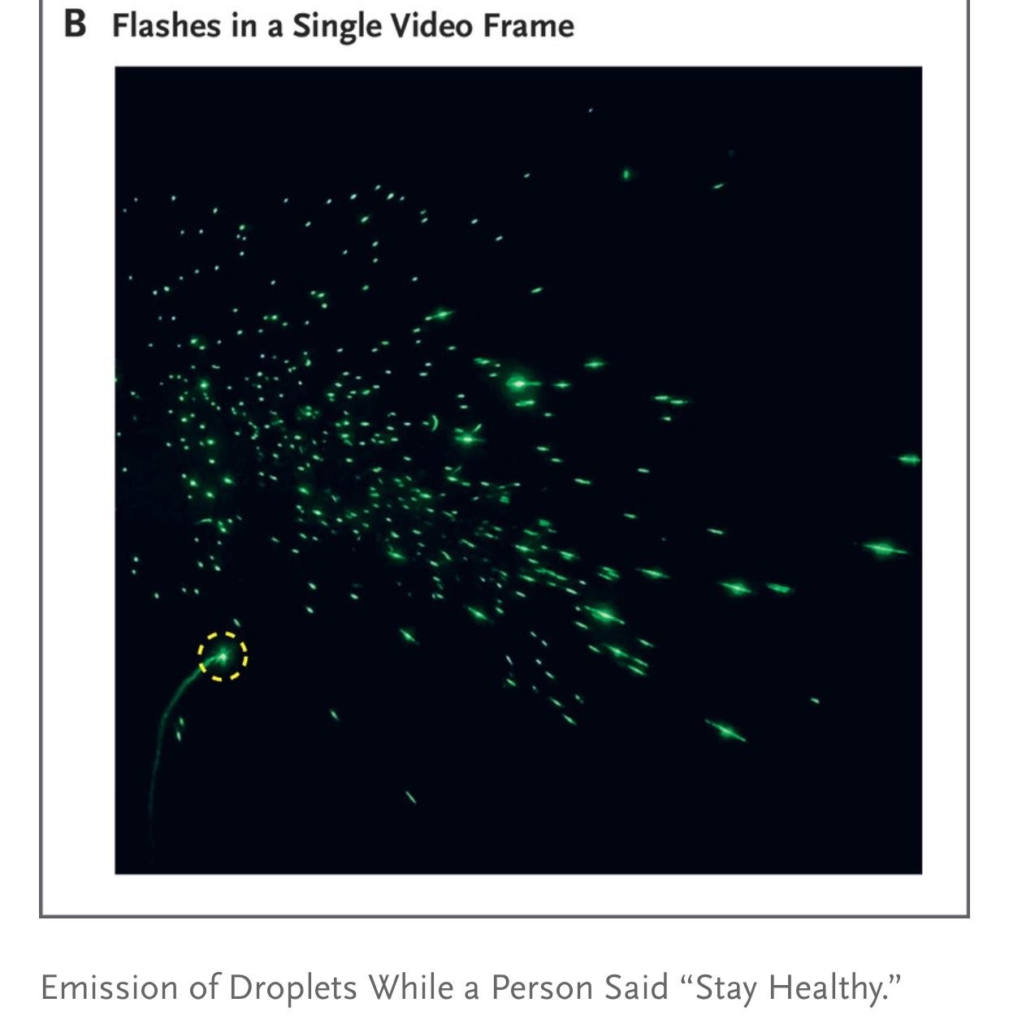
As seen in the above photos, numerous droplets, ranging from 20 to 500 μm, were generated when a person said, “stay healthy.”
“The brightness of the flashes reflected the size of the particles and the fraction of time they were present in a single 16.7-msec frame of the video.”
“The number of flashes in a single frame of the video was highest when the “th” sound in the word “healthy” was pronounced,” the Journal explained.
Conclusion
The research on SARS, which dates back to 2003, confirms that through the use and pronunciation of aspirated consonants, /p, t, k/, English speakers throw out more saliva droplets into the air, a phenomenon that can spread COVID-19.
****
This report was produced under the Dubawa Student Fact-checking Project.
Latest Stories
-
Ntim Fordjour accuses government of failing to act on Ghana’s drug crisis
4 hours -
Autopsy shows Hayden Panettiere died from a drug overdose
4 hours -
Earl Spencer should pull Diana book from shelves, Piers Morgan says
4 hours -
IMF tells advanced economies to ‘bring debt down’ as borrowing costs rise
4 hours -
‘I have never felt heat like that’ – a survivor on watching 33 cellmates die in Nigeria
5 hours -
16 arrested, 4 printing hubs busted in major counterfeit currency crackdown
5 hours -
Sir Jim Ratcliffe suspends production at key UK plants blaming high gas prices
5 hours -
Major US outlets suspend shared Trump coverage in protest at media ban
5 hours -
Trump says he would back ban on diesel exports
6 hours -
Lekzy DeComic to feature four generations of comedians on upcoming show
6 hours -
Nigeria wins arbitration as Sunrise’s $400 million hydropower claim dismissed
6 hours -
Xhaka under investigation over Covid-19 certificate
6 hours -
FAW chief questions Infantino’s Fifa reform claims
6 hours -
La Liga chief dismisses Real’s ref conspiracy claims
6 hours -
GMA rejects claims its vessel monitoring system is ineffective
6 hours