

Audio By Carbonatix
The US and UK are facing growing international criticism over a new security pact signed with Australia.
The deal seen as an effort to counter China will see the US and UK give Australia the technology to build nuclear-powered submarines.
But the move angered France, which said it had been "stabbed in the back", while China accused the three powers of having a "Cold War mentality".
And the pact has raised fears that it could provoke China into a war.
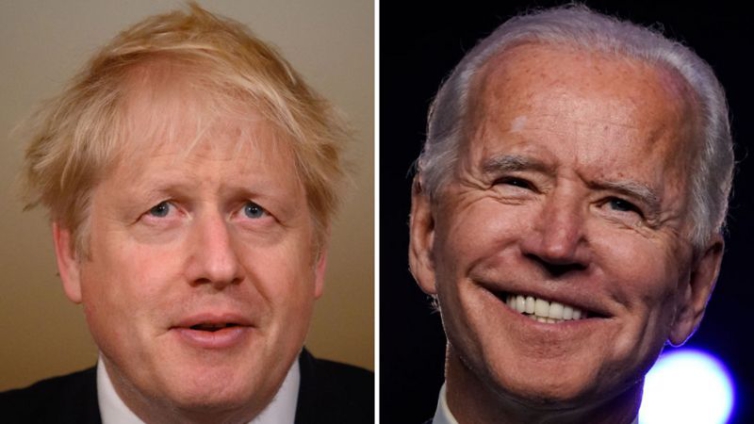
The alliance, known as Aukus, was announced by US President Joe Biden, UK Prime Minister Boris Johnson and his Australian counterpart Scott Morrison on Wednesday.
While they did not mention China, Aukus is being widely viewed as an effort to counter Beijing's influence in the contested South China Sea.
Mr Johnson later told MPs that the agreement was "not intended to be adversarial" to China.
But the prime minister was questioned by his predecessor, Theresa May, about whether the deal could lead to Britain being dragged into war with China.
She asked the prime minister about the "implications" of the partnership in the event of a Chinese invasion of Taiwan.
Mr Johnson replied: "The United Kingdom remains determined to defend international law and that is the strong advice we would give to our friends across the world, and the strong advice that we would give to the government in Beijing."
Democratic Taiwan sees itself as a sovereign state, but Beijing has increased pressure on the island which it views as a breakaway province.
'A very low moment'
Meanwhile, Washington has sought to quell the anger in Paris at the pact, which has scuppered a multibillion-dollar submarine deal France had signed with Australia.
France's Foreign Minister Jean-Yves Le Drian called the announcement a "stab in the back".
He called it a "brutal, unilateral and unpredictable decision" that reminded him of former President Donald Trump.
French diplomats in Washington cancelled a gala to celebrate ties between the US and France in retaliation.
"It's a very low moment," France's former ambassador to the US, Gérard Araud, told the BBC's World Tonight programme. "The US knew that this contract and this strategic contract were essential French national interests, and the US didn't care."
US Secretary of State Antony Blinken called France "a vital partner" and said Washington would still work "incredibly closely" with Paris.
White House Press Secretary Jen Psaki shrugged off the French criticisms.
"There are a range of partnerships that include the French and some partnerships that don't, and they have partnerships with other countries that don't include us," she said. "That is part of how global diplomacy works."
'Profound strategic shift'
The pact, which will also see the allies share cyber capabilities, artificial intelligence and other undersea technologies, was described as showing "profound strategic shifts" by the UK's national security adviser Stephen Lovegrove.
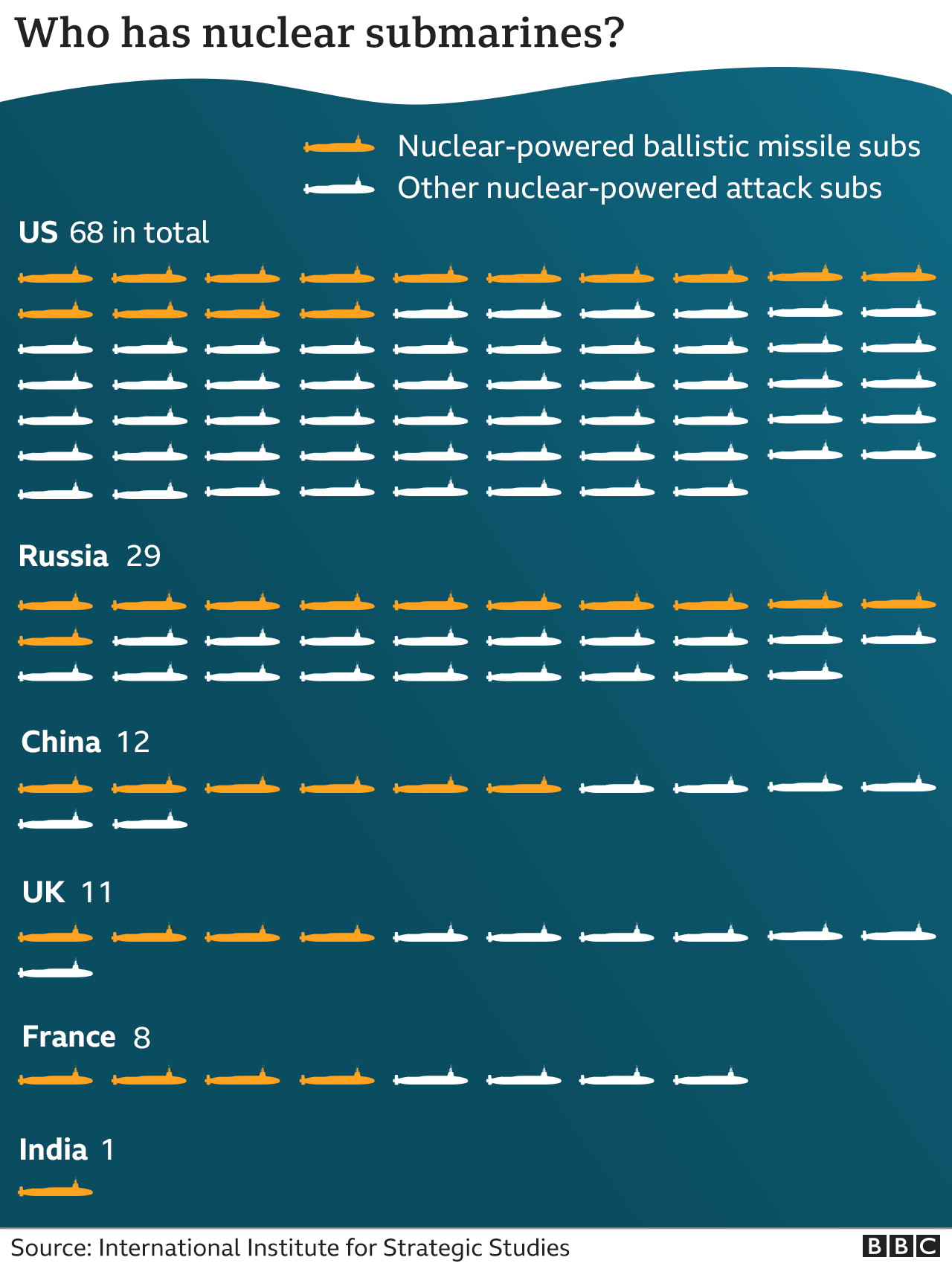
It means Australia will become just the seventh nation in the world to operate nuclear-powered submarines.
Mr Lovegrove said the pact was "perhaps the most significant capability collaboration in the world anywhere in the past six decades".
China, meanwhile, has accused the allies of having a "Cold War mentality" that would hurt their own interests.
The Chinese state-run Global Times warned of an arms race for nuclear submarines, adding that Australian soldiers were likely to be the "first to die" in a Chinese "counterattack".
But Australia's Defence Minister, Peter Dutton, brushed aside Beijing's reaction.
"This is not the first time that we've seen different outbursts from China in terms of Australia's position," he said.
"We are a proud democracy in our region. We stand with our neighbours in the Indo-Pacific to ensure enduring peace, and this collaboration makes it a safer region. That's the reality and no amount of propaganda can dismiss the facts."
Latest Stories
-
Vibes The Movie: Big Ghun’s Ghanaian film earns five nominations at 2026 REFFA
14 minutes -
MamaCare CEO warns unresolved conflicts among health workers could undermine maternal and neonatal care
38 minutes -
Health professionals urged to translate medical knowledge into practice to save mothers
45 minutes -
Conflicts among care providers linked to maternal, neonatal deaths – Expert
2 hours -
GIS marks 10th TIME conference, champions improved teaching practices
2 hours -
BRICS Or Balance? What Ghana’s bid really means
3 hours -
GPRTU wants full TRAFFITECH-GH implementation to start in 2027
3 hours -
Mahama announces plans to import electric wheelchairs for PWDs
3 hours -
KGL U17 Colts 2026: Western beat Prempeh Elite Academy to set up final final with Greater Accra Region
4 hours -
Late Solanke strike salvages 10-man Spurs draw at Man United
4 hours -
Gender Ministry to monitor welfare of Nana Akua Addo’s children amid domestic violence case
4 hours -
Benedict Okyere Yeboah: Ghana’s football problem goes beyond sacking a coach
4 hours -
GPL 2026/27: Darkwah Wiafe’s winner sees All Blacks beat Kotoko
4 hours -
ITF World Tour : Patel Wins Boys’ Singles Final at J100 Accra
4 hours -
Ghana must pursue BRICS partnership if it brings economic benefits – Kpebu
4 hours