

Audio By Carbonatix
Poor countries need up to $300 billion, not the initial $100 billion per year by 2030, for clean energy and climate adaptation projects.
According to a UN report released earlier this month, there is a growing gap between the cost of climate adaptation in developing countries and the amount of public finance available for it.
The report estimates that developing countries need five to 10 times more funding than they currently have to manage climate impacts.
Developed countries are yet to deliver on their $100 billion annual commitment to help poorer countries pay for clean energy and climate adaptation projects. Most of the money that was disbursed went into climate change mitigation, not adaptation.
The Organization for economic cooperation and development in its current report estimates that total climate finance reached was $79.6 billion in 2019, which clearly meant developed countries missed the 2020 target.
The US president recently announced he would double the country's international climate finance commitment to $11.4 billion annually by 2024. Good news, but some experts say it isn't enough describing it as a mere promise.
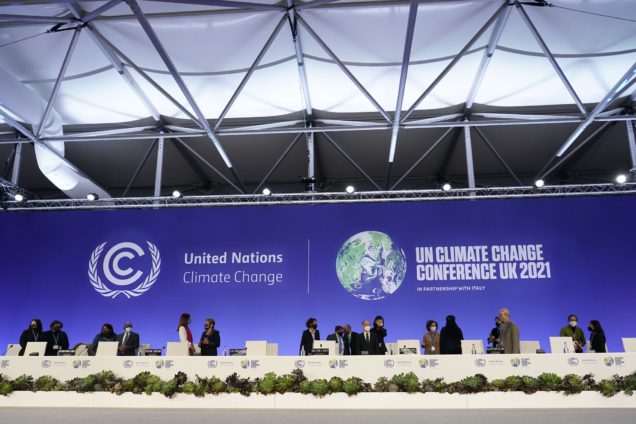
COP26 climate negotiations look at more profound ways of addressing the climate crisis. Poorer countries like Ghana look forward to advocating for sustainable funding for adaptation.
Vulnerable countries have called for 50-50 split between adaptation finance and mitigation.
A recent paper published in the journal Nature Climate Change highlights a general lack of data showing whether adaptation projects reduce risk.
A panel of over 100 scientists has undertaken massive peer-reviewed literature on adaptation to climate change.
Of more than 48,000 articles about adaptation, only about 1,700 documented projects that had actually been implemented. And only 58 of the 48,000 studies analyzed whether a given adaptation project or plan was working.
"I think climate change adaptation and mitigation projects implementation shouldn't be separated, they should go hand in hand. One shouldn't lose sight of the fact that climate action may be site-specific. Governments or communities should know which actions would be appropriate. There will be the need to prioritize," Senior Research Scientist at Forestry Research Institute of Ghana, Dr. Gloria Djaney Djagbletey said.
Latest Stories
-
NPP orders parliamentary aspirants and their supporters to suspend campaign activities
20 minutes -
Techiman unites against child marriage: Joy Impact Makers Awardee leads charge on International Day of the Girl Child
32 minutes -
Ghana Psychological Association calls for greater involvement of people with lived experience in mental health care
2 hours -
Ablakwa says Ghana could evacuate more citizens from South Africa if the situation worsens
2 hours -
Violence against girls must be tackled through individual responsibility – Gender advocate
2 hours -
Ghana’s BRICS bid must be guided by national interest – International Affairs Analyst
2 hours -
Journalists look back on a decade of breast cancer reporting in Ghana
3 hours -
President Mahama ends Resetting Ghana tour of Ahafo Region
5 hours -
African negotiators seek delivery of climate commitments at COP31
5 hours -
BoG develops AI rules for financial sector
5 hours -
‘Big Push’: Government assures contractors of prompt payments
5 hours -
Court fines miner for breaking into gold buying shop
5 hours -
Tarkwa court jails labourer for three years over GH¢123,000 theft
6 hours -
GAEC must retain nuclear scientists for Ghana’s nuclear ambitions – Minister
7 hours -
Man reportedly mistaken for game and shot by hunter dead in forest
7 hours