

Audio By Carbonatix
Government is considering the reintroduction of the Electronic Transaction Levy percentage charge from 1.75 % to 1.5%.
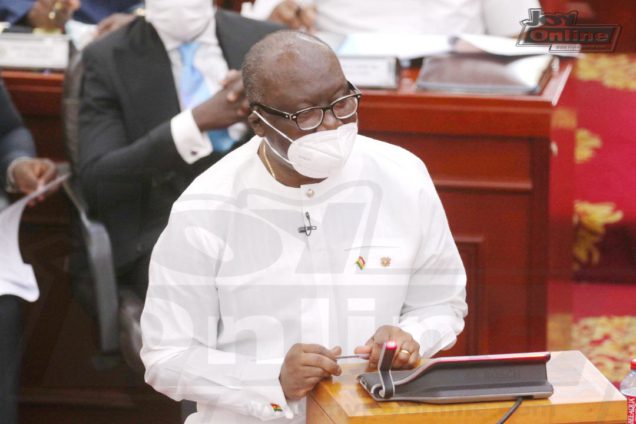
This comes after the Deputy Majority Leader, Alexander Afenyo-Markin revealed that the Finance Minister, Ken Ofori-Atta, will withdraw the controversial E-levy in Parliament and re-introduce same.
Mr Markin made this known whiles presenting the business statement for next week to the House.
He said the e-levy will be withdrawn by government on Tuesday February 15, 2022.
He also noted that it will further be reintroduced after it has been reviewed on Friday, February 18, 2022.
Members of Parliament were however encouraged to “participate fully in the consideration of the Bill for the passing of a good piece of legislation for the benefit of all.”
Earlier, government had hoped to get the buy-in of the NDC MPs for the Bill to be passed.
This was after telecommunication companies agreed to reduce their 1% charge on transactions by 0.25%.
If this was upheld, the rate would be reduced from 1.75% levy to 1.5%.
But it was rejected by the Minority.
About E-levy
Finance Minister Ken Ofori-Atta, presenting the 2022 budget on Wednesday, November 17, announced that the government intends to introduce an Electronic Transaction Levy (e-levy).
The levy, he revealed, is being introduced to “widen the tax net and rope in the informal sector”. This followed a previous announcement that the government intends to halt the collection of road tolls.
The proposed levy, which was expected to come into effect in January, 2022, is a charge of 1.75% on the value of electronic transactions. It covers mobile money payments, bank transfers, merchant payments, and inward remittances. There is an exemption for transactions up to GH¢100 per day.
Explaining the government’s decision, the Finance Minister revealed that the total digital transactions for 2020 were estimated to be over GH¢500 billion (about $81 billion) compared to GH¢78 billion ($12.5 billion) in 2016. Thus, the need to widen the tax net to include the informal sector.
Although the government has argued that it is an innovative way to generate revenue, scores of citizens and stakeholders expressed varied sentiments on its appropriateness with many standing firmly against it.
Even though others have argued in support of the levy, a section of the populace believe that the 1.75% e-levy is an insensitive tax policy that will deepen the already prevailing hardship in the country.
Latest Stories
-
Muntaka commissions polyclinic at Ayigya Zongo to address healthcare challenges
7 minutes -
World Habitat Day: Adequate housing for all – a right we must build
8 minutes -
Ghana Institute of Architects urges government to adopt coordinated agenda for affordable housing
9 minutes -
Yutong bus extensively damaged by fire at Gbogdaa
9 minutes -
Spanish PM Sánchez calls early election after housing protests
15 minutes -
GH¢3,000 monthly allowances for Paramount Chiefs and Queen Mothers fully paid – Ayariga
15 minutes -
Government disbursed over GH¢5bn to MMDAs in 2025- Ayariga
16 minutes -
Teachers’ strike: Abosamso queenmother, assemblyman take over classroom
19 minutes -
GPL 2026/27: Tanko, Agyemang shortlisted for September Coach of the Month award
24 minutes -
Mahama directs creation of Local Government TV – Ayariga
26 minutes -
GPL 2026/27: Amankona, Gyamfi Junior and four others nominated for September Player of the Month award
30 minutes -
Government to remodel 24-hour markets, rename project District Model Markets – Ayariga
33 minutes -
June 29 floods exposed weaknesses in Ghana’s environmental sanitation system – Ayariga
39 minutes -
Local Gov’t Minister announces plans to regenerate Agbogbloshie enclave
44 minutes -
LA 2028: Black Queens performance watch ahead of Mauritius clash
45 minutes