

Audio By Carbonatix
The media must be supported to overcome the current economic challenges to enable it to continuously execute its role in the consolidation of the country’s democracy.
Ghanaian journalists work in challenging circumstances and lack the resources to provide the kinds of robust coverage necessary to perform some of their core functions.
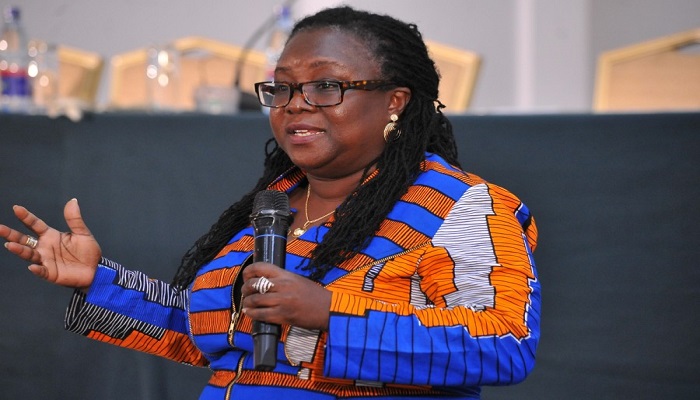
Delivering an inaugural lecture at the University of Ghana (UG) on Thursday, April 29, 2022, Professor Audrey Gadzekpo, Former Dean, School of Information and Communication Studies, UG, said the Covid-19 pandemic had put the media under strain and “needs a bailout.”
“…as a key pillar of democracy, the media sector is too important to fail. It needs a bailout on several fronts,” she said.
“We must remember that the media is a public good and must be supported to survive. If for nothing else, they must survive in the interest of democracy,” she added.
Prof. Gadzekpo said in the wake of the seeming economic challenges, media businesses must adopt new models and find innovative ways to sustain their operations.
“The old model where commercial advertising is the primary source of media funding is obviously atrophied. Other sustainable types of funding from private philanthropy to private subsidies must be explored,” she said.
Prof. Gadzekpo, a Professor of Communication Studies, said media owners must also invest in building the capacities of their employees regularly and not solely rely on stakeholders to build the capacities of their journalists.
She observed that many journalists are “inexperienced, lacking requisite knowledge on the areas they cover and do not have a strong sense of history.”
Prof. Gadzekpo said in spite of the challenges facing the media, journalism practice in Ghana demonstrates a lot of potential.
Making reference to an Afrobarometer report, which indicated that trust in the media among the public has eroded, she said the media must conduct a self-introspection of its performance and work to address the problem.
“Without popular support for civic freedom, there is the risk that authoritarian-minded government would place further restrictions aimed at weakening the media’s ability to hold them accountable.
“If the media is expected to be guardians of democracy, they themselves must deepen their commitment to democratic ideals,” she said.
The media must work in support of public interest and in support of democratic development, she added.
Prof. Gadzekpo said efforts to improve media professional standards of ethics must be strengthened to ward off “hostile external regulations.”
She called on media companies and media associations such as the Ghana Journalists Association (GJA) and the Ghana Independent Broadcasters Association (GIBA) to encourage self-regulation and hold their employees and employers more accountable.
Latest Stories
-
NPP UK branch calls for independent audit into gold purchasing operations and parliamentary probe
27 minutes -
Zanetor Agyeman-Rawlings pledges decisive action on climate change, galamsey and environmental degradation
32 minutes -
Bawumia was brainchild behind Domestic Gold Purchase Programme – Samuel Jinapor
33 minutes -
Fuel prices set to go up from September 1, Petrol to sell at GHC 16.69 and Diesel, GHC 17.90 – COMAC
35 minutes -
Our World Our People withdrawn due to curriculum duplication, not politics – Adutwum’s spokesperson
38 minutes -
GANRAP is essentially a rebranding of Domestic Gold Purchase Programme – Abu Jinapor
44 minutes -
I am tired of being in opposition, my goal is to win in 2028 – Boakye Agyarko
55 minutes -
Ghana’s road maintenance funding gap deepens as only 37% of needs met – World Bank
55 minutes -
Roland Europe Group appoints Opoku Sanaa as Head of Sales, Middle East & Africa
57 minutes -
Sammyflex TV’s Roland Amartey girds up for 2026 Ghana Music Awards UK coverage
1 hour -
U.S. bank queried payments for Ghana ambassador’s residence renovated by company owned by embassy’s IT officer
1 hour -
GoldBod to generate US$1.4bn in FX in September
2 hours -
GAF 2026/2027 enlistment opens September 3 for degree holders
2 hours -
Reparatory justice: Mahama announces high-level UN side event in September
2 hours -
Bosome Freho Assembly invests first tranche Common Fund in water and education projects for 19 rural communities
2 hours