

Audio By Carbonatix
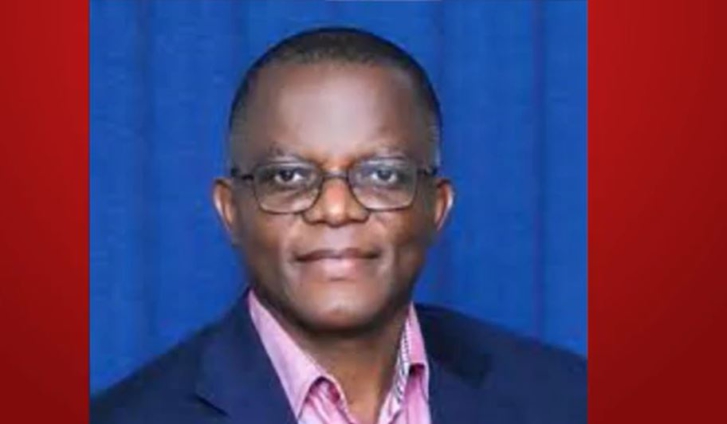
The Director of Research and Corporate Affairs at the Public Utilities Regulatory Commission (PURC), Dr. Eric Kofi Obutey, has explained how his outfit was able to reach a consensus with the utility providers on the newly announced tariff adjustment.
The PURC on Monday, August 15 announced tariff increases effective September 1, 2022.
Tariffs for electricity and water are expected to go up by 27.15% and 21.55% respectively.
Speaking in an interview on Joy FM’s Top Story on Monday, Dr. Obutey explained that although the Ghana Water Company Limited (GWCL) and Electricity Company Limited (ECG) requested 334% and 148% respectively, they agreed on these percentages because government will take care of the debts owed by the utility providers.
According to him, since this was agreed on, “it means we had to split up the cost” that the utility providers submitted to PURC.
“So we have taken all of this into consideration. We gave them [utility providers] a five-year tariff loan from 2022 to 2027 but we brought it down to 2025 that is a three-year period. That means that the investment for the two years have been chopped off. 2025, 26 and 27 are not part of this tariff revision,” he said.
According to him, PURC wants to lessen the burden on the ordinary Ghanaian, hence its move to absorb the cost.
In a related development, the Executive Secretary of the Public Utilities Regulatory Commission (PURC), Dr. Ishmael Ackah has asserted that the newly approved electricity tarrif was arrived at after deep consideration of its effect on Small and Medium scale Enterprises (SMEs).
According to him, the Commission considered the role of SMEs in the country’s economic development, in particular, the creation and/or preservation of jobs and livelihoods.
Dr. Ackah said this when he announced an upward adjustment of utility tarrifs at a media briefing in Accra on Monday, August 15.
He announced that Electricity consumers will pay 27.15% more whilst water users have to make do with 21.55% increment. The new tarrifs take effect from September 1, 2022 and will extend to 2025.
The PURC boss noted that “industry including, small and medium scale business owners of Hairdressing and Beauty Parlours/Salons, Barbering Shops, Tailoring and Dress Making Shops, Welding, Mechanics, Cold stores, Chop bars, Vulcanising and Carpentry Workshops among others will now pay lower tariffs than the residential consumer class. This is to address the high electricity cost for industrial customers which has been repeatedly identified in the AGI Business Barometer as the key challenge affecting the competitiveness of Ghanaian industry in the global market place.”
Latest Stories
-
Banking sector NPLs fall to GH¢19.9bn as asset quality improves
2 minutes -
Republic Bank Ghana, UPSA sign strategic MoU to advance professional dev’t and industry-academia collaboration
7 minutes -
MTN 30th Anniversary CEO Invitational Golf Tournament set to tee off at Achimota
10 minutes -
Ghana woos Australian investors into critical minerals
23 minutes -
Akufo-Addo’s former legal counsel Kow Essuman, writes to Finance Minister to demand his ex-gratia payment
30 minutes -
NSMQ Final: St Augustine’s get GH¢110,000 motivational package from old boys
47 minutes -
AFCON 2027: Ghana has no business doing football if we can’t beat Somalia and The Gambia to qualify – George Afriyie
1 hour -
Starlets to face Togo on October 10 in U-17 AFCON qualifying campaign
1 hour -
FIFA U-20 World Cup: Princesses showed character-Head Coach
1 hour -
PBee releases new single ‘Lose My Mind’ featuring SIICIE today
2 hours -
Many have been dismissed – Interior Minister exposes forged WASSCE results in security recruitment
2 hours -
NCA clears MTN, Telecel, Goal for next stage of 5G spectrum licensing
2 hours -
Father demands probe into death of Central University student in motorway crash
2 hours -
Transport Minister orders urgent action to tackle surge in port congestion
2 hours -
NPP national executive election: Here are the ballot positions
2 hours