

Audio By Carbonatix
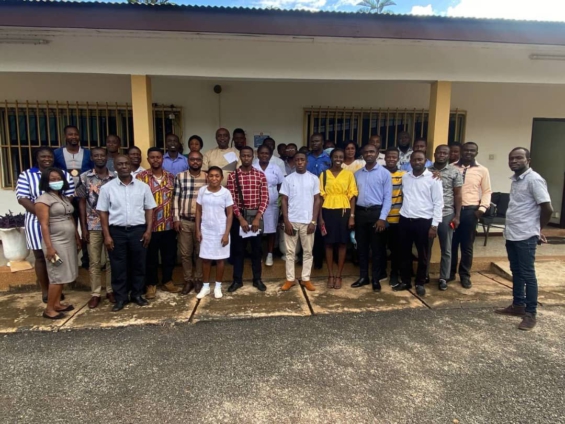
The Kintampo Health Research Centre (KHRC), with support from the European & Developing Countries Clinical Trials Partnership (EDCTP) is organizing a series of workshops to sensitise health professionals in the Bono East region about clinical trials. Two sessions of the workshop have been held at KHRC.
The workshop is aimed at broadening the knowledge and understanding of health professionals, who are seen as key stakeholders, about the role of clinical trials in evidence-based medicine discovery and to help them appreciate the ethical and regulatory standards applied in the implementation of clinical trials in Ghana.
Addressing participants at the first and second sessions held in Kintampo, Dr. Kwaku Poku Asante, Director of the Kintampo Health Research Centre stressed the importance of clinical trials to health professionals as it is a means through which humanity can be saved.
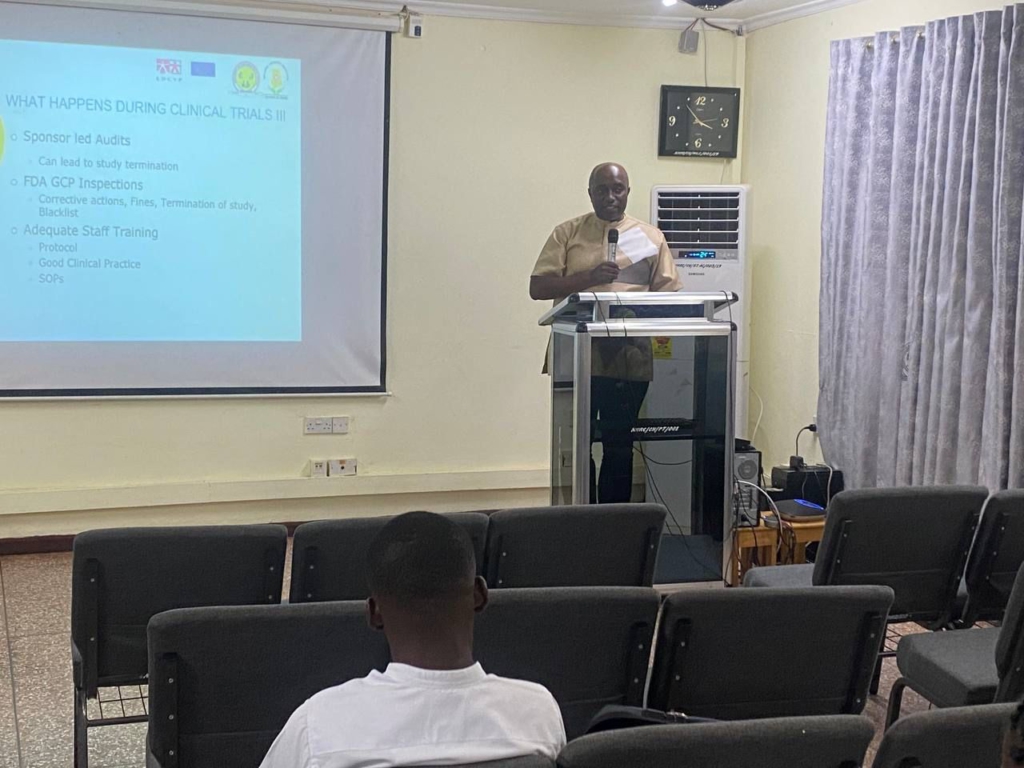
He added that “as health professionals, we forget that clinical trials are as important as the medications that we give to our patients. The reason is that without clinical trials, we don’t get medications and vaccines on the market. The other reason is that clinical trials have been done elsewhere but recently, a lot of trials are being done on the continent and the reason is that we have strong health systems and the capacity, to support the conduct clinical trials”.
He urged the health professionals to be ambassadors of clinical trials and educate people who are oblivious of the benefit of clinical trials and how they are conducted.
Regional Director of Health Services Dr. Fred Adomako Boateng, delivering his presentation on disease burden in low- and middle-income countries (LMICs) during the first session, explained that these countries “bear the highest burden of disease globally as a direct consequence of scarce resources in health care”.
The double burden of disease in developing countries according to him, emphasizes the strong need to conduct clinical research to identify cost-effective and novel treatment in these countries.
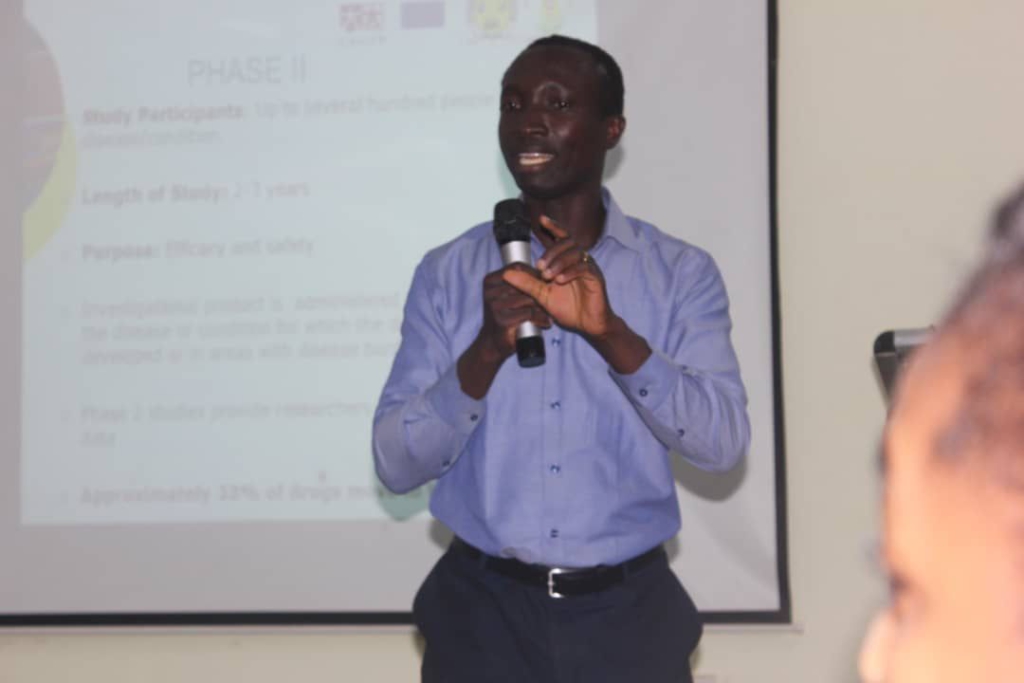
Reiterating the need to conduct clinical trials particularly in developing countries, Dr. Adomako Boateng noted that the responses to vaccines or drugs are dependent on human genetics and environmental factors, among other things as different people respond to different drugs and vaccines in different ways.
Mr. Japhet Anim, clinical research fellow and lead organizer of the workshop, noted that most research is conducted in high-income countries, where a conducive environment, infrastructure and capacity have been built up in past decades to address the health priorities of these countries. He emphasized the need to promote and advance good quality clinical research in Africa in order to maintain gains made in reducing disease burden and close the significant remaining gap.
Dr. Prince Agyapong, clinical research fellow at KHRC disclosed that prior to the start of a clinical trial, preclinical trials are conducted to generate preliminary information on the efficacy, toxicity and safety of a vaccine or drug, testing wide doses of the drugs using in vitro (test tube or cell culture) and in vivo (animal) experiments before they are introduced into the human body.
Highlighting some major challenges that impede the conduct of clinical trials in the country, Dr. Samuel Ekow Harrison, clinical research fellow at the centre noted that myths and fake news surrounding blood draws often threatens recruitment of participants. He again mentioned low community and stakeholder support as a key challenge in the conduct of clinical trials in Ghana.
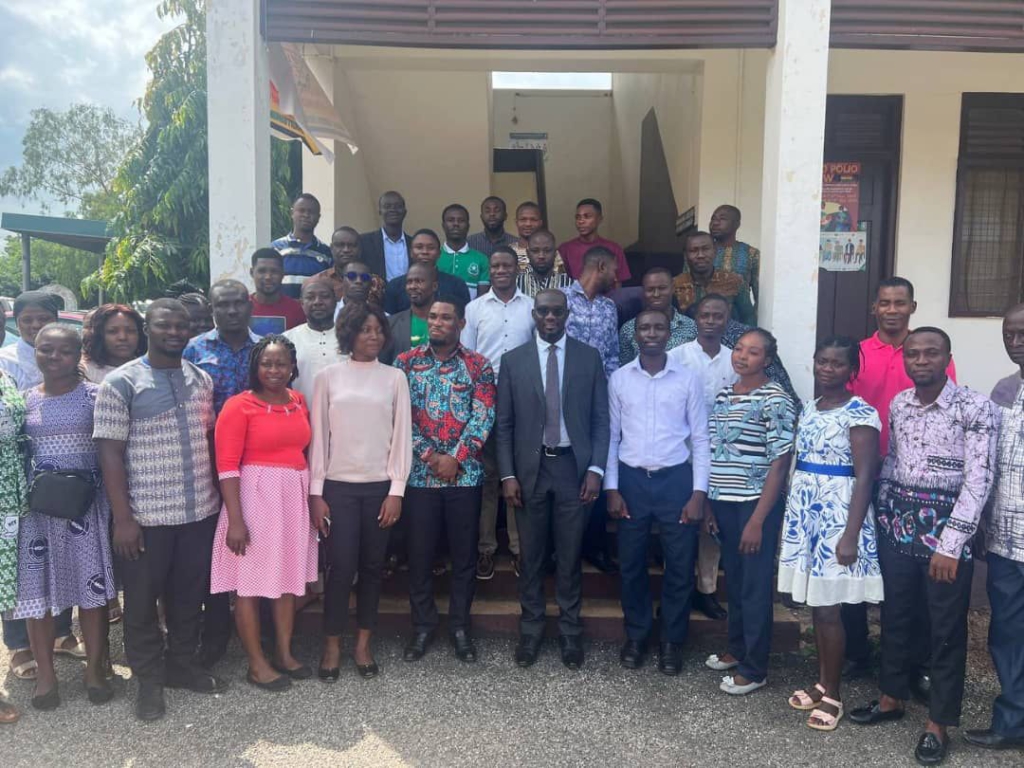
Participants expressed their profound gratitude to the centre for the insightful presentations made by the facilitators.
Topics treated included research ethics, regulatory and ethical oversight, and phases of clinical trials, among others. Facilitators at the workshop also included Mr. Elvis Adeniji – Data Manager, KHRC; Mr. Elvis Wilson-Pharmacist, KHRC and Mr. Fred Kanyoke, administrator of the institutional ethics committee.
Established in 1994, the Kintampo Health Research Centre seeks to conduct public health and biomedical research that will influence policy direction and programme implementation that seek to significantly improve well-being and reduce ill-health.
The centre has been in active clinical research for the past 25 years and has been instrumental in performing some key trials that has led to the shift in policy in Ghana and internationally. One such trial was the pivotal phase 3 trial for the WHO-approved RTS,S malaria vaccine.
Latest Stories
-
Petra Odubayo sets September 11 for maiden album release
17 minutes -
IMF expresses worry over continued build-up of SOEs liabilities; ECG accounts for GH¢71bn of liabilities
27 minutes -
IMF identifies political appointments as major weakness in GPHA, VRA, COCOBOD and other SOEs
43 minutes -
Government reform efforts yet to translate into improved SOEs financial performance – IMF
1 hour -
Teacher unions demand apology from Muntaka over WASSCE forgery comments
2 hours -
NSMQ 2026: From 9 points to ADO9 – PRESEC Legon survive thriller to claim 9th trophy
2 hours -
Photos: Inside the thrilling NSMQ 2026 Grand Finale as PRESEC, AUGUSCO and Accra Academy battle for glory
2 hours -
Achimota, five other SHSs pilot waste segregation, clean-air initiative
2 hours -
More women attempt suicide, but men die by suicide more often – National Suicide Analysis Report
2 hours -
Three Ghanaian students launch e-commerce platform, Panta, to support small businesses
3 hours -
KMA passes by-law requiring Metropolitan Chief Executives to occupy official residence
3 hours -
Zoomlion rolls out disinfection, disinfestation exercise across Volta Region
3 hours -
Photos: Mahama swears in three new Supreme Court justices
3 hours -
$260 e-Visa fee could make Ghana less competitive – GHATOF
3 hours -
New Supreme Court justices pledge fairness, impartiality and fidelity to Constitution
3 hours